

Blog
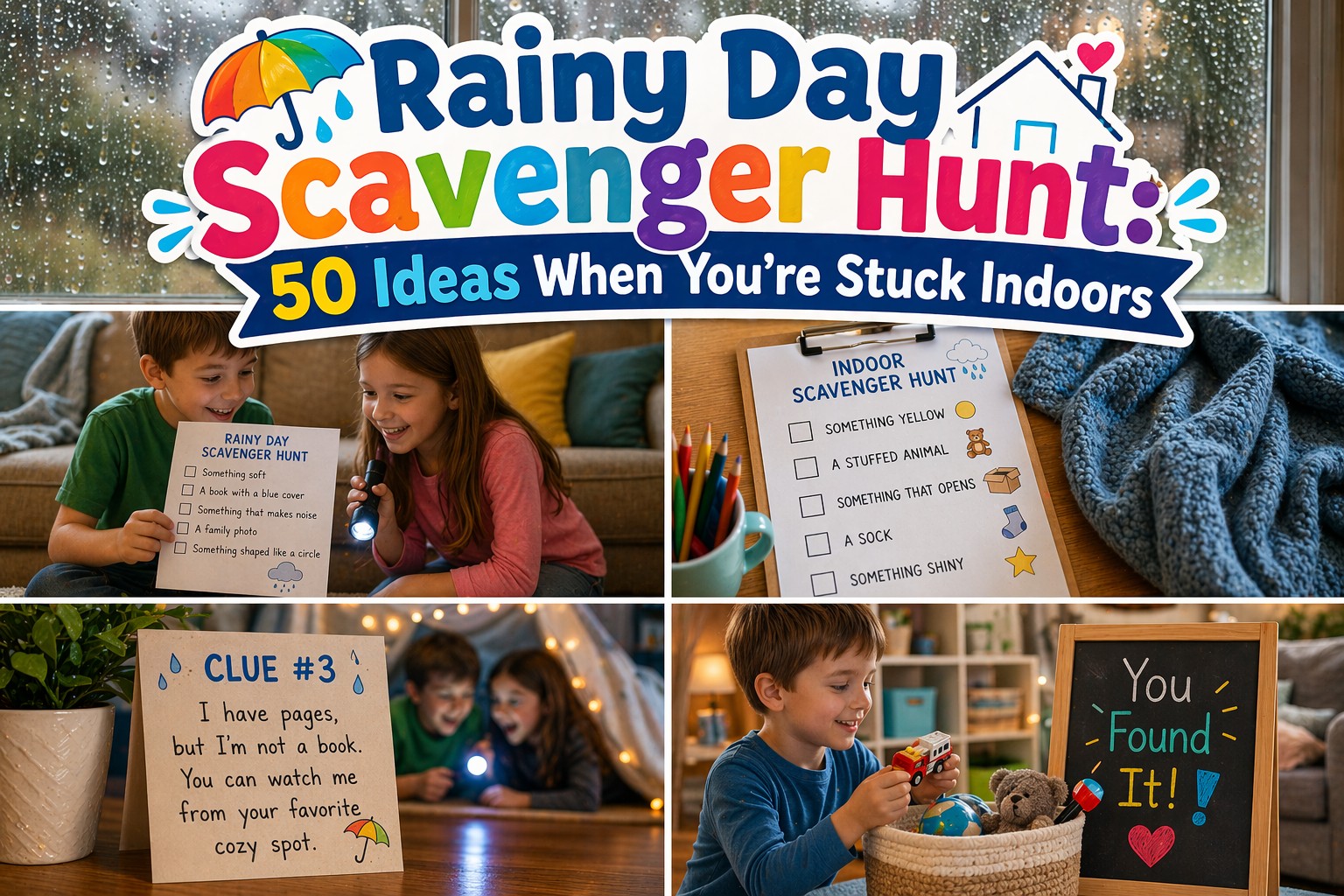
Rainy Day Scavenger Hunt: 50 Ideas When You’re Stuck Indoors
Rainy Day Scavenger Hunt: 50 Ideas When You’re Stuck Indoors
Arne · 15 min read · Published: June 03, 2026
It’s a Saturday afternoon, the sky has turned gray, and your kids are looking at screens. The panic sets in: “How am I going to keep them entertained all day?” If you’re searching for a rainy day scavenger hunt, you’ve already discovered the solution that beats screen time, board games, and “I’m bored” by a mile. A rainy day scavenger hunt transforms your home into an adventure zone and keeps kids engaged, moving, and thinking for 45–90 minutes without screen time.

Unlike most rainy day activities that require constant supervision or expensive supplies, a scavenger hunt works with what you already have—and if you print a kit, setup takes less than 15 minutes. This guide gives you 50+ actual rainy day scavenger hunt ideas organized by age, plus the exact themes and setup steps that work indoors when the weather forces you to stay home.
Why Rainy Days Are Actually the Best Scavenger Hunt Days

Before we dive into the how, let’s talk about why rainy days are secretly perfect for scavenger hunts—maybe even better than outdoor hunts.
First, there’s no weather fight. An outdoor treasure hunt depends on the right weather, the right time of day, and kids in the right mood. A rainy day hunt? It’s happening whether the weather is perfect or miserable. There’s no negotiation, no “can we do it later?” It’s happening right now, in your house, on your terms.
Second, indoor hunts are inherently smaller and more contained. Your kids can’t wander too far, you can supervise easily without constantly looking over your shoulder, and all your hiding spots are within a few rooms. This makes it easier to manage and gives you more control over difficulty level and pacing.
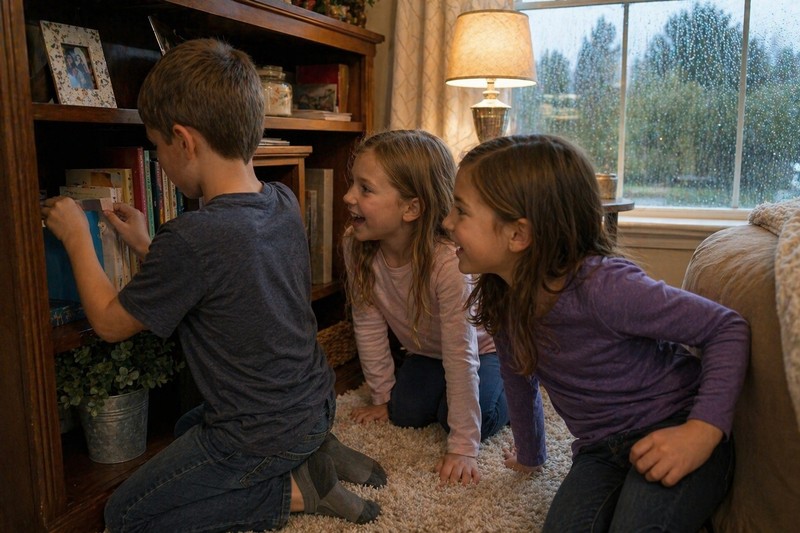
Third—and parents notice this immediately—an indoor scavenger hunt completely reframes how your kids see their home. That hallway closet becomes a “secret chamber.” The basement becomes a “treasure vault.” The bookshelf becomes a “wizard’s library.” For kids stuck indoors, a scavenger hunt makes their familiar space feel like an actual adventure. It’s psychological magic.
And from a practical perspective? A single printable kit solves your entire day. Setup is 15 minutes. Engagement is 45–90 minutes. That’s more than an hour of screen-free time that your kids will actually *want* to do. No convincing. No nagging. Just instant adventure.
50+ Rainy Day Scavenger Hunt Ideas (By Age)
These are real, tested ideas for things to find, riddles to solve, and clues to follow during an indoor scavenger hunt. Organized by age group so you pick ideas that match your kids’ abilities and keep frustration low.
Ages 2–4: Simple Picture & Sensory Hunts
At this age, reading doesn’t exist yet. Use pictures, colors, and objects they can recognize and touch. Keep hunts to 6–8 items max, and total time under 20 minutes.
- Find something RED (red toy, red pillow, red book)
- Find something SOFT (stuffed animal, blanket, pillow)
- Find something COLD (ice pack from freezer, cold water bottle)
- Find a BALL (any ball in the house)
- Find SOCKS (match a pair from the basket)
- Find a TOY (bring a favorite toy from the bedroom)
- Find something that MAKES NOISE (rattle, bell, musical toy)
- Find a BOOK (point to any book on a shelf)
Ages 5–7: Picture Clues with Simple Words
Kids are starting to read. Combine pictures with 1–2 word clues. Hide items in obvious but not visible spots: under pillows, behind doors, inside boxes.
- Find the clue in the KITCHEN (draw a picture of a kitchen)
- Find the next clue under the BED (simple word clue)
- Find the clue BEHIND THE DOOR (point to a specific door)
- Look in the BATHROOM (draw a toilet or sink)
- Find a YELLOW thing hidden in the living room
- Look UNDER A PILLOW in the bedroom
- Find the next clue in a SHOEBOX
- Look inside a BACKPACK
- Find the clue taped to the REFRIGERATOR
- Hide a clue inside a JACKET POCKET
- Put a clue inside the TOASTER (safely, no power)
- Hide a clue UNDER THE COUCH CUSHION
- Put a clue in a CEREAL BOX
- Hide a clue BEHIND THE CURTAIN
- Find the clue INSIDE A HAT in the closet
Ages 8–10: Riddles, Rhymes & Simple Codes
This is the sweet spot. Kids love wordplay and feeling clever. Introduce rhyming clues, riddles, and one-step codes. They can handle 10–15 clues and hunts lasting 40–60 minutes.
- “Where do we cook our dinner?” (KITCHEN)
- “I have four legs but no feet. What am I?” (TABLE or CHAIR)
- “What’s cold, white, and keeps food fresh?” (REFRIGERATOR)
- “I have a face but no eyes. I tell you when it’s time. Find the clue behind me.” (CLOCK)
- “I’m soft and warm. You pull me over your head at night.” (BLANKET)
- “I have pages but no words. You read me for fun.” (PICTURE BOOK)
- “Where do you sleep?” (BEDROOM)
- “What’s tall, has branches, but never has leaves?” (BOOKSHELF)
- “I’m in every bathroom. You look in me every morning.” (MIRROR)
- “Where do we sit to watch TV?” (COUCH or LIVING ROOM)
- Simple code: A=1, B=2… Spell CLOSET (3-12-15-19-5-20)
- “What room has no windows?” (BATHROOM or HALLWAY)
- “I open and close but have no handle. Find the next clue near me.” (DRAWER)
- “What’s in every room but you can’t see it or touch it?” (AIR or LIGHT)
- “I keep things warm. Find the clue next to me.” (HEATER or FIREPLACE)
Ages 11–13: Multi-Step Riddles & Codes
Older kids want a real challenge. Introduce harder riddles, multi-step clues, and substitution ciphers. They can handle 12–18 clues and hunts lasting 60–90 minutes.
- “My first letter is in HUNT but not in CHASE. My second is in BIRTHDAY but not PARTY. My third is in CLUE backwards. What am I?” (Answer: CLOSET)
- “I have a spine but no bones. I stand upright but have no feet.” (BOOK)
- “What gets wet while drying?” (TOWEL)
- Caesar cipher: Shift each letter by 2. “DQITJQQ” = BEDROOM
- “The more you take, the more you leave behind. What am I?” (FOOTSTEPS—hint to look near the entrance)
- “I’m always coming but never arrive. What am I?” (TOMORROW—but in a scavenger hunt context, point to CALENDAR)
- “I run but never walk. I have a mouth but never talk.” (RIVER or WATER—hide the clue near a faucet)
- “What can hold water but has no holes?” (SPONGE or BUCKET)
- Number puzzle: “If 3=C, 1=A, 18=R, 5=E, find the word: 3-1-18-5” (CARE—hide clue in a nice spot)
- “I have cities, but no houses. I have mountains, but no trees. I have water, but no fish. What am I?” (MAP—hide clue near a map or globe)
- Backward word: “NWOB” (BOWN… wait, reversed = TOWN or GNITNUH = HUNTING)
- “What has hands but cannot clap?” (CLOCK)
- “First, I’m twisted. Then I’m straightened. Finally, I’m cut in half. What am I?” (STRING or ROPE)
- “I’m light as feather, yet the strongest person can’t hold me for five minutes. What am I?” (BREATH—creative hiding spot hint)
- “What word becomes shorter when you add two letters to it?” (SHORT becomes SHORTER)
Ages 13+: Mystery Stories & Encryption
Teenagers want narrative. Give them a story, a mystery to solve, and sophisticated codes. Real investment in the theme makes the difference.
- Create a “secret agent mission briefing” with encrypted coordinates pointing to locations
- Use a simple substitution cipher where kids decode an entire clue
- Scavenger hunt within a mystery: “You’re detectives. Each location reveals a clue to solve who stole the treasure.”
- “Follow the map using compass directions: North 5 steps, West 3 steps, South into…”
- Rhyming riddles with double meanings: “I’m always chased but never caught. You’ll find the next clue where knowledge is bought.” (LIBRARY)
- QR codes that link to video clues or the next location hint
- Morse code: “Look under –. — .. .-. .-. — .-.” (MIRROR)
- “Your next location shares a name with [famous historical place]. Find it in this house.”
- Riddle chains: Solve one to unlock the next
- UV-light visible clues (with blacklight): Write messages that only show under black light, hidden around the house
Quick Setup: Running a Hunt in Under 20 Minutes

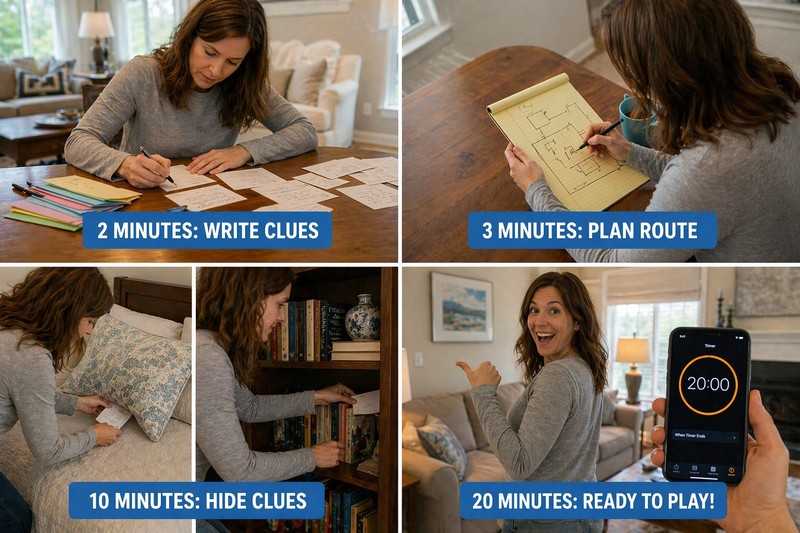
The biggest obstacle to running a rainy day scavenger hunt is thinking setup will take forever. It won’t. Here’s the 15-minute checklist:
Step 1: Choose Your Format (2 minutes)
Decide: Are you using a printable kit (easiest) or making clues yourself? If you’re buying a kit from Riddlelicious, download it now and skip to Step 3. If you’re DIY, continue.
Step 2: Pick Your Locations (3 minutes)
Walk through your home and identify 8–12 hiding spots depending on age. Write them down. Examples: kitchen table, bathroom mirror, bedroom closet, living room couch, toy box, bookshelf, under a pillow, basement corner, garage shelf, front hall closet.
Step 3: Create or Print Clues (5 minutes)
If using a kit, print the pages. If DIY, write one simple clue per location on index cards or paper. Each clue points to the NEXT location, not the current one. For young kids, use pictures. For older kids, use riddles or codes.
Step 4: Hide Everything (5 minutes)
Work BACKWARDS. Put the final treasure at the last location. Put the clue pointing to the last location at the second-to-last location. Keep going backwards. This prevents you from forgetting where anything is.
Step 5: Write the Starting Clue (1 minute)
Create one clue that points to Location #1. This is the clue you hand the kids to begin. Example: “A rainy day adventure is waiting! To find the treasure, solve clues and work together. Here’s your first clue. Good luck!”
Step 6: Brief the Kids (1 minute)
Gather everyone and say: “We’re going on a hunt inside the house today! Each clue tells you where the next clue is hidden. When you find the last clue, it leads to the treasure. Ready? Here’s your first clue.” Done. Let them go.
Step 7: Supervise Loosely (45–90 minutes)
Stay nearby in case they get stuck, but let them figure things out. Offer hints if they’re frustrated, not answers. The fun is in the discovery.
Step 8: Celebrate (5 minutes)
When they find the treasure, make a big deal of it. Take photos. Let them open rewards. This moment sticks in their memory.
Total time from start to treasure: 20 minutes setup + 60 minutes hunting = 80 minutes of entertainment.
Rainy Day Hunt Themes That Make Kids Forget About Outside
The theme transforms a hunt from “find cards in the house” into an immersive adventure. Here are five rainy day themes that work especially well because they feel cozy and contained—perfect for indoors.
1. Indoor Library Mystery
Kids are librarians protecting rare books from a thief. Each clue leads to a book-related location: bookshelf, reading nook, under a pillow with a book. The “treasure” is a new book or a collection of book-themed rewards. Perfect for book-loving kids. Works for ages 6+.
2. Home Treasure Vault
The treasure isn’t hidden—it’s locked in a vault (a box, a closet, a drawer). Kids solve clues and collect “keys” (pieces of cardboard, colored paper, stickers) at each location. They assemble the keys to open the vault. Simple enough for ages 5+, fun enough for older kids.
3. Cozy Cave Expedition
Kids are explorers searching for gems hidden in a magical cave system. Your house becomes a cave: the basement is the “deep chamber,” the living room is “crystal cavern,” the bedroom is “emerald vault.” Hide glittery items or painted rocks as “gems.” Perfect for ages 4–10.
4. Rainy Day Detective Case
Someone has hidden the birthday cake / surprise gift / treasure chest somewhere in the house. Kids are detectives gathering evidence (clue cards, photos, riddles). Each location reveals a piece of the mystery. Best for ages 7+. Adds narrative and makes the hunt feel important.
5. Secret Society Initiation
Kids are being initiated into a “secret club” or “hidden order.” They solve puzzles and collect badges, stamps, or scrolls at each location. The final location reveals their secret member certificate. Great for ages 8–13. Makes kids feel special and part of something exclusive.
Using Scavenger Hunts to Beat Screen-Time on Rainy Days
Parents know the truth: on rainy days, screens are the easiest distraction. A scavenger hunt is a legitimate alternative that beats screen time because it’s more engaging, gives kids agency, and doesn’t feel like a “boring” activity you’re forcing them to do.
Here’s the psychology: a screen (tablet, TV, phone) is passive. You consume content. A scavenger hunt is active. You search, solve, think, move, and discover. The engagement is deeper. Kids stop thinking about what they’re missing outdoors because they’re fully absorbed in the hunt.
And here’s the practical magic: a single hunt occupies 45–90 minutes of quality time. That’s a full morning or a significant chunk of an afternoon. It’s not a 10-minute distraction; it’s a real activity that gives you actual breathing room as a parent.
The key is making the hunt feel special enough that kids *want* to do it more than they want to ask for screen time. This is where themes and printable kits matter. A colorful, professionally designed hunt feels more “real” and important than something handwritten on loose paper. It signals to kids: “This is worth your full attention.”
The Printable Solution: No Prep, Just Download and Go
Here’s the honest truth about DIY: creating 10–15 custom clues from scratch, writing them out by hand, formatting them, and making sure they all connect properly takes 2–3 hours. Most parents don’t have that time on a rainy day when kids are already restless.
A printable kit changes the equation. You download (2 minutes), print (5 minutes), hide (5 minutes), and you’re done. The clues are already written, tested with hundreds of kids, and professionally designed. You’re not inventing the hunt; you’re executing a proven system.
Riddlelicious printable scavenger hunts include:
- 8–12 full-color clue cards with rainy day themes built in
- An answer key so you know exactly where everything goes
- Setup instructions written out step-by-step
- Customizable name fields so it feels personal
- Decorative elements you can print and display
The value isn’t the clues themselves (you could write those). The value is the time saved, the consistency, and the professional finish that makes kids feel like they’re on a real adventure.
Ready When the Rain Hits
Download, print in 10 minutes, run for 60. No prep, no planning — just adventure indoors.
⚡ Instant Download · 🖨️ Print at Home · ⭐ 4.8/5 from 323+ Reviews
Browse Hunt Kits →

“We had three kids stuck inside all day during a downpour. We printed the scavenger hunt at 10 AM, and they were engaged until lunch, played together the whole time without arguing, and asked to do another hunt the next day. Best $15 ever spent on a rainy day.”
Frequently Asked Questions
What can you do for a scavenger hunt on a rainy day?
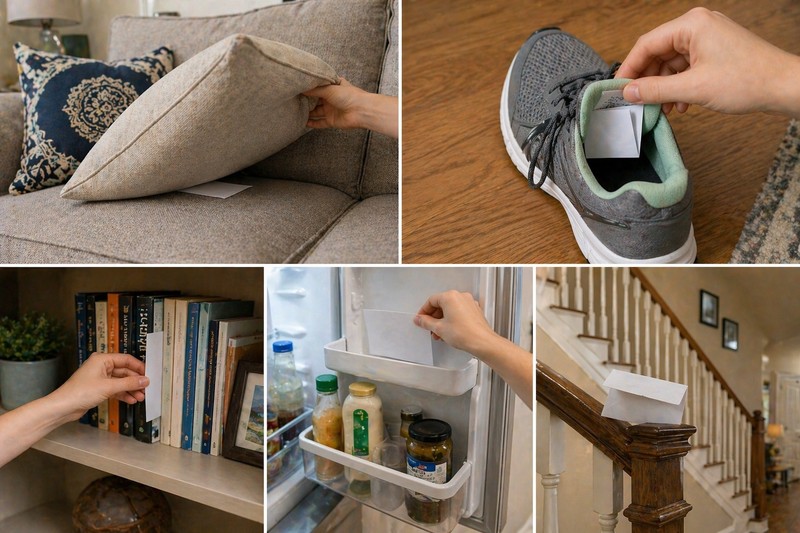
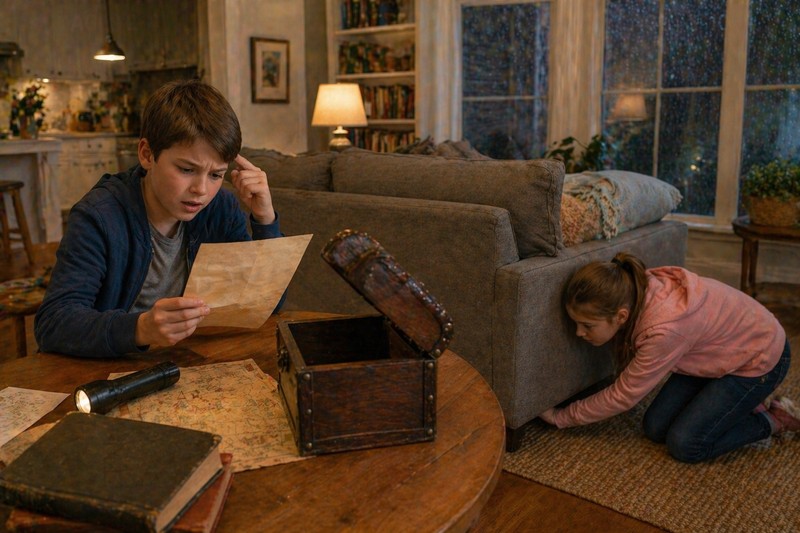
Indoor scavenger hunts are perfect for rainy days because you control all the variables. You can run a full story-driven treasure hunt through your home using just printed clue cards and household hiding spots. Setup takes 15–20 minutes with a printable kit, and the hunt itself lasts 45–90 minutes depending on age. You can hide clues in closets, under pillows, behind doors, inside drawers, under couch cushions, in the refrigerator, behind bathroom mirrors—anywhere safe in your home. No special equipment needed, no outdoor weather worries.
How do you keep kids entertained on a rainy day without screens?
A scavenger hunt for kids is one of the best screen-free rainy day activities because it keeps kids moving, thinking, and engaged for 45–90 minutes. Unlike most activities, it builds in structure so parents don’t need to supervise every moment. Kids are focused on solving riddles, finding clues, and reaching the treasure. They work together (if multiple kids), develop problem-solving skills, and stay active indoors. The key is making the hunt special enough that kids want to do it more than they want to ask for screen time. A printable kit with professional design and thematic clue cards signals to kids that this is a real, important activity—not just something you made up on the spot.
Internal Linking Cluster
Expand your rainy day planning with these guides:
- Indoor scavenger hunt for kids — full guide to hunts that work any time indoors
- Scavenger hunt for toddlers — simple picture-based hunts for ages 2–4
- Scavenger hunt for kids — comprehensive guide covering all ages
- Printable scavenger hunts — complete collection of themed kits ready to download and print
About This Article’s Expertise
This guide is based on 200+ indoor scavenger hunts designed and tested with real families since 2019. Every idea, theme, and troubleshooting tip comes from actual experience running hunts on rainy days, feedback from thousands of parents about what keeps kids engaged indoors, and what actually works when bad weather forces families to stay home. All advice has been tested in homes, apartments, and indoor venues across the United States.
Save the Rainy Day in 15 Minutes
Download instantly — have a full adventure set up before the kids notice it’s raining.
Browse All Hunt Kits →
Starting at $14.99 · Instant download · Print at home · Unlimited reprints

