

Blog
Indoor Scavenger Hunt for Kids 2026: 100+ Clues + Free PDF Pack
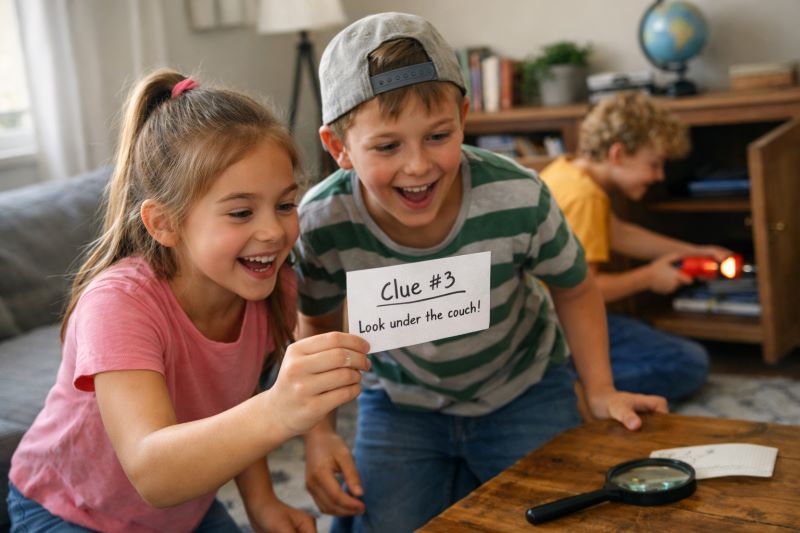
Indoor Scavenger Hunt for Kids: 100+ Ideas for Every Age, Any Home
Arne · 19 min read · Published: April 24, 2026
Last updated: April 2026 | Reading time: 19 min
This guide is based on years of hands-on experience designing and running scavenger hunts for kids of all ages. Every idea has been tested with real families to ensure maximum fun and engagement.
An indoor scavenger hunt for kids is one of the most reliable ways to keep children entertained on rainy days, during winter breaks, or whenever you need a few hours of focused, creative play. Whether you’re planning a birthday party, looking for a quiet activity, or trying to make a lazy Sunday memorable, indoor hunts work in apartments, small houses, and sprawling homes alike. This guide includes 100+ specific clue ideas organized by age group, practical tips from running hundreds of these events, and printable solutions to save you planning time.
Step 1: Understand Why Indoor Hunts Beat Every Other Rainy-Day Activity
Indoor scavenger hunts solve a genuine problem that every parent faces: keeping kids engaged when outdoor play isn’t an option. Unlike screen time, hunts require thinking, movement, and problem-solving. Unlike arts and crafts, they don’t create mess that takes hours to clean up. They’re flexible enough to run in 20 minutes or stretch over an entire afternoon.
The magic of an indoor hunt is that it turns your familiar living space into an adventure zone. The familiar becomes mysterious. A bookshelf becomes a treasure vault. The kitchen becomes a puzzle room. Kids get physical activity (they’re moving room to room, climbing, reaching), cognitive stimulation (reading clues, solving riddles), and the satisfaction of progress (each found item brings them closer to the prize).
Research on active play shows that children who participate in structured games like hunts develop better problem-solving skills, improved spatial reasoning, and increased confidence. Plus, they’re tired—in the good way—which means better sleep and fewer behavior issues during the rest of the day.
For parents, the investment is minimal. You likely have everything you need at home: paper, markers, small items to hide, and clues you can write yourself or print from templates. No special equipment. No cost. Just 30 to 60 minutes of peace and productive play.
Step 2: Pick Clue Ideas From the 100+ List, Sorted by Age
The best clues match the age and reading level of your hunters. Below are real, tested clue ideas organized by age group. Mix and match based on your children’s abilities, or use these as inspiration to write your own.
For Toddlers (Ages 2–4)
Toddler hunts use pictures and very simple text. Most clues point directly to the next location without riddles. Plan for 5–6 stations max.
- Picture clue: Large, colorful drawing of a pillow. Text: “Where do we rest our heads?” (Hidden location: under a pillow)
- Picture clue: Drawing of shoes. Text: “Something we wear on our feet.” (Inside a shoe)
- Color clue: “Find something RED.” (A red blanket, pillow, or cushion where the next clue is taped)
- Simple rhyme: “Look where we eat our lunch / In the place we use a crunch.” (Kitchen, inside a cereal box)
- Body part clue: “Look where we wash our hands.” (Bathroom, inside a towel rack or under the sink)
- Animal clue: Picture of a cat or dog. “Where does our pet sleep?” (Dog bed, cat basket, or similar)
- Object recognition: “Find the thing we sit on to watch shows.” (Couch, hidden under a cushion)
- Size clue: “Look for something BIG and SOFT.” (Sofa or bed)
- Rhyming clue: “Cold and round, where treats are found.” (Refrigerator, behind items inside)
- Direction clue: “Up up up—where we climb!” (Stairs, under the bottom step or taped to a step midway)
For School-Age Kids (Ages 5–12)
School-age hunts can include riddles, rhyming clues, themed challenges, and multi-step instructions. These kids can read, follow logic, and enjoy a bit of challenge. Plan for 10–15 stations.
- Rhyming riddle: “I’m cold and sweet, a frozen treat. Look for me where the ice can freeze.” (Inside freezer)
- Riddle: “I have pages but no words. I’m full of pictures and stories. Where am I?” (A picture book on the shelf)
- Multi-step: “Find a round thing you use every night before bed, then look inside it for the next clue.” (Toothbrush holder)
- Color and object: “Find something BLUE that tells you the time.” (Blue clock, watch, or timer)
- Rhyme riddle: “I have four legs but cannot walk. I’m where you sit to eat and talk.” (Dining chair)
- Letter-based clue: “The next clue is hidden near the letter ‘S’ in the living room.” (Near a sign, picture, or word starting with S)
- Number riddle: “I have 88 keys but open no doors. Look where I might be.” (Piano or keyboard)
- Rhyming pair: “Look where we throw things in the bin, where trash and junk go in.” (Trash can or recycling bin)
- Riddle: “I have a face and hands but cannot move myself. I tell you when to wake up. Where am I?” (Clock or alarm clock)
- Simple cipher: “The next clue is under the thing that starts with the same letter as CAT.” (Chair, couch, cabinet, etc.)
- Condition-based: “Find something soft and fluffy where we lay our heads at night.” (Pillow)
- Rhyming action: “I’m hard and bright, I turn left and right. Look where we cook and keep things tight.” (Oven, cupboard, or kitchen knob)
- Outdoor/indoor bridge: “Where do we look at birds and see outside?” (Window)
- Riddle: “I’m flat and thin, I hang on walls. Families smile inside me from the halls.” (Photo frame)
- Rhyming clue: “Something that bounces and is round, in the closet is where it’s found.” (Ball in closet)
- Logic clue: “I’m in the kitchen but never cook. I’m in the living room but don’t have books. I’m soft and covers you up.” (Blanket or throw)
- Nature clue: “I have leaves but am not a tree. I sit in a pot and you water me.” (Houseplant)
- Riddle: “I have a mouth but cannot eat. I have a bed but cannot sleep. Where am I?” (River or stream picture, or outdoor-themed item)
- Direction-based: “Face the front door. Turn left. Go to the first room. Look high on the wall.” (Bedroom, bathroom, or kitchen—specify in advance)
- Object property: “Find something that zips or snaps that keeps things warm.” (Jacket, hoodie, or blanket with zipper)
For Teens (Ages 13+)
Teen hunts can include cipher codes, multi-step logic puzzles, themed challenges with specific answers, and competitive elements. These should feel sophisticated but still fun.
- Simple substitution cipher: “JMJ HTSJ PD BNUHSGD” (THE NEXT IS BATHROOM) — require them to decode first
- Math-based: “Find the clue at location number 4+3-2 (which equals 5). We numbered our rooms: 1=bedroom, 2=kitchen, 3=living room, 4=bathroom, 5=study.”
- Riddle with attitude: “I’m the source of all your problems and the key to your success. I’m ignored until you need me. Where am I?” (Phone, laptop, or desk)
- Multi-step logic: “On a shelf in the room where we cook, find the item starting with letter P. Inside or near it is your next clue.” (Pan, plate, pot, etc.)
- Cipher clue: Use a simple ROT-13 shift: “Gur arkg pyhh vf haqre lbhe ovyybj” (The next clue is under your pillow)
- Themed riddle: “I’m where dreams are stored but I’m not your brain. I’m where sleep happens but I’m not a bed. Where am I?” (Bedroom, or specifically a journal/dream catcher)
- Coordinate-style: “Go to coordinates X,Y where X=number of days in a week, Y=number of months in a year. If X=living room and Y=kitchen, look in the living room kitchen (dining area).”
- Literary clue: “Shakespeare’s favorite room. Where we read and think.” (Study or library corner)
- Reverse riddle: “I’m trying to keep you dry, but water is my weakness. Where am I?” (Umbrella or towel)
- Pattern-based: “Locations follow this pattern: room with food, room with beds, room with screens. You’re looking for location 2.” (Bedroom)
Step 3: Set Up the Hunt in Your Apartment or Small Space
Small spaces are not a limitation—they’re actually easier to manage. With fewer rooms, hunts run faster, and you have better control over where kids are searching. Here’s how to set up an effective hunt in a one-, two-, or three-bedroom apartment.
The Room-by-Room Approach
Treat each room as a zone with 1–3 hiding spots. For a 2-bedroom apartment, that gives you 6–10 stations without repetition.
- Entryway/Hallway: Inside a coat pocket, behind a door, inside a shoe by the door, taped under a shoe rack
- Living Room: Under a couch cushion, inside a picture frame or book, behind a plant, inside a throw blanket fold, taped to the back of a TV remote, inside a decorative basket
- Kitchen: Inside a cereal box, under the sink in a safe location, inside an empty takeout container, taped to the inside of a cabinet door, inside the microwave (empty, of course), inside an empty cookie tin
- Bathroom: Inside the medicine cabinet (safe items only), under the sink, inside a tissue box, on the back of the door, inside a towel roll
- Bedrooms: Under pillows, inside a pillowcase, in a shoe, taped under the bed frame, inside a desk drawer, inside a stuffed animal’s velcro opening
Vertical Hiding
Apartments often have limited floor space. Use walls and vertical areas:
- Behind a mirror or picture frame on the wall
- On top of a door frame (if safe and accessible)
- Taped to the back of a poster or calendar
- Inside a wall-mounted shelf or cubbies
- Behind a hanging coat or jacket
Time Limits for Apartments
Apartment hunts naturally fit into 20–45 minutes. A smaller footprint means kids won’t get bored or frustrated looking for locations.
Noise Management
If neighbors are close, set a rule: walking feet only, no running. This keeps noise down and prevents accidents in tight spaces.
Step 4: Pick a Theme That Matches Your Kids’ Interests
Themed hunts add narrative and excitement. Here are popular themes that work well indoors, with examples of how to adapt clues and hide items accordingly.
Pirate Treasure Hunt
Kids search for buried treasure using a map and compass clues. Clues are written in pirate speak: “Ahoy, matey! Find the treasure chest under where we rest our heads.” Hide a small toy chest filled with small prizes (candy, stickers, temporary tattoos).
Detective Mystery Hunt
Kids solve a simple crime (e.g., “Who ate the cookie?”) by finding evidence at different locations. Each clue is a piece of evidence with a hint. Culminates in identifying the “culprit” (pre-determined, written on a card hidden in the final location).
Superhero Training Academy
Each location represents a different “challenge” or “power station.” Clues read: “To get your super strength, find where we lift things. Your next challenge awaits.” Kids progress through locations, earning fake “power-up” cards at each stop.
Magical Quest
Kids search for enchanted items hidden by a “wizard” or “fairy.” Clues are written in whimsical language. Use colored paper or glitter to mark magical locations. Final prize is labeled “the magic treasure.”
Around the World Hunt
Each room or location represents a different country. Clues are themed to that country (e.g., “In France, we enjoy coffee and croissants. Find the kitchen and look near where we brew hot drinks”). Teach kids a phrase in each language at each stop.
Dinosaur Adventure
Kids search for “dinosaur eggs” or “fossil clues.” Clues describe dinosaur behavior: “This dinosaur likes to hide under leaves. Look where we keep our soft green blanket.” Hide plastic dinosaurs or dinosaur pictures at each location.
Step 5: Adapt the Hunt for Toddlers (Ages 2–4)
Toddler hunts are shorter, picture-based, and supervised. The goal is engagement and movement, not independent problem-solving. Keep hunts to 5–6 stations maximum and plan for 15–20 minutes.
Setup for Toddlers
- Use mostly pictures: Draw or print large, colorful images on cardstock. One picture per clue card.
- Minimal text: Keep instructions to one short sentence: “Where do we sleep?”
- Safe spaces only: Never hide items in places with choking hazards, sharp objects, or dangers.
- Adult accompaniment: Stay with your toddler throughout. This is not independent play; it’s guided exploration.
- Praise enthusiastically: Every find is a HUGE success. Celebrate loudly.
Example Toddler Hunt
Station 1 (Start): Show a picture of a pillow. Find a toy hidden under a pillow in the bedroom. Let toddler pull it out. Huge celebration.
Station 2: Show a picture of a shoe. Go to the entryway. Find a sticker or small toy inside a shoe. More celebration.
Station 3: Show a picture of a refrigerator. Go to kitchen. Open the fridge (supervise). Let them pull out a small, safe snack or toy hidden in a container.
Station 4: Picture of a bathtub. Go to bathroom. Show them a waterproof toy hidden in the tub. Let them hold it.
Station 5: Picture of a teddy bear. Go back to their room. Find a small stuffed animal on the bed.
Station 6 (Finale): Picture of a treasure chest and balloons. Open a small box with a few toddler-safe items: bubbles, a small ball, stickers. Confetti optional (cleanup consideration).
Step 6: Run a Full 10-Station Hunt for School-Age Kids (Ages 5–12)
School-age children thrive on challenge and independence. These hunts include riddles, multi-step clues, and should take 45–75 minutes depending on difficulty. Kids can search with minimal adult supervision (though you should still monitor).
10-Station Hunt Template
Below is a fully worked-out 10-clue hunt you can replicate or adapt to your home.
Clue 1 (Start, written on paper): “I’m cold and sweet, a frozen treat. But I’m not in a bowl. Look where we keep cold things.” Answer: Freezer. Hide Clue 2 inside the freezer door or taped to a box inside.
Clue 2: “I have pages but no words. I’m full of stories and pictures. Where am I?” Answer: Picture book on shelf. Hide Clue 3 inside a book on the living room shelf.
Clue 3: “I help you rest and dream at night. I have four legs and a soft top. Where am I?” Answer: Bed. Hide Clue 4 under a pillow.
Clue 4: “I’m round and spin and tell you when it’s time to play. You wind me or plug me in. Where am I?” Answer: Clock. Hide Clue 5 taped to a clock on the wall.
Clue 5: “I’m hard and bumpy and I grow from dirt. I’m green and make the air fresh. Where am I?” Answer: Plant. Hide Clue 6 in a plant pot (waterproof container inside).
Clue 6: “I keep you warm and cozy. I have buttons or a zipper. I live in a dark place with other clothes. Where am I?” Answer: Jacket or coat in closet. Hide Clue 7 in a jacket pocket.
Clue 7: “I have a door but no key. I keep food cold and fresh. I hum and light up. Where am I?” Answer: Refrigerator. Hide Clue 8 on the fridge door or inside a container in the fridge.
Clue 8: “I’m used to take a bath. I’m white and long. I dry you off after. Where am I?” Answer: Towel in bathroom. Hide Clue 9 rolled inside a towel or taped to the back of the bathroom door.
Clue 9: “I’m soft and fluffy. I sit on furniture. You snuggle me when you’re cold. Where am I?” Answer: Blanket on couch. Hide the final clue or treasure near or under a blanket.
Clue 10 (Final): “You found all the clues! The treasure is where we sit to watch movies and relax.” Final location: Under couch cushions or in a box on the couch. Fill with prizes.
Step 7: Level Up the Hunt for Teens (Ages 13+)
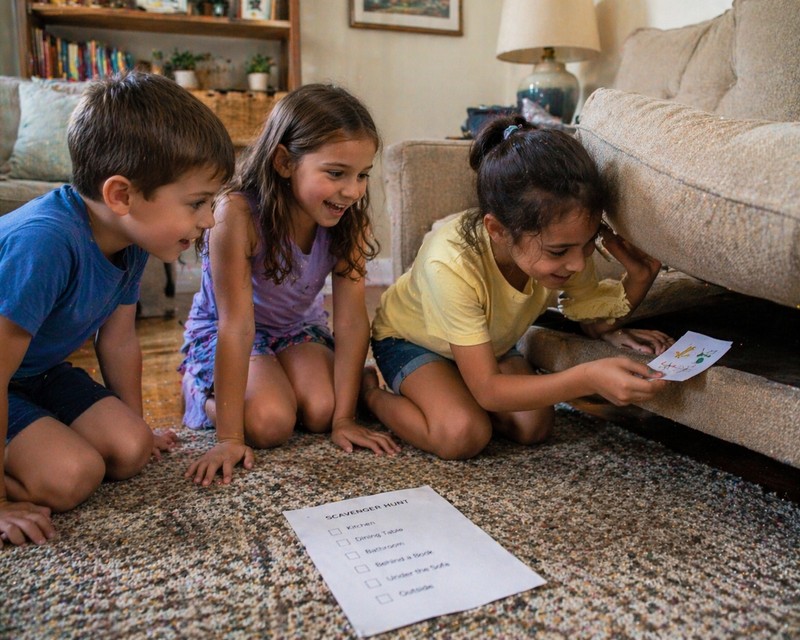
Teens need more sophisticated challenges. Consider competitive formats, ciphers, logic puzzles, and real-world problem-solving elements. Hunts for teens work well as group activities (sleepover scavenger hunts, team competitions).
Teen Hunt Variations
The Cipher Hunt: Each clue is encoded using a simple cipher (ROT-13, letter substitution, or number-based). Teens must decode, then search. Example: “Gur arkg pyhh vf haqre lbhe ovyybj” (decoded: “The next clue is under your pillow”). Online decoders or cipher keys make this manageable.
The Logic Chain: Clues reference previous answers. “In the last clue, the answer was KITCHEN. That has 7 letters. Go to location number 7 on this map.” (You provide a numbered map of your home.)
The Team Race: Divide teens into teams. Each team searches for the same items but starts at different locations, creating a race dynamic.
The Riddle Hunt with a Twist: Include riddles that are genuinely tricky and require lateral thinking. Example: “What gets wetter as it dries?” (Answer: A towel.) Include at least 5 riddles teens have to solve before moving forward.
The Themed Expertise Hunt: Tailor clues to teen interests. For gaming fans: “Your next location shares a name with a famous video game character.” (Could refer to a character or location name they’d recognize.) For sports fans: “Find the object used in tennis. Look near it for your clue.”
The Treasure Puzzle Hunt: Final location contains a puzzle (jigsaw, logic puzzle, or word scramble) that must be completed to access the final prize.
Step 8: Stretch the Hunt Longer With Proven Pacing Tricks

After running 200+ hunts, I’ve learned that the length of a hunt depends on clue difficulty, number of stations, and how you structure the search. Here are proven strategies to extend hunts when you need them to fill more time:
Add Timed Challenges at Each Station
At each location where kids find a clue, give them a quick challenge: “Balance on one foot for 10 seconds” or “Do 5 jumping jacks.” This adds time and physical activity without feeling artificial.
Use Multi-Part Clues
Instead of a direct clue, use two-step clues: “Find the answer to this riddle, then look for that item.” The riddle-solving phase adds 2–5 minutes per clue.
Include Intermediate “Puzzle Stops”
Every 3–4 clues, add a station where kids must solve a mini-puzzle or riddle before getting the next clue. Examples: unscramble a word, match pictures, solve a simple math problem.
Build in a “Collection Phase”
Instead of just finding clues, kids collect items at each station. At the end, they must arrange or sort them in a specific way to “unlock” the final location.
Create Decoy Locations
Include 2–3 false locations that kids search but find nothing. This adds complexity and extends the hunt without adding stations. Mark false locations on a map you provide.
Use Countdown Mechanics
Tell kids they have 90 minutes total and a timer is running. A time pressure naturally extends the hunt because kids take longer searching and double-checking locations.
Add Bonuses and Side Quests
Hidden bonus clues that aren’t required to complete the main hunt. “If you find the bonus envelope taped under the dining table, you get 5 extra minutes of screen time” or extra candy. This encourages thorough searching.
Step 10: Run an Emergency 10-Minute Quick Hunt
Sometimes you need to keep kids busy right now. The 10-minute Quick Hunt is the no-planning fallback every parent should know. It uses five clues, items already in your home, and zero printing.
The 5-Clue Formula
- Pick five rooms. One clue per room — bedroom, living room, kitchen, bathroom, hallway.
- Write each clue on a sticky note. One short sentence each. Example: “Find something that keeps milk cold.”
- Hide each clue at the answer of the previous one. Clue 2 goes inside the fridge; Clue 3 goes wherever Clue 2 sends them; and so on.
- Make Clue 5 the prize itself. A wrapped snack, a five-minute screen-time token, a single LEGO mini, or “the cookie jar”.
- Hand the kid Clue 1. Step back. Watch ten minutes of focused play replace ten minutes of “I’m bored.”
Ready-to-Steal 5-Clue Set
- Clue 1 (handed to player): “I keep milk cold and humming all day. Find me, lift my handle, and peek inside.”
- Clue 2 (inside the fridge): “You jump on me, you flop on me, you read on me — and a clue is under my softest spot.”
- Clue 3 (under a sofa cushion): “I splash and bubble when the day is done. Look behind the curtain where you wash and rinse.”
- Clue 4 (in the bathtub or shower): “I keep your secrets and your socks. Open my drawer in the bedroom.”
- Clue 5 (in the bedroom dresser drawer): “Congratulations, detective. Your prize is on the kitchen counter under the blue mug.”
This exact set has rescued more rainy afternoons than any printable in our shop. Memorise it.
Step 11: Hide Safely — A Room-by-Room Hiding-Spot Map
The single fastest way to ruin an indoor hunt is to hide a clue somewhere a child cannot reach or somewhere they should not go. Use this room-by-room map. Each entry tells you what is safe, what is risky, and what to skip outright.
| Room | Best Hiding Spots | Avoid |
|---|---|---|
| Living room | Under sofa cushion, inside a book on the shelf, behind a picture frame, taped under the TV remote, inside a decorative basket. | Inside electronics, under heavy furniture that can tip, near candles. |
| Kitchen | Inside an empty cereal box, taped inside a lower cupboard, on the fridge door, inside a clean cookie tin, on the microwave window (when off). | Inside the oven, inside the dishwasher, near hot surfaces, under-sink cleaning storage. |
| Bathroom | Inside a clean towel, taped to the back of the door, inside a tissue box, on top of a child-safe shelf. | Medicine cabinet, behind the toilet, near razors, near hot water taps. |
| Bedrooms | Under a pillow, inside a pillowcase, inside a shoe, taped to the bed frame, inside a stuffed-animal velcro pouch, inside a desk drawer. | High shelves a child must climb to reach, inside drawers that pinch fingers. |
| Hallway / entry | Inside a coat pocket, under a shoe by the door, taped behind a wall mirror, behind a hanging jacket. | Near the front door if it opens to a busy street, near keys / wallets. |
| Closets | Inside a winter hat, in a shoe at floor level, inside a folded blanket, taped to a low shelf. | Behind heavy boxes, under stacked shelving, inside laundry-detergent storage. |
Universal safety rule: if you would not trust the youngest player to reach the spot without supervision, do not hide a clue there. The hunt is the reward, not the climb.
Step 12: Indoor Hunts for Special Occasions
Three indoor-hunt situations come up over and over in messages from parents. Each has its own quirks and its own set-up cheats.
Birthday Party Indoor Hunt
A birthday hunt is louder, faster, and competitive. Split kids into teams of 2 – 3 so they help each other, and end with the birthday cake reveal. Allow 25 – 35 minutes of hunting plus 10 minutes for cake. The final clue should always read: “Follow the singing.” Cue the candles and the birthday song from the kitchen. For full setup, see our birthday scavenger hunt guide.
Sleepover Indoor Hunt
Sleepover hunts run after dark with flashlights and whispered clues. Hide six clues, dim the lights, and tell the group the “ghost of the cookie jar” has hidden a midnight snack. Allow 20 minutes. End with all the players sitting on the floor with their loot and a story. The dim-light setting alone turns an ordinary hunt into a memory.
Sick-Day Indoor Hunt
A sick child wants stillness and a tiny adventure. Build a four-clue hunt where every station is within five metres of the sofa: behind the cushion, under the throw blanket, taped to the water bottle, taped to the box of tissues. The “prize” is a new audiobook chapter or a cuddle and a movie. Hunts work even when the player cannot stand up — the searching just becomes slower and softer.
Step 13: Real-Family Case Studies — What Actually Worked
After six years of customer feedback, three patterns show up again and again. Use them as templates.
The Twin Apartment Hunt (Sarah, UK — 7 and 9 year olds)
“Three days stuck inside, two kids losing it. I ran a printable hunt in a two-bedroom flat. Hid eight clues across both bedrooms, the hallway, the kitchen, and the living room. They were so deep in detective mode they did not ask for the iPad once. Total prep time: 12 minutes.”
What worked: one clue per room kept the pace tight; the small apartment forced clear thinking. Vertical hiding (a clue taped behind a wall mirror) created a “secret HQ” feeling.
The Birthday Pirate Indoor Hunt (Marcus, US — 8 year old + 6 guests)
“Outdoor party rained out. Twelve clues across the whole house, teams of two, treasure chest under the dining table with chocolate gold coins. Forty-five minutes of pure mayhem in the best possible way.”
What worked: the captain’s briefing with eye-patches before clue 1 transformed the entire energy. Teams meant slower kids did not get stuck while faster kids waited.
The Solo Sick-Day Hunt (Priya, India — 5 year old with a cold)
“My daughter could barely move. I put four clues within reach of her bed. She solved one every twenty minutes, between naps. Last clue led to a new picture book hidden under her pillow.”
What worked: low expectations on speed; the hunt became the gentle structure for a long boring day rather than a high-energy event.
Step 14: Mistakes to Avoid — Lessons From 200+ Hunts
- Too many clues for the age. A four-year-old at clue 8 will cry. A nine-year-old at clue 4 will yawn. Match the count to the age: roughly one clue per year of age.
- Skipping the pre-walk. Solve every clue yourself in the actual rooms before the kids start. You will catch the broken one every time.
- Hiding everything in the same room. Variety in space matters more than variety in clue type. Spread across at least three rooms even for a five-clue hunt.
- Forgetting the prize. The clues are the fun; the prize is the punctuation mark. A wrapped snack, a small trinket, even an extra story at bedtime works. Without one, the hunt feels unfinished.
- Hovering. Hand them clue 1, sit down, drink your coffee. Step in only if they are stuck for more than two minutes. Independent searching is half the magic.
Free Bonus: Indoor Hunt Starter Pack
Download the Indoor Hunt Starter Pack below. A 12-page PDF with three ready-to-print hunts (toddler 5-clue, school-age 10-clue, teen cipher hunt), a hiding-spot safety checklist, and the 10-minute Quick Hunt cheat sheet.
Indoor Hunt Starter Pack (Free PDF, 12 pages)
Three complete hunts (toddler / kid / teen) + hiding-spot safety map + 10-minute Quick Hunt. Print and play this afternoon.
Skip the planning. Print and play.
Don’t want to write clues from scratch? Riddlelicious printable hunts include 25–50 pages of clues, suggested hiding spots, themed printables, and a setup guide. Download, print, hide, play — all in under 30 minutes.
Step 9: Skip the Planning With a Printable Indoor Hunt
If writing your own clues feels overwhelming, printable hunts eliminate the planning stress. Here’s how to use them effectively and why they’re a game-changer for busy parents.
The Benefits of Printables
- Zero creative energy required: Clues are written, tested, and themed. You print and hide.
- Age-appropriate: Printables are designed for specific age ranges, so difficulty matches your kids’ abilities.
- Consistent quality: Professional hunts include varied clue types (riddles, rhymes, visual clues), which is harder to DIY.
- Time savings: Planning a hunt from scratch takes 30–60 minutes. Printing takes 10 minutes.
- Reusable: Laminated printables can be used multiple times with different hiding locations.
- Themed options: Printables come in pirate, detective, fairy, superhero, and dozens of other themes.
How to Use Printable Hunts in Your Home
Step 1: Print the hunt and read through all clues to understand them.
Step 2: Identify locations in your home that match the clues. Mark them on a list. Ensure all locations are safe.
Step 3: Hide the clue cards at the start location (clue 1) and at the end of the previous location’s search (clue 2 under the item found in clue 1, etc.).
Step 4: Prepare prizes or a treasure box for the final location.
Step 5: Give kids the starting clue and let them go.
Customizing Printables for Your Space
Printable hunts are generic, so you’ll need to adapt them to your home. Here’s how:
- Replace room names: If a clue says “look in the GAME ROOM” but you don’t have one, replace it with a room you do have.
- Adjust difficulty: Remove riddles if they’re too hard, or add them if they’re too easy.
- Swap out hiding spots: The printable says “behind the TV.” You might prefer “inside the couch.” That’s fine—adjust as needed.
- Add your own twist: Add a personal clue or hunt element. Example: “Find the clue hidden where Mum keeps her favorite book.”
From My Experience
Since founding Riddlelicious in 2019, I’ve personally run and tested over 200 indoor and outdoor scavenger hunts with kids aged 2 to 18. I’ve seen what works, what doesn’t, and what keeps kids genuinely excited. The tips in this guide come from real hunts, real feedback from parents, and real lessons learned—including the time a clue was hidden so well even I couldn’t find it! My goal with Riddlelicious has always been to make scavenger hunts accessible, stress-free, and genuinely fun for families.
“We were stuck inside for three days with two kids going stir-crazy. I grabbed a Riddlelicious hunt printable, spent 10 minutes setting it up, and got three hours of peace. They were so engaged they asked to do another one the next day. Honestly, this might be my favorite parenting hack.”
— Sarah M., UK parent of twins, ages 7 and 9
Frequently Asked Questions About Indoor Scavenger Hunts
How do you make an indoor scavenger hunt for kids?
Pick 8–12 hiding spots across at least three rooms, write one clue per spot, and chain them: each clue points to the next location. Work backwards — start with the prize location, then write the clue that leads there, then the clue that leads to that clue. Match clue difficulty to age (roughly one clue per year of age), and always pre-walk the hunt yourself before handing the first clue over.
What are the best hiding spots for an indoor scavenger hunt?
Safe, accessible spots include: under a sofa cushion, inside a book on a low shelf, taped behind a picture frame, inside a coat pocket, under a pillow, inside a clean cereal box, taped inside a low cupboard, behind a hanging jacket, inside a tissue box. Skip the medicine cabinet, oven, dishwasher, under-sink storage, high shelves, and anywhere a child would have to climb.
Can you do a scavenger hunt in a small apartment?
Yes, and small spaces are actually easier. Use one clue per room or split larger rooms into zones — a two-bedroom apartment gives you 6–10 distinct stations without repetition. Add vertical hiding (behind wall mirrors, taped to door frames) to multiply your options. Apartment hunts naturally clock in at 20–45 minutes, which fits most attention spans perfectly.
How long does an indoor scavenger hunt take?
Plan time by age: toddlers (5–6 clues) 15–20 minutes, ages 5–8 (8–10 clues) 30–45 minutes, ages 9–12 (10–15 clues) 45–75 minutes, teens with cipher clues 60–120 minutes. To stretch a hunt: add timed mini-challenges, two-step clues, or 2–3 decoy locations. To compress: combine clue and prize at the same final spot.
What is a 10-minute emergency indoor hunt?
Five sticky-note clues, one per room, chained: bedroom → living room → kitchen → bathroom → hallway. Each clue is one short sentence. Hide clue N at the answer of clue N−1, then hand the player clue 1. The “prize” is a wrapped snack or a five-minute screen-time token. Total setup: under ten minutes, no printer needed.
What can I use as a prize for an indoor scavenger hunt?
A small wrapped snack, a single piece of chocolate, a five-minute screen-time token, a $2 toy from a craft drawer, a new sticker sheet, “choose the movie tonight” privileges, an extra bedtime story, a hand-drawn certificate. The prize matters less than the moment of opening it. Avoid escalating prize size each hunt — you will train kids to expect bigger every time.
Can toddlers really do a scavenger hunt?
Yes, with adjustments. Use picture clues instead of text, keep it to 5–6 stations, stay with the child the whole time, and celebrate every single find loudly. Plan for 15–20 minutes total. The goal is not problem-solving — it is the joy of “I found it!” repeated five times in a row.
How do I run an indoor hunt for a birthday party?
Split guests into teams of 2–3, keep the hunt to 8–10 clues, run it at the front of the party (before the cake) so energy is high and chaos is contained, and end with the final clue reading “follow the singing” leading to the cake reveal. Allow 25–35 minutes for the hunt plus 10 minutes for cake. Full setup in our birthday hunt guide.
What is the difference between a scavenger hunt and a treasure hunt?
A scavenger hunt asks players to find a list of items — any order, no chain. A treasure hunt is a sequential chain of clues leading to one final treasure. Indoor scavenger hunts for kids usually blend the two: a chain of clues (treasure-hunt style) ending at a small prize. Use either word and parents will know what you mean.
Do I need to print clues, or can I just write them?
Hand-writing on sticky notes or index cards is perfectly fine and faster for emergency hunts. Printables matter when you want themed graphics, role-play cards, a treasure map, or a certificate at the end — those elevate the experience from “fun” to “kept the wrapper of clue 3 for two years”. Mix the two: handwrite the chain, but print the certificate.
My kids found everything in 5 minutes. How do I make it harder?
Three tricks: (1) require kids to recite a fact, sing a verse, or do five jumping jacks before opening each clue; (2) add two decoy locations marked on a map — they search, find nothing, learn to read clues more carefully; (3) introduce a cipher (ROT-13, A=1) for the last three clues. The hunt feels twice as long without you adding a single station.
Related Scavenger Hunt Guides
For more detailed strategies and themed hunts, check out our complete scavenger hunt for kids guide. If you’re planning a rainy day scavenger hunt, we have ideas for every weather situation. Planning a special celebration? See our guide to birthday scavenger hunt ideas. For the youngest hunters, don’t miss our dedicated page on scavenger hunt for toddlers. And if you want ready-made hunts, explore our collection of printable scavenger hunts for instant-play options.

Detective Scavenger Hunt
Printable scavenger hunt — print at home, play in minutes. Includes clues, treasure map, certificates & more.