
Planning & ideas, Printable Activities, Scavenger Hunt, Scavenger Hunt Tips & Facts, Special scavenger hunts & treasure hunts

Printable Scavenger Hunts: The Complete Buyer’s Guide (2026)

Printable Scavenger Hunts: The Complete Buyer’s Guide (2025)

Printable Scavenger Hunts: The Complete Buyer’s Guide (2025)

Arne Boetel  ·  18 min read  ·  Published: April 27, 2026

A printable scavenger hunt is more than just a list of clues—it’s a complete game kit ready to download and play. Instead of spending hours designing clues, hiding supplies, or learning riddle-writing, you download a PDF, print at home, and host an adventure that feels professionally designed but costs less than a board game.

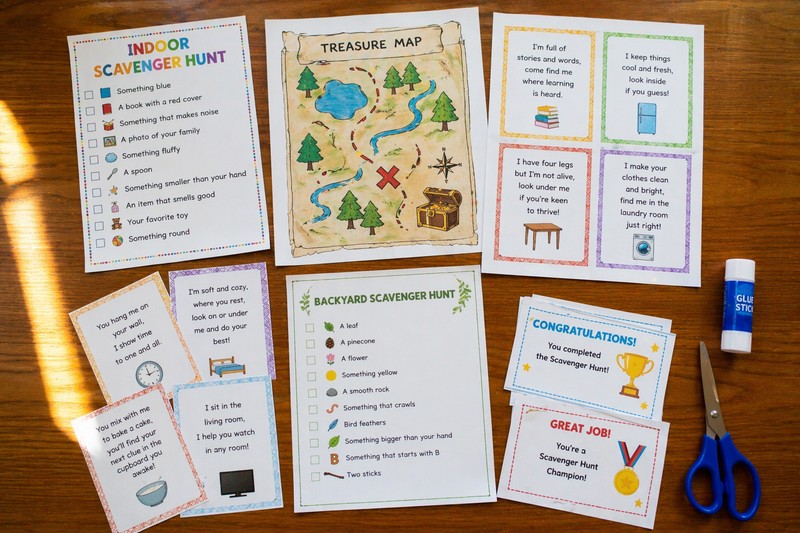
A printed scavenger hunt clue card set fanned out on a light wooden table, colourful and clearly readable, natural window light from the side, shot on smartphone, natural light, candid moment, soft warm tones, real home setting, not staged

This guide covers everything you need to know before buying: what separates quality kits from generic clue cards, how to choose by age and theme, and why thousands of families choose ready-made hunts over DIY. Whether you’re planning a birthday party, rainy day activity, or classroom engagement tool, you’ll know exactly what to look for by the end.

Expertise: This guide is based on 6+ years of designing and selling scavenger hunts to families worldwide, feedback from 10,000+ customers, and direct experience with what makes hunts unforgettable versus forgettable.

What Is a Printable Scavenger Hunt? (And Why It’s Better Than DIY)

Premium printable scavenger hunt kit product flat lay: story narrative booklet (cover visible), 12 clue cards fanned, illustrated treasure map, themed

A printable scavenger hunt is a complete, story-driven game delivered as a PDF file. You download it, print the pages at home, and immediately begin playing. No cutting required, no guessing how to set up riddles, no rewatching videos to understand the flow.

Here’s what separates a real printable hunt from a generic “clue card pack”:

  • A narrative arc: The hunt has a beginning, middle, and end. Players don’t just collect clues—they’re solving a mystery, finding a treasure, or completing a quest that makes sense and feels satisfying.
  • Age-calibrated difficulty: Each clue is written specifically for the age group. 5-year-olds see picture-based clues; 10-year-olds solve codes; teens face logic puzzles. A generic clue is confusing or too easy.
  • Complete setup instructions: You get a printed guide explaining exactly where to hide items, how long it takes, how many players it works for, and what to do if kids find answers too quickly or too slowly.
  • Themed props and extras: Real hunts include printable maps, character cards, treasure certificates, or ritual objects that make the game feel intentional, not assembled from scraps.
  • Reusability: You pay once, print for multiple kids, multiple years. A $15 hunt used three times costs $5 per use—cheaper than renting or hiring entertainment.

Why buy instead of DIY? Writing a hunt from scratch requires solving three problems at once: balancing difficulty, designing narrative flow, and creating enough content to fill 30–60 minutes. Even experienced teachers and parents underestimate one or more of these. A quality kit eliminates guesswork and guarantees success.

The 5 Things Every Great Printable Hunt Should Include

1. A Story or Narrative (Not Just Clue Cards)

A clue card says: “Find something cold.” A narrative-driven hunt says: “Detective Riddle’s jewels have been stolen. Find the ice statue (located in the freezer) to retrieve the first map piece.”

The difference is emotional. Clue cards feel like busywork. A story gives purpose to every action. Kids remember the narrative weeks later; they forget random clue sequences within hours.

Look for hunts that:

  • Introduce a character, mystery, or quest in the opening
  • Use themed language throughout (pirate hunts include nautical words; detective hunts have “interrogation” questions)
  • Build momentum—early clues are easier, later ones harder
  • Deliver a satisfying ending with a reward, revelation, or celebration

2. Age-Calibrated Difficulty

The difference between a great hunt and a frustrating one is whether the clues match how kids think at that age.

  • Ages 3–5: Clues are picture-based or describe colors/shapes. “Find something round and red.” Rhyming is optional. Hunts work best with 5–7 stations, taking 10–15 minutes.
  • Ages 6–8: Clues are simple riddles or rhymes: “I have a face but no eyes. Find me in the dark.” Multiple-choice riddles work well. Hunts have 8–12 stations, 20–30 minutes. Kids enjoy codes and simple ciphers.
  • Ages 9–12: Full riddles, logic puzzles, and codes appear. “A man walks into a room and you hear a bang, then silence. No one is hurt. Why?” Hunts span 15–25 stations, 45–60 minutes. Detective/mystery themes dominate.
  • Teens and Adults: Complex logic, deduction, and social interaction. Murder mystery games with role-play. Hunts can span 60–120+ minutes with layered narratives.

A hunt calibrated correctly means every child solves clues without being bored or stuck. Mis-calibrated hunts fall apart—younger kids quit in frustration, older kids lose interest in 10 minutes.

3. A Complete Setup Guide

The setup guide is your safety net. It should answer:

  • How long does setup take? (15 minutes? 45?)
  • What physical space does it need? (Will it work in an apartment or only a house with a yard?)
  • How many players is it designed for? (Is it one child or five?)
  • What supplies do I need? (Anything beyond printing, or do I need a flashlight, magnifying glass, or props?)
  • What if kids finish too early? (Or get stuck?)
  • Can it be adapted for indoors vs. outdoors?

Quality guides address all of these. Generic kits don’t.

4. Themed Props or Printable Extras

The details separate memorable from mediocre. A pirate hunt that includes a printable treasure map or “pirate captain” certificate feels like a complete product. One that only has clue cards feels unfinished.

Look for:

  • Treasure maps or route sheets
  • Character cards or role-play instructions
  • Certificates, medals, or reward cards
  • Themed tokens, stickers, or ritual objects
  • Multiple difficulty levels (so one hunt works for ages 6 and 9 playing together)

5. Flexibility for Any Home or Venue

A hunt designed only for backyards fails for apartment dwellers. A hunt with indoor-only clues fails for outdoor-loving families.

Quality kits offer:

  • Clear indoor and outdoor variations
  • A “suggested hiding spots” list so you’re not guessing
  • A way to scale for fewer or more players
  • Duration variations (can run it in 20 minutes or 45, depending on your group)

Printable Scavenger Hunt by Age: What to Look For

Five quality criteria icon infographic: Story/Narrative (open book icon), Age-Calibrated Difficulty (age progression bars), Complete Setup Guide (chec

For Ages 3–5: Picture-Based and Short

Preschoolers and kindergarteners are learning to follow instructions and recognize visual cues. They need hunts with lots of pictures, short clues, and frequent wins (a clue every 2–3 minutes keeps energy high).

  • Clue format: “Find something BIG and ROUND” (shows picture of ball). Rhyming is bonus, not required.
  • Number of stations: 6–8 stops. Any longer and attention drops.
  • Duration: 10–15 minutes total. Longer hunts need adult support for every clue.
  • Themes that work: Dinosaur, Animal, Color-based, Character-based (favorite TV shows).
  • Setup: You hide physical items (toys, objects from around the home). Clues direct them to the next hidden item.
  • Warning: Avoid hunts with complex instructions or multiple decision points. Young kids get confused.

For Ages 6–8: Rhyming Riddles and Simple Codes

This age group loves rhymes, simple wordplay, and beginning riddles. They want to feel smart. A well-written rhyming clue (“I have a face but no hands, find me where you wash your hands”) gives them that win without requiring adult help.

  • Clue format: Rhyming riddles, simple codes (A=1, B=2), treasure map with X marks spot.
  • Number of stations: 8–12 stops. Kids this age can sustain engagement for 20–30 minutes.
  • Duration: 20–30 minutes. Includes setup time; most kids solve clues in 2–3 minutes each.
  • Themes that work: Pirate (ship, treasure map, “pirates” theme is timeless), Detective (solving mysteries), Superhero, Sports.
  • Setup: Clues lead to physical locations (kitchen, bedroom, garden shed). Kids follow the trail independently.
  • Bonus: Kits with multiple difficulty levels (easy clues + hard clues) work well if you’re mixing ages.

For Ages 9–12: Codes, Longer Riddles, Detective Stories

This age loves complexity, logic puzzles, and detective/mystery narratives. They want a hunt that feels “grown-up” and challenges them. A good kit offers layered clues (first you solve a code, then you use the answer to unlock the next clue).

  • Clue format: Riddles with misdirection, Caesar ciphers, number codes, logic puzzles (“Which clue is the odd one out?”), multi-step solutions.
  • Number of stations: 12–20+ stops. Older kids want a longer, more involved experience.
  • Duration: 45–60 minutes. Can be stretched or shortened based on group size.
  • Themes that work: Detective/Mystery (most popular), Spy, Escape Room-style, Treasure Hunter, Archaeology.
  • Setup: More involved. You’ll hide objects, arrange stations, and potentially create a “headquarters” for debriefing.
  • Bonus: Kits with role-play elements (kids take on detective roles) keep groups engaged longer.

For Teens and Adults: Social Deduction and Murder Mystery

Adults and older teens want narrative depth, role-play, and social interaction. A murder mystery game where everyone has a secret and must deduce the killer works better than a simple clue hunt.

  • Format: Role-play murder mystery with character cards, secrets, and accusation mechanics. Hunts are secondary to social gameplay.
  • Duration: 60–120+ minutes depending on group size and how much time people spend investigating and debriefing.
  • Themes: Murder Mystery (most popular), Escape Room, Heist, Historical Mystery.
  • Group size: 4–12+ players. Larger groups = more intrigue.
  • Setup: Significant. You’ll arrange a space, distribute character cards, plant clues, and guide the game to a conclusion.

Printable Scavenger Hunts by Theme: How to Choose

The best theme is the one your group is most excited about. A mediocre pirate hunt enthuses pirate fans more than a brilliant detective hunt. That said, here’s what each theme typically delivers:

Pirate Hunt

The timeless favorite. Kids love the “pirate adventure” narrative—searching for treasure, decoding maps, finding a hidden chest. Works for ages 5–12. Expect nautical language, ship references, and treasure maps as core elements. Pirate hunts typically feature clues hidden in various locations representing “ports,” and the final treasure is a chest filled with coins, jewelry, or candy. The immersion factor is high—kids can dress as pirates, speak in pirate accents, and feel like they’re part of a real adventure.

Detective/Mystery Hunt

Most popular with ages 8–14. Kids solve crimes, interrogate suspects, or find clues to crack a case. Offers the most flexibility (can be simple clue-following or complex logic puzzles). Works well for mixed-age groups. A detective hunt puts kids in the shoes of professional investigators—they collect evidence, analyze fingerprints, interview witnesses, and determine the culprit. The narrative is engaging because it involves problem-solving and deduction, not just following a path. Kids feel smart when they solve the mystery.

Unicorn/Fairy Tale Hunt

Popular with ages 4–8, especially girls (though many boys enjoy it too). Magical themes, enchanted forests, princess quests. Often includes colorful printables and treasure elements (candy, stickers, jewelry). A unicorn hunt might involve finding magical crystals, reuniting separated unicorns, or breaking an enchanted spell. The aesthetic is whimsical, with pastel colors, sparkle elements, and fantasy language. Parents appreciate that these hunts develop imagination and creativity while remaining age-appropriate.

Dinosaur Hunt

Works for ages 3–8. Prehistoric adventure theme with fossil hunts, “excavation sites,” and paleontologist roles. Combines learning with adventure. Dinosaur hunts appeal to kids fascinated by natural history. They might become paleontologists discovering fossils, exploring ancient habitats, or protecting dinosaur eggs from danger. The educational value is real—kids learn dinosaur names, habitats, and extinction events while playing. Parents like it because it’s both fun and instructional.

Space/Alien Hunt

Great for ages 6–12, especially kids interested in science. Futuristic settings, alien encounters, planet exploration. Often includes space-themed printables and tech elements. A space hunt might involve rescuing astronauts, collecting moon rocks, communicating with alien species, or preventing a meteor strike. The sense of urgency and sci-fi adventure keeps kids engaged. References to planets, constellations, and space exploration add educational depth without feeling like a lesson.

Forest/Jungle Hunt

Works for outdoor settings, ages 5–12. Animal encounters, survival themes, explorer narratives. Combines nature education with adventure. A forest hunt leverages your actual yard or local park—kids become explorers discovering hidden animal homes, tracking creatures, or protecting habitats. The hunt works best in warm weather and outdoor spaces with natural cover (trees, bushes, garden beds). It encourages kids to notice nature while playing a structured game.

Christmas Hunt

Seasonal, ages 4–12. Holiday-themed narrative (finding Santa’s workshop, reuniting reindeer, discovering Christmas magic). Limited selling window (Oct–Dec) but highly purchased. A Christmas hunt captures the magic of the season. Kids might help Santa find his reindeer, locate lost presents, or unlock the workshop. Many families run Christmas hunts on Christmas Eve or Christmas morning as part of holiday traditions. The emotional resonance is high—kids remember “the year we hunted for Santa’s reindeer” for decades.

Halloween Hunt

Seasonal, ages 5–12. Ghost, witch, or general spooky themes. Can be funny or genuinely creepy depending on age group. A Halloween hunt might involve collecting spooky artifacts, solving a witch’s puzzles, or breaking a curse. The vibe ranges from silly (friendly ghost) to genuinely mysterious (haunted mansion). You control the fear level—perfect for families that want Halloween engagement without genuinely scary content.

Easter Hunt

Seasonal, ages 3–10. Easter bunny narratives, egg hunts evolved into riddle-based adventures. Works well in gardens. An Easter hunt replaces or complements a traditional Easter egg hunt with a story-driven experience. Kids might help the Easter Bunny find lost eggs, locate the Easter Bunny’s home, or repair his magical egg machine. It appeals to families who want structure beyond “find colored eggs,” but still include the physical, outdoor hunt element.

Custom/Character-Based Hunts

Not tied to a single brand but themed around popular characters or personal narratives. “Help your character find their way home,” “Birthday treasure hunt for [child’s name].” Custom hunts personalize the experience—you might commission a hunt featuring your child as the hero, or create one around their favorite book character. The emotional impact is maximum because the child sees themselves in the story.

Printable Scavenger Hunt for Indoor vs. Outdoor

The best hunt for your situation depends on your space. Here’s how to evaluate both:

Indoor Hunts: Apartment-Friendly

What to look for:

  • Clues that reference indoor locations: kitchen, bedroom, bathroom, living room, closet
  • Hiding spots in furniture, appliances, or decorative items (NOT behind doors or high shelves where small kids can’t reach)
  • No outdoor-specific elements (e.g., don’t require a backyard, garden, or patio)
  • Compact design: 8–15 stations that fit in 800–1500 sq ft of space
  • Duration: 20–40 minutes (indoor hunts are shorter because there’s less space to cover)
  • Bonus: Hunts that work in apartments of any size, not just houses

Best themes for indoors: Detective, Mystery, Escape Room, Spy, Treasure (with indoor hiding spots).

Outdoor Hunts: Yard and Garden Adventures

What to look for:

  • Clues that use outdoor features: trees, garden beds, shed, fence, swing set, sandbox
  • Suggestions for non-destructive hiding (don’t bury things deep; don’t damage plants)
  • Weather considerations: Can it be done in rain? What if the ground is muddy?
  • Duration: 30–60+ minutes (outdoor hunts can be longer because there’s more space)
  • Group size: Works for 1–10+ kids depending on the hunt
  • Bonus: Hunts that include both indoor and outdoor variations

Best themes for outdoors: Pirate, Treasure Hunter, Forest/Jungle Explorer, Archaeology, Camping.

Hybrid (Indoor + Outdoor)

The most flexible kits include both indoor and outdoor clues so you can adapt based on weather, space, and group preference. This is ideal if you live somewhere with unpredictable weather or want to run the same hunt multiple ways.

How to Evaluate Quality: Separating Good Kits from Generic Clue Cards

Age-specific product previews: three printable kits side by side — ages 3-5 (colourful picture-heavy design), ages 6-8 (illustrated riddle cards, simp

Not all printable hunts are created equal. Here’s a comparison table showing the difference between a quality, story-driven kit (like those from Riddlelicious) and generic Etsy clue card packs:

Feature Quality Story-Driven Kit Generic Etsy Clue Cards
Narrative/Story Complete character arc; opening, middle, climax, resolution. Kids feel like they’re on a quest or solving a mystery. Random clue cards. No connecting narrative. “Find something cold” → “Find something soft.”
Age-Calibration Clues designed specifically for stated age. Tested with multiple age groups. Difficulty matches cognitive development. One-size-fits-all. Same clues for ages 5 and 10. Often too easy for some, too hard for others.
Setup Guide 10–20 page guide with: timing, suggested hiding spots, difficulty adjustments, supplies needed, troubleshooting tips. Simple page: “Print clue cards, hide, kids find.” No guidance beyond that.
Themed Props/Extras Printable maps, character cards, certificates, treasure chests, role-play instructions. Feels like a complete product. Just clue cards. You supply everything else (decorations, rewards, props).
Print Quality Professional design, color-matched to theme, images are high-resolution, text is readable at any size. Basic design, clip-art quality images, text often too small, inconsistent colors.
Price $14.99–$24.99. Unlimited reprints. Reusable for years. $5–$15. Often single-use or limited reprints. Cheap upfront, expensive long-term.
Reusability One purchase = unlimited reprints. Run for multiple kids, years, and events. Varies. Check license. Many allow reprints; some don’t.

Bottom line: A quality kit feels like a complete product the moment you open it. A generic clue pack feels like a starting point—you still have to design the experience, source decorations, and hope it works.

The Real Cost of Printable Scavenger Hunts vs. Other Options

When evaluating whether to buy a printable hunt, it helps to understand the true cost of alternatives:

DIY Hunt (Designing From Scratch)

Time Cost: 6–10 hours. You’ll spend time researching riddle ideas, writing clues, testing difficulty, creating printables, and setting up.

Monetary Cost: $10–$30 (printing, supplies, potential props).

Quality Risk: High. Even experienced parents underestimate difficulty calibration. Kids either solve clues too easily or get stuck for 20 minutes.

Reusability: Medium. You can run it again, but it requires re-setup and re-testing.

Printable Hunt (Pre-Designed Kit)

Time Cost: 20–30 minutes. Download, print, hide clues, play.

Monetary Cost: $14.99–$24.99.

Quality Guarantee: High. Professional design, tested with multiple age groups, narrative is proven.

Reusability: Unlimited. Print for siblings, friends, and future events. One purchase = years of use.

Hired Entertainment (Magician, Party Planner, etc.)

Time Cost: Minimal (just coordination).

Monetary Cost: $100–$500+.

Quality: Depends on hire.

Reusability: None. One-time event.

The Math: A $20 printable hunt used 3 times costs $6.67 per use. A $20 hunt used 5 times (different kids, different years) costs $4 per use. Hiring entertainment at $200+ for a single event is 10–50x more expensive on a per-use basis.

What to Expect When You Download a Quality Printable Hunt

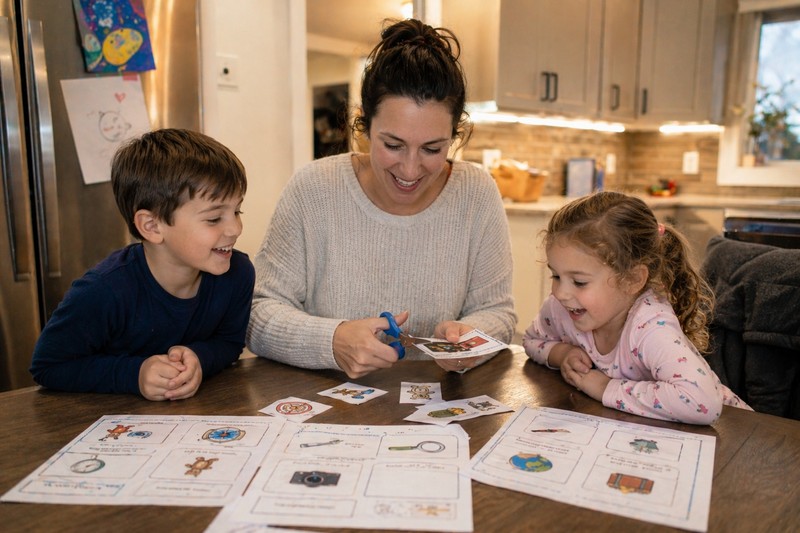
Print-at-home process: laptop showing download page → home printer running → freshly printed clue cards on tray → cut cards laid out on table → hunt r

When you purchase and download a professional printable scavenger hunt, here’s what you’ll receive:

The PDF Files

  • Setup Guide (10–20 pages): Detailed instructions, difficulty recommendations, timing expectations, supplies needed, suggested hiding spots, troubleshooting tips, and variations for different group sizes.
  • Clue Cards (15–25 pages): Color-printed, themed clue cards ready to cut out or print as-is. Often designed with a cohesive visual style matching the narrative.
  • Printable Extras (5–10 pages): Maps, certificates, character cards, role-play instructions, treasure labels, or other props that enhance the experience.

What You Get to Do

When everything is in your hands, you:

  1. Read the setup guide (5–10 minutes). You understand the hunt flow, what age it’s designed for, how long it takes, and what space it needs.
  2. Print the clues (5 minutes). Everything is ready to print. Most hunts are optimized for standard home printers.
  3. Hide the clues (10–15 minutes). Follow the suggested hiding spots or create your own. The guide tells you how many hiding spots you need and the approximate locations.
  4. Gather your group and start (5 minutes to explain rules). Kids immediately begin solving clues and moving through the hunt.

From download to play: under 45 minutes of total prep time.

Common Mistakes When Buying a Printable Hunt

Avoid these pitfalls when choosing:

Mistake 1: Buying Based on Price Alone

A $5 hunt and a $20 hunt are not equivalent. The $5 hunt is likely a generic clue pack. The $20 hunt likely includes story, setup guide, and printable extras. If you use the $20 hunt 2–3 times, it’s cheaper per use than the $5 hunt used once.

Mistake 2: Not Checking the Age Recommendation

A hunt designed for ages 8–12 will bore a 6-year-old and frustrate a 5-year-old. Always verify the age range matches your group. If you have mixed ages (6 and 10), look for hunts that explicitly offer multiple difficulty levels.

Mistake 3: Underestimating Setup Space

An “outdoor hunt” described as “backyard hunt” might need a 5,000+ sq ft space. If you have a small yard or apartment, confirm the space requirement before buying. Many quality hunts offer indoor variations—look for that flexibility.

Mistake 4: Assuming All Printables Are High Quality

Some hunts use low-resolution images, generic clip art, or inconsistent design. Look at preview images. Does it look professional? Are the colors consistent? Is the text readable? These details matter for the user experience.

Mistake 5: Not Considering Reusability

Before buying, check the license. Can you reprint it? Can you use it for multiple children? Can you share with a friend? A hunt with unlimited reprints is worth more than one with single-use restrictions.

Frequently Asked Questions About Printable Scavenger Hunts

1. What is a printable scavenger hunt?

A complete game kit in PDF format. Download it, print at home, use immediately. A quality kit includes a story/narrative, age-calibrated clues, setup guide, and themed printables (maps, certificates, character cards). You’re not getting just clue cards—you’re getting a ready-to-play experience.

2. How much do printable scavenger hunts cost?

Quality kits range from $10–$20. Riddlelicious hunts are $14.99 (children’s hunts) and $19.99 (murder mystery games). The key advantage: unlimited reprints from one purchase. Use it for your child, a second child, a friend’s birthday, a classroom—all from one $15 investment. Compare that to renting entertainment ($50–$200) or hiring a service, and the value is obvious.

3. Where can I buy a printable scavenger hunt?

Dedicated sites like Riddlelicious.com offer complete story-driven kits. Etsy has individual clue card packs if you want to build your own experience. Generic marketplaces (Amazon, creative sites) offer templates.

For the most comprehensive, tested, and well-designed hunts, dedicated sites outperform Etsy sellers because they specialize in narrative flow and age-calibration.

4. How long does it take to set up a printable scavenger hunt?

Setup typically takes 15 minutes. Download, print, hide the clue cards (or objects referenced in clues), and you’re ready. No craft skills required. No additional supplies beyond printer paper and hiding spots around your home.

Some elaborate hunts (especially murder mysteries) take 30–45 minutes because you’re arranging more elements. But the time investment is always minimal compared to designing a hunt from scratch.

5. Can I reuse a printable scavenger hunt?

Yes. Unlimited reprints are a core advantage of printable hunts. Use the same kit for multiple children, different years, or share with friends. One purchase = endless uses. This is why a $15 hunt used three times costs only $5 per use—cheaper than most one-time activities.

Ready to Choose Your Hunt?

Browse All 27+ Printable Scavenger Hunts — Instant Download

From pirates and detectives to unicorns and space explorers. All kits include story, setup guide, and printable extras. Starting at $14.99.

Browse All 27+ Printable Scavenger Hunts →

Parent sitting at a kitchen table printing a scavenger hunt kit on a home printer, one page coming out, relaxed home office feel, soft overhead light, shot on smartphone, natural light, candid moment, soft warm tones, real home setting, not staged

“I’ve bought from three different Etsy sellers and nothing came close to the quality here. The story, the map, the certificates—it felt like a real product, not a bundle of clue cards. My kids talked about this hunt for weeks.”

— Kelly W., verified buyer

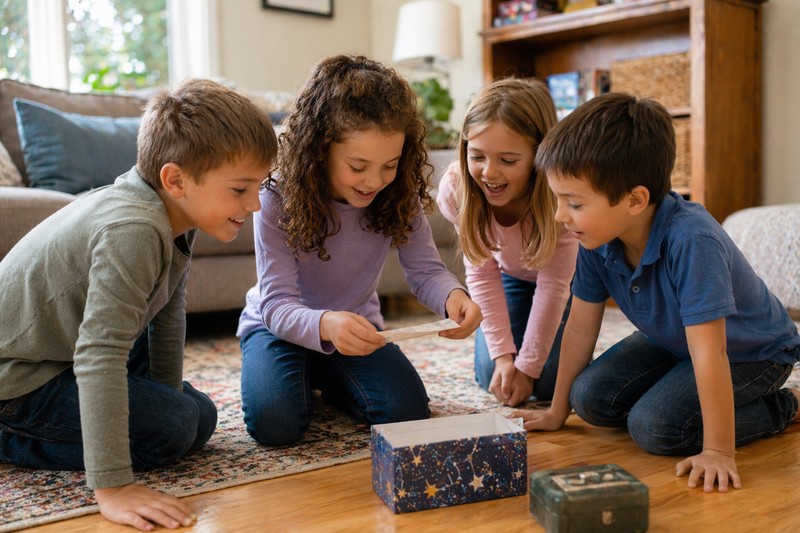
Child age 7 reading a printed clue card at a kitchen table, folded pages in a neat stack beside them, warm morning light, shot on smartphone, natural light, candid moment, soft warm tones, real home setting, not staged

Related Guides on Riddlelicious

Real family using the product: child reading a printed clue card at home, clearly engaged, another child peeking from behind a door waiting to be foun

Start Your Hunt Today

No more spreadsheets, no more guessing. Get a complete, tested, story-driven scavenger hunt ready to print and play in under an hour.

Browse All Printable Hunts (27+ Themes) →