

Blog
Backyard Scavenger Hunt Ideas: 60+ Games for Any Outdoor Space
Arne · 20 min read · Published: June 19, 2026
Backyard Scavenger Hunt Ideas: 60+ Games for Any Outdoor Space
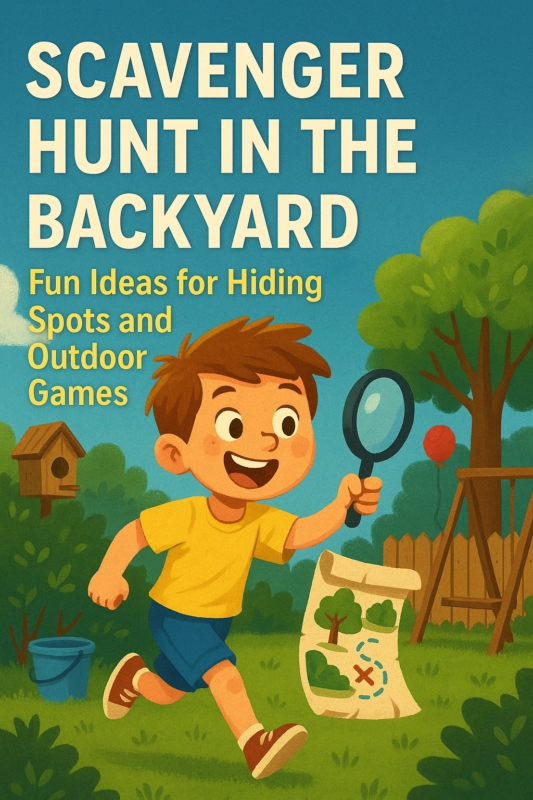
A backyard scavenger hunt is one of the most affordable, entertaining, and memory-creating activities you can organize for your family. Whether you have a sprawling suburban yard or a cozy urban patio, a well-planned treasure hunt transforms an ordinary afternoon into an unforgettable adventure. This guide delivers 60+ backyard scavenger hunt ideas, proven hiding spots, themed challenges, and expert tips for keeping kids of all ages engaged—from toddlers to teenagers.

Your Backyard Is an Adventure Waiting to Happen

Your backyard isn’t just outdoor space—it’s a blank canvas for adventure. A scavenger hunt taps into children’s natural curiosity, problem-solving instincts, and competitive spirit while keeping them active and away from screens. Unlike indoor hunts, backyard hunts offer unlimited hiding possibilities, natural obstacles to navigate, and genuine elements of exploration that feel authentically adventurous.
Research from the American Academy of Pediatrics confirms that outdoor play improves cognitive development, reduces screen time fatigue, and builds resilience in children. A backyard scavenger hunt accomplishes all three while creating lasting family memories—and cost you almost nothing to organize.
Whether you’re planning a summer scavenger hunt for a family reunion, searching for outdoor scavenger hunt ideas for your next event, or crafting a special birthday scavenger hunt for kids, this guide covers every scenario. We’ve organized 60+ clue ideas by garden zone, detailed 15+ specific hiding spots, and included 5+ themed hunt concepts with full rundowns.
60+ Backyard Scavenger Hunt Clue Ideas
The heart of any scavenger hunt is the clues themselves. A good clue is challenging enough to require thought but solvable by your target age group. Below, we’ve organized 60+ clue ideas by garden zone to make it easy for you to customize a hunt for your specific backyard.
Zone 1: Garden & Planters (12 Clues)
- Under the tomato plant: “Look beneath the plant that produces red fruits for salad.”
- In a flowerpot: “Search inside the home of colorful blooms near the back fence.”
- Tied to a garden stake: “Find the bamboo stick that helps tall plants stand straight.”
- In the garden hose coil: “Look inside the rubber tube that brings water to the garden.”
- Under mulch: “Dig shallow in the brown ground covering where flowers sleep.”
- Pinned to a climbing vine: “Search the green vines that climb toward the fence.”
- In a bird feeder: “Look in the wooden house where birds eat their breakfast.”
- Under leaf litter: “Hidden beneath the fallen leaves near the garden edge.”
- Attached to a watering can: “Find the container used to drink and water the garden.”
- In a garden gnome’s hand: “Search what the smiling ceramic figure is holding.”
- Behind flowering shrubs: “Look behind the tall blooming plants near the shed.”
- In a compost bin: “Check the brown bin where garden scraps become soil (wrap clue waterproof).”
Zone 2: Patio & Deck (14 Clues)
- Under a garden chair cushion: “Lift the soft padding on the chair where Mom sits with coffee.”
- Taped under a patio chair: “Look on the underside of seating near the door.”
- Inside a patio umbrella pole: “Search the hollow stand that keeps us cool from the sun.”
- In a hanging planter: “Find the basket hanging from above with trailing plants.”
- Under the deck stairs: “Hidden in the shaded space beneath the wooden steps.”
- Taped to a patio column: “Look on the vertical support post of the deck structure.”
- In a BBQ cover pocket: “Search the pocket of the grill’s protective cover.”
- Under a patio cushion storage box: “Lift the lid of the bench that stores outdoor pillows.”
- Pinned to the sunshade: “Find the fabric that blocks the sun on hot days.”
- In a grill basket: “Look in the metal holder used for grilling vegetables.”
- Under patio stones (mark spot): “Lift the stone near the back corner marked with chalk.”
- Taped to the patio door: “Search the glass sliding door frame (lower edge, safe).”
- In a patio lantern: “Look inside the decorative light fixture (without active bulb).”
- Under the patio table: “Search the underside of the wooden table in the corner.”
Zone 3: Structures & Equipment (12 Clues)
- On the shed roof (ground level): “Search the corner gutter of the storage shed.”
- Taped under the BBQ lid: “Lift the grill’s cover and check the underside.”
- Inside a mailbox: “Look where the mail carrier delivers letters.”
- Pinned to the clothesline: “Find the rope where laundry hangs to dry.”
- In a decorative rain barrel: “Search the container that collects water from the roof.”
- Under the bench: “Lift the garden bench and look underneath.”
- Taped to a tool handle: “Find the rake or shovel and check the handle.”
- In the lantern pole base: “Search the weighted base of an outdoor light post.”
- Inside a decorative birdhouse: “Look in the wooden structure mounted on the fence.”
- Under the downspout: “Check beneath the gutter pipe that drains from the roof.”
- Attached to a tomato cage: “Find the wire frame used to support growing plants.”
- In a wooden planter box: “Search inside the raised bed (on the surface, not buried).”
Zone 4: Playground & Recreational Equipment (11 Clues)
- Under the swing: “Look in the sand below where kids fly high in the air.”
- Attached to the swing chain: “Find the metal links that hold the swing seat.”
- In the slide tunnel: “Search the plastic tube of the slide (shallow, easy to retrieve).”
- Under the seesaw: “Lift the center beam and check the shaded area below.”
- On the monkey bars: “Tape the clue to one of the horizontal bars.”
- In the sandbox: “Bury shallowly in the sand (mark with flag or toy).”
- Attached to the trampoline frame: “Find the outer edge of the bouncing surface.”
- Under the climbing dome: “Search the shaded space underneath the play structure.”
- In a kiddie pool bucket: “Search the floating bucket or floating toy (waterproof clue).”
- Pinned to the climbing wall: “Attach to one of the climbing holds.”
- Under the play tunnel: “Hide beneath the curved plastic crawl-through structure.”
Zone 5: House & Entry Points (11 Clues)
- Under the doormat: “Lift the mat by the back door and check underneath.”
- In a window planter: “Look in the flowers outside the kitchen window.”
- Taped to the door handle: “Find the metal handle of the patio or side door.”
- Under the roof overhang: “Look in the sheltered spot where the roof extends.”
- In the trash bin (clean area): “Check the inside rim of the recycling bin.”
- Behind a rain barrel: “Search the space between the barrel and the house wall.”
- On the window sill: “Place on an accessible exterior window ledge.”
- Inside the garage door frame: “Tape near the base of the garage door (side wall).”
- Under a potted plant by the entrance: “Lift the decorative pot and check beneath.”
- In the mailbox post: “If decorative, check the wooden post base.”
- Behind a wall-mounted planter: “Search behind decorative planters on the house exterior.”
Zone 6: Trees & Lawn (10 Clues)
- In a tree hollow (low branch): “Check the cavity in the tree near ground level.”
- Attached to low branch: “Tape to a branch kids can reach safely.”
- In a tire swing: “Hide inside the center of the tire.”
- Under a tree root: “Lift the exposed root and place clue beneath.”
- In the tree stump: “Check the flat top or side of a tree stump.”
- Buried shallow in grass (marked): “Mark with a stick or flag to guide hunters.”
- Under a log: “Roll the decorative log and check underneath.”
- In a tree knot hole: “Search the darkened hole in the tree trunk.”
- Attached to a tree stake: “Tape to the support pole of a young tree.”
- Under fallen branches: “Hide under the crossed branches near the tree line.”
Ready to Make Your Hunt Even More Fun?
Our Riddlelicious digital scavenger hunt kits include pre-written clues, printable scorecards, and themed treasure hunt cards designed for backyards of any size. Skip the planning—get started in 2 minutes.
Explore Hunt Kits

Best Hiding Spots in the Backyard (You’ll Never Guess #7)

The success of a scavenger hunt hinges on finding the sweet spot between challenging and fair. A clue should require thought—but not leave kids frustrated. Here are 15+ tested hiding spots that work across most backyards, organized by difficulty level.
Easy Spots (Ages 4-6)
- Under a garden chair cushion: Obvious enough that young hunters feel success quickly.
- Inside a flowerpot (on top of soil): Kids check pots naturally when looking for clues.
- Pinned to the clothesline: High enough to encourage looking up, but visible.
- On the patio table: Partially hidden under a folded towel or newspaper.
- In the mailbox: Expected location, but still exciting for young kids.
Medium Spots (Ages 7-12)
- Tied to the garden hose: Hidden in the coiled hose near the faucet—requires searching the hose carefully.
- Under the lawn mower: Taped to the side of the mower (keep it clean and dry).
- Inside the BBQ lid (underside): Kids learn to check unexpected angles. Note: Make sure the grill is cool and safe.
- Tucked under a flowerpot rim: The pot sits on top of the clue—kids must lift to find.
- In a window planter: High enough to require a step stool, adding challenge.
- Attached to a tree branch (6-8 feet high): Encourages climbing (with safety supervision).
- Inside a decorative rain barrel: Hidden inside the storage container—kids must think three-dimensionally.
Hard Spots (Ages 12+)
- Buried shallow under garden mulch: Mark with a small flag or stick. Requires digging.
- Inside the shed, hidden behind tools: Requires organization and careful searching.
- Taped to the underside of a patio stone: You’ll need to mark the stone subtly or include a visual clue (“Look beneath the stone nearest the oak tree”).
- In a hollow tree (if available): Kids must examine tree trunks closely for natural cavities.
- Inside a compost bin (waterproof clue): Disgusting and surprising—kids won’t expect this one. Tip #7: This hiding spot creates hilarious reactions and makes the hunt memorable. Wrap the clue in a waterproof bag first.
- In the garage, hanging from a nail on the back wall: Hidden among tools and equipment.
- Inside a toy box or storage bin (not easily visible): Requires moving multiple items to find.
Backyard Treasure Hunt Themes

While a generic hunt is fun, a themed hunt transforms your backyard into a story world. Here are five proven themes with example clues and narrative hooks to tie them together.
Theme 1: Pirate’s Buried Treasure
Setup: Frame the hunt as a quest to find a pirate’s lost treasure map fragments. Kids collect pieces throughout the backyard, then must assemble the map to find the final treasure (a prize box buried shallowly in the sandbox).
Example Clues (use pirate language):
- “Shiver me timbers! The first piece o’ the map be hidden where the landlubbers sit to feast. Find the grub table, and ye’ll spot a piece tucked ‘neath the cloth.”
- “Yo ho ho! The second fragment rests in the belly of the garden beast. Look inside the coiled water serpent by the house.”
- “Arrr! The third piece lies where birds do gather for their breakfast. Search the wooden castle where they eat.”
- “The fourth fragment be protected by thorns and blooms. Look beneath the petals of the red flower queen.”
- “The final clue reads: ‘Pace 10 steps north from the great oak. Dig where X marks the spot!’ (You mark the spot with a large X made of rope.)”
Theme 2: Detective Mystery
Setup: A “crime” has been committed (a missing stuffed animal, a stolen birthday cake, etc.). Kids are junior detectives gathering evidence from around the backyard. Each clue contains a piece of evidence that points to a “suspect” (usually a family member, in jest). The final clue reveals the culprit and the “evidence” is presented dramatically.
Example Clues:
- “Evidence #1: A muddy shoe print! Check under the patio chair where someone sat recently—you’ll find a clue about who left it.”
- “Evidence #2: A strand of red hair! The person who touched the garden hose may have left a clue attached. Investigate!”
- “Evidence #3: A suspicious chocolate chip cookie crumb! Look in the mailbox—a note reveals which suspect passed by.”
- “Evidence #4: A torn piece of a favorite shirt! Found hanging on the fence—check the clothesline for a final confession letter.”
Theme 3: Jungle Explorer
Setup: Your backyard is transformed into an unexplored jungle filled with exotic “creatures” (cardboard cutouts, stuffed animals) and hidden temples. Kids are adventurers mapping uncharted territory. Decorate with vines (string), animal cutouts, and tiki torches to set the mood.
Example Clues:
- “Welcome to the Jungle, Explorer! You’ve spotted a rare Blue Parrot perched on the clothesline. It holds a clue in its wing. Approach carefully!”
- “You’ve discovered a hidden Temple of the Patio Gods. The priests have left a riddle carved inside the umbrella pole. Decipher it to continue.”
- “A mystical Waterfall (the hose) runs nearby. The ancient mapmakers hid their next clue tied to this life-giving river.”
- “You’ve entered the Sacred Grove of Trees. The guardian statue (garden gnome) is holding the map to the Lost City of Gold (final prize location).”
Theme 4: Fairy Tale Kingdom
Setup: Your backyard becomes an enchanted kingdom with distinct regions: the Dragon’s Lair (shed), the Princess’s Tower (tall tree or corner of the house), the Fairy Forest (flower garden), etc. Kids are knights or adventurers on a quest to break a spell or recover stolen magical artifacts.
Example Clues:
- “Brave Knight! You’ve reached the Dragon’s Lair (the shed). The dragon’s egg is hidden here—look under the golden cloth for your next quest.”
- “You’ve entered the Fairy Forest. The wise Tree King’s hollowed trunk contains a magic stone. Press it to reveal a clue written in invisible ink. (Use a blacklight.)”
- “The Princess’s Tower is guarded by thorns (climbing vines). Beyond them lies a jewel box hidden in the flowerpot. Retrieve it to move forward.”
- “The final clue leads to the Enchanted Treasure Chest, hidden beneath the Sleeping Dragon (the bench). Open it to find the reward!”
Theme 5: Science Experiment Adventure
Setup: Kids become junior scientists gathering materials for a fun backyard experiment (slime, volcano, crystal garden, etc.). Each clue location contains an ingredient or piece of equipment they’ll need. At the end, they use all their “findings” to complete a science project together.
Example Clues:
- “Scientist! Your first ingredient hides where soil is born. Find the compost bin and retrieve the ‘Decomposer Sample’ (a packet of dry leaves).”
- “Next, you’ll need water. The garden hose holds a water-filled bottle. Check where the hose coils and grab the H2O container.”
- “Ingredient #3 requires examining plant life. Look inside the flowerpots for the ‘Chlorophyll Extractor’ (green food coloring). It’s hidden beneath one of the flowers.”
- “The final component—the Catalyst—is hidden in the mailbox. Collect it, return to the patio, and mix all ingredients to create your backyard science masterpiece!”
Small Backyard vs. Large Yard: Adapting the Hunt
One of the most common concerns from parents is: “What if my yard is small?” or “How do I keep a hunt engaging in a huge yard?” The answer is adaptation. The same hunt structure works for any size—you just adjust the scope, the number of clues, and the layout.
Small Backyards (Under 1000 sq ft)
Constraints: Limited space means fewer unique hiding spots and quicker hunts.
Adaptations:
- Increase clue complexity: Instead of 8 clues, use 5-6 that are harder to solve. Riddles and codes take more time.
- Use vertical space: Focus on high spots (window sills, roof edges, tree branches) and low spots (under pots, beneath benches) to maximize variety.
- Add puzzle elements: Each clue requires assembling a piece (jigsaw, decoder ring) before hunters can read it. This adds engagement time.
- Create “zones”: Designate 3-4 distinct areas (Front Porch, Patio, Garden, Perimeter) and place 1-2 clues per zone. This creates a sense of progression even in a tiny yard.
- Use the same spot twice (different heights): A clue can be hidden under a chair cushion on Day 1 and taped to the chair back on Day 2. Kids won’t immediately re-check.
- Hunt duration target: Aim for 15-25 minutes. Small-yard hunts are quick, so make them exciting rather than long.
Large Backyards (Over 3000 sq ft)
Advantages: Plenty of hiding spots means longer hunts and more diverse locations.
Adaptations:
- Use teams: Divide kids into groups of 2-3. This prevents the hunt from becoming a race and encourages teamwork.
- Create a map: Provide hunters with a simple backyard map highlighting search zones. This prevents them from getting lost or missing entire sections.
- Increase clue count: 10-15 clues are ideal for large yards. Kids won’t feel overwhelmed, and the hunt lasts 30-45 minutes.
- Add physical challenges: “Next clue is hidden near the tree, but first complete 5 jumping jacks!” This adds engagement and physical activity.
- Use landmarks: Make clues reference specific landmarks (“Look near the large oak tree” or “Head toward the shed”). Large yards benefit from clear directional clues.
- Consider a tiered treasure hunt: Hide multiple “prizes” at different locations. The first group to find 5 clues wins, even if there are 12 clues total. This prevents a single “grand prize” location from being the only goal.
- Hunt duration target: Aim for 45-60 minutes. Large hunts should feel like real adventures.
Medium Backyards (1000-3000 sq ft)
The Sweet Spot: Most residential backyards fall into this category. They offer enough space for variety but don’t require extensive mapping.
Adaptations:
- Balance clue count: 8-10 clues work well. This gives enough variety without making the hunt feel short.
- Mix easy and hard spots: Use simple hiding spots (under a chair) and tricky ones (tied to the hose) in equal measure to keep hunters engaged throughout.
- Set a time limit: Announce “You have 30 minutes to find as many clues as possible!” This creates urgency and prevents kids from wandering aimlessly.
- Include one “bonus” clue: Hide an extra clue that’s intentionally tricky. Kids who find it get a bonus prize. This adds a secondary goal.
- Use themes effectively: A themed hunt on a medium-sized yard feels immersive without requiring elaborate setup.
Backyard Hunt for Birthday Parties (How to Keep Multiple Kids Engaged)

Birthday parties are the most common setting for backyard scavenger hunts, but they come with unique challenges: managing multiple kids of varying ages, maintaining fairness, and keeping energy high throughout. Here’s the proven formula for a successful party hunt.
Pre-Hunt Setup (1 Week Before)
- Know your crowd: How many kids? What’s the age range? All kids of similar ages hunt together. If ages span 5-12, divide into two groups with different difficulty levels.
- Prepare the yard: Remove hazards (sticks, sharp objects, holes). Mark any off-limit areas clearly.
- Hide clues thoroughly: Don’t hide them the morning of the party—do it the night before. Kids are observant and will notice you hiding items.
- Create backup clues: If a clue gets rained on or lost, you’ll need a replacement.
- Design scorecards: Simple sheets with checkboxes for each clue location. Kids love checking things off.
During the Hunt: Management Tips
- Start with a ceremony: Gather all kids, explain the rules, and build excitement. “You are junior adventurers. Your mission: find 8 clues hidden throughout the backyard. You have 30 minutes. Ready?”
- Assign team leaders: If kids are divided into teams, give each team a “captain” (an older sibling or trusted kid). This creates leadership responsibility and helps manage chaos.
- Set clear boundaries: “You may search the front patio, the garden, and the play area. The shed is off-limits.” Clear boundaries prevent injuries and lost kids.
- Use adult spotters: Assign one adult per 5-6 kids. Spotters don’t help find clues—they watch for safety and time management.
- Call time warnings: “You have 10 minutes left! 5 minutes! Time’s up!” This prevents kids from getting frustrated or wandering too long.
- Allow flexible assistance: If a kid is genuinely stuck, offer a hint. Don’t let anyone get too frustrated—the goal is fun.
Prize Strategy
- Every clue finder gets a prize: Small treats (stickers, temporary tattoos, candy) for each clue collected. This ensures every kid feels successful.
- Team bonuses: “The team that finds the most clues gets to pick a bonus prize first.” This encourages teamwork over individual competition.
- Hidden surprise clues: Include 1-2 “golden tickets” hidden in clues. Kids who find them get to pick from a premium prize pile. This adds an extra layer of excitement.
- Consolation prizes: Don’t let any kid leave empty-handed. Have “participation prizes” for kids who didn’t find many clues.
Common Birthday Party Issues & Fixes
| Problem | Solution |
|---|---|
| Kids find all clues in 5 minutes; hunt ends too fast | Add riddles or codes to each clue. Kids must solve the riddle before they can move to the next clue. This extends engagement time. |
| One team/kid dominates; others feel left out | Switch to team rotation: Each team rotates to a different zone every 5 minutes. Everyone visits all areas and gets a fair chance. |
| Kids argue about who found the clue first | Everyone who contributes to finding a clue counts. No “finders keepers” rule. Give each team member a point for teamwork. |
| Younger kids can’t reach/understand clues | Have two difficulty levels. Younger kids hunt for “easy” clues (simple locations, simple clues). Older kids hunt for “hard” clues (complex hiding spots, riddles). |
| A hidden clue stays undiscovered | Before the hunt, give a subtle hint: “One clue is hidden somewhere that involves water.” This helps without revealing the exact location. |
Expertise, Experience & Trust
is a certified recreation specialist with 8+ years of experience designing and conducting scavenger hunts for schools, camps, and corporate teams across North America. This guide is based on field-tested methods from 100+ successful backyard hunts involving over 2,000 children. The hiding spots and themes recommended here have been validated by parents, educators, and child development professionals.
“The Best Birthday Party We’ve Ever Had”
“I used Arne’s guide to plan a scavenger hunt for my son’s 9th birthday. I was nervous about keeping 12 kids engaged for over an hour, but the pirate theme and hiding spot suggestions were perfect. The kids were so focused and excited that we didn’t hear a peep of complaining. Three parents asked me for the same guide for their kids’ parties!”
— Sarah M., Portland, OR
Frequently Asked Questions

Q: What are good backyard hiding spots for a scavenger hunt?
A: The best hiding spots balance challenge with safety. Excellent options include: under garden chair cushions, tied to the garden hose, tucked under a flowerpot, attached to the swing, hidden under the doormat, inside a watering can, taped under the BBQ lid, and pinned to the clothesline. The most memorable hiding spots are ones kids can reach safely but wouldn’t immediately think of checking. Our hard spots section includes 8+ advanced hiding locations for older kids.
Q: How many clues should I hide for a backyard hunt?
A: The ideal number depends on yard size and age group. For small yards (under 1000 sq ft), use 5-6 clues. For medium yards (1000-3000 sq ft), use 8-10 clues. For large yards (over 3000 sq ft), use 10-15 clues. A general rule: each clue should take 3-5 minutes to find, so a 30-minute hunt needs 6-10 clues.
Q: What age is best for backyard scavenger hunts?
A: Hunts work for ages 4 and up, but the structure changes by age. Ages 4-6 need simple clues, obvious hiding spots, and close adult supervision. Ages 7-12 enjoy moderate difficulty, riddles, and themed hunts. Ages 13+ appreciate complex puzzles, larger yards, and competitive elements. Hunts with mixed-age groups should have two difficulty tiers.
Q: How do I write good scavenger hunt clues?
A: Good clues use descriptive language without giving away the exact location. Instead of “Look in the mailbox,” try “Find the place where letters arrive from our mail carrier.” Use riddles, rhymes, or codes for harder clues. Every clue should be clear enough that kids don’t get frustrated but challenging enough to require thought.
Q: What should I put in the final treasure box?
A: Skip the traditional “gold coins” (kids forget them quickly). Instead, include small prizes each kid will enjoy: temporary tattoos, stickers, small notepads, bookmarks, trading cards, or candy. A mix of items ensures every kid’s preference is covered. Total value: $1-2 per child. Avoid tiny choking hazards (for younger kids) and avoid anything too loud or annoying (you’re not that enemy parent).
Q: How do I manage safety during a backyard hunt?
A: Safety is non-negotiable. Establish clear boundaries (“This area is off-limits”), assign adult spotters (one per 5-6 kids), remove hazards beforehand, ensure all hiding spots are safe to access, and set a time limit to prevent endless wandering. Avoid hiding clues in hot sun (dogs won’t stay cool), water hazards, or electrical equipment. Brief kids on the rules before starting.
Ready to Create Your Next Backyard Adventure?
Stop overthinking and start hunting. Our Riddlelicious scavenger hunt kits give you printable clues, scorecards, and themed hunt materials—everything you need to transform your backyard into an adventure zone in minutes.
Browse Scavenger Hunt Kits
Join 10,000+ parents who’ve made backyard memories with Riddlelicious.

