
Blog
Outdoor Scavenger Hunt Ideas: 80+ Adventures for Kids & Families

Outdoor Scavenger Hunt Ideas: 80+ Adventures for Kids & Families
Arne · 15 min read · Published: May 22, 2026
When was the last time you saw your kids truly unplugged, running around outside without screens or devices? Outdoor scavenger hunt ideas are one of the most effective ways to get families outside, moving, exploring, and having genuine fun together. Unlike indoor activities that rely on a single room or yard setup, outdoor hunts take advantage of nature itself—turning parks, forests, beaches, and neighborhoods into treasure maps waiting to be discovered.
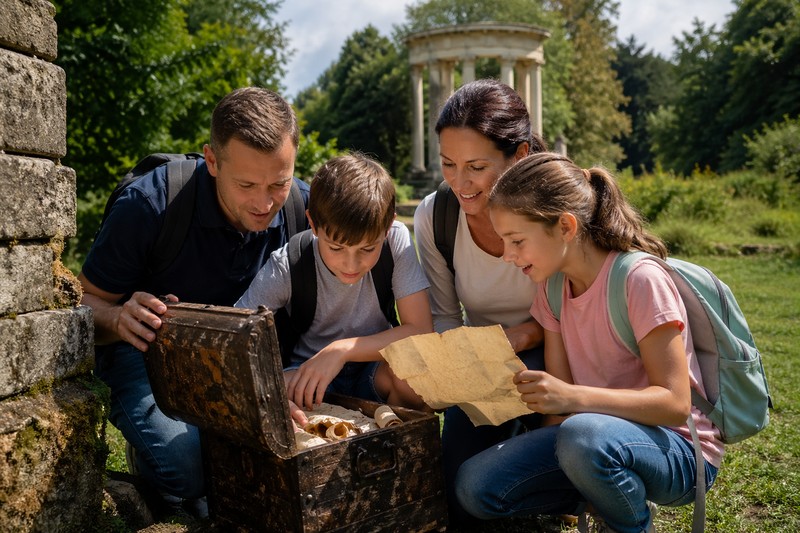
Whether you’re planning a birthday party, family reunion, school field trip, or just a Saturday adventure, this guide covers 80+ real, tested outdoor scavenger hunt ideas. We’ve organized them by setting (backyard, park, forest, beach, neighborhood) so you can pick what works best for your family, age group, and environment.
Why Outdoor Scavenger Hunts Are Better Than Any Screen
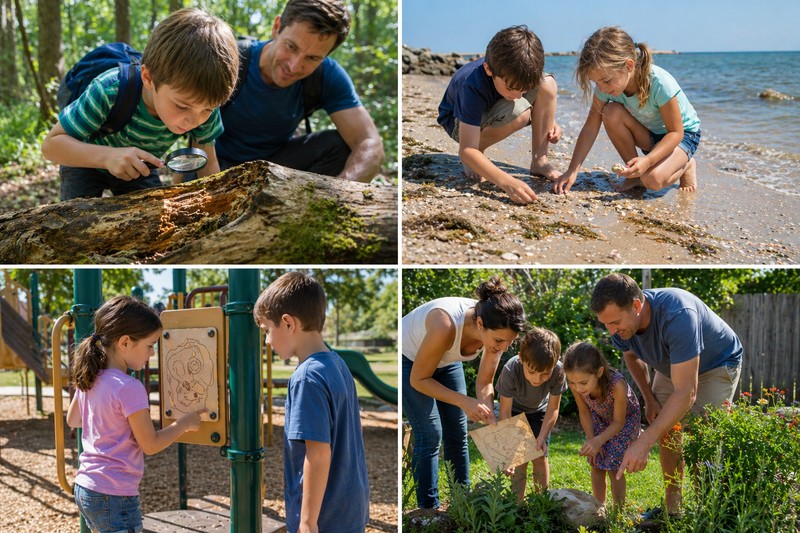
There’s solid research behind why outdoor scavenger hunts work so well with kids:
- Physical activity without feeling forced: Kids are too engaged finding items to realize they’re exercising. A typical outdoor hunt easily covers 1-2 miles of walking or running without complaint.
- Real nature connection: Instead of learning about ecosystems in a classroom, kids are handling leaves, rocks, and flowers—engaging their senses and building genuine curiosity about the natural world.
- Problem-solving and independence: When a clue says “find something with exactly 5 petals,” kids aren’t asking for the answer—they’re exploring, testing hypotheses, and feeling proud when they solve it themselves.
- Social bonding: Hunts naturally create teamwork. Kids collaborate, celebrate discoveries together, and create shared memories that last far longer than screen time.
- No batteries, no setup nightmares: Once you print the list or write the clues, you’re done. No apps to crash, no WiFi needed, no tangled wires.
The beauty of an outdoor scavenger hunt is that it works for almost any age—toddlers through teenagers enjoy them, just with different difficulty levels.
80+ Outdoor Scavenger Hunt Ideas (Forest, Beach, Park, Backyard)
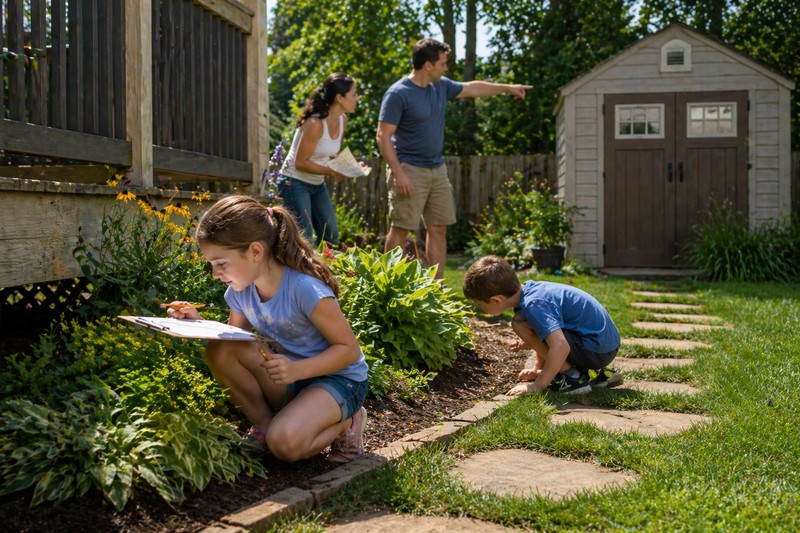
Backyard Outdoor Scavenger Hunt: 30+ Garden Hiding Spots and Items
Your backyard is a goldmine for scavenger hunts. Here are 30+ real items and spots your kids can find:
- Something red (flower, leaf, bug, toy)
- A heart-shaped rock or stone
- A feather (bird feather, not pillow fuzz)
- An acorn or pinecone
- A flower with exactly 5 petals
- Something with spots (ladybug, spotted leaf, stone with marks)
- A smooth rock (no rough edges)
- A leaf bigger than your hand
- A weed (kids love finding “bad” plants)
- A spider web (without the spider, obviously)
- Moss or lichen growing on something
- A dandelion (yellow flower or white puffball stage)
- Animal poop (sounds gross, but kids find it hilarious)
- A stick shaped like a Y
- Something that makes noise when shaken (seed pod, acorn in shell)
- A piece of bark that has fallen naturally
- An insect (ant, grasshopper, butterfly—observe and release)
- A flower that’s NOT common (something unique in your yard)
- A stick thicker than your thumb
- A leaf with holes in it (eaten by insects)
- Something orange or yellow
- A rock that looks like an animal or face
- A plant growing in an unusual spot (between pavers, on a tree trunk)
- Something soft to touch (soft leaf, moss, rabbit fur if you find any)
- A nut (walnut, hazelnut, chestnut)
- Something blue or purple (flower, bruised leaf, even a piece of trash if nature-safe)
- A stick that’s perfectly straight
- A seed or seed pod
- Something that’s symmetrical (butterfly wing, leaf shape)
- Evidence of an animal living in your yard (footprints, burrow, chewed leaves)
Park and Nature Scavenger Hunt Ideas
Parks offer more space, more plants, and more adventure than backyards. Here are 25+ park-specific ideas:
- A bench with a plaque or dedication
- A dog being walked (bonus: pet it if the owner agrees)
- A bird (any species—point and identify)
- A squirrel or chipmunk
- A playground piece you haven’t used in over a year
- A trash can (seems easy, but encourages park awareness)
- A path that’s completely shaded
- A spot with the best view of the whole park
- A tree wide enough that 3 people can hug it together
- A pond, stream, or water feature
- A flower bed or planted area
- A trail marker or sign
- A soccer field, basketball court, or sports area
- Shade under a tree (lay down and look up)
- Something made of wood
- A rock larger than a football
- A game or sport being played (you just watch)
- A family with kids younger than yours
- An oak, maple, birch, or pine tree (learn to identify trees)
- A picnic table
- A hill you can run down
- A place where kids are playing that looks fun
- A fence or gate
- A sign with rules on it
- A place to sit with a nice view
Forest and Trail Scavenger Hunt
Forest hunts are the most immersive. Kids get genuinely lost in exploration. Here are 20+ forest-specific items:
- Bark that peels off in strips (birch trees are perfect)
- A mushroom or toadstool (don’t touch with bare hands)
- A fallen log with something living in or on it
- A tree with a hole in it (woodpecker hole or hollow)
- Three different types of leaves from the same tree
- Moss covering more than half a rock or log
- A bird’s nest (unoccupied, obviously)
- A trail fork where you have to choose left or right
- A stream or creek to cross
- A spot where the forest is so dense it feels dark
- A clearing or sunny spot in the middle of dense trees
- Evidence of a large animal (deer tracks, scat, rubbed bark)
- A tree that’s been struck by lightning (usually has a scar)
- Ants working (anthill or trail)
- Something that smells interesting (pine needles when crushed, flowers)
- Dead wood that’s rotting (soft and crumbly)
- A plant growing on a tree (ivy, lichen, moss)
- A view of the sky through the tree canopy
- Berries or edible-looking fruit (identify before eating—safety first)
- An animal burrow or nest (empty, for observation only)
Beach and Lake Hunt Ideas
Beach hunts are magical—the ocean and shore offer endless natural treasures. Here are 15+ beach-specific ideas:
- A seashell (any type, any size)
- Sea glass or beach glass (frosted, any color)
- A smooth stone shaped by water
- Seaweed or kelp washed ashore
- Sand dollars or similar flat shells
- A rock with holes in it (made by boring creatures)
- Evidence of a tide pool (rocks covering small pools of water)
- A feather on the beach (gull, tern, cormorant)
- Something made of plastic (collect and dispose responsibly—beach cleanup hunt!)
- A crab or crustacean (observe under a rock)
- Wet sand versus dry sand (touch both, feel the difference)
- A pattern or design made by waves in the sand
- A rock that skips (flat and round)
- Something sharp (sea urchin spine, broken shell—careful!)
- A spot where fresh water meets salt water (mouth of a river or stream)
Neighborhood Scavenger Hunt (Photo Hunt Version)
Great for older kids (8+) who can be trusted to explore the neighborhood. This works best with a phone camera to prove what they found:
- A red mailbox
- A house with white columns
- A stop sign
- A dog (pose with it for photo)
- A cat (same—proof of sighting)
- A business with a funny name
- A fire hydrant
- A bench on a street corner
- A mural or street art
- A street sign with an unusual name
- A tree growing through pavement
- A store with your last name (Smith’s, Johnson’s, etc.)
- Someone gardening (get permission for photo)
- A house with a unique color
- A pathway or walking trail
- A building made of brick (vs. wood or vinyl)
- Graffiti (note: not the tagging kind—looking for street art)
- A fountain or water feature (public)
- A bus stop
- Someone doing yard work
Ready-Made Outdoor Hunt Kits
Forest and Pirate treasure hunts designed for outdoor adventures — print and run in any park, backyard, or trail.
⚡ Instant Download · 🖨️ Print at Home · ⭐ 4.8/5 from 323+ Reviews
Browse Outdoor Hunt Kits →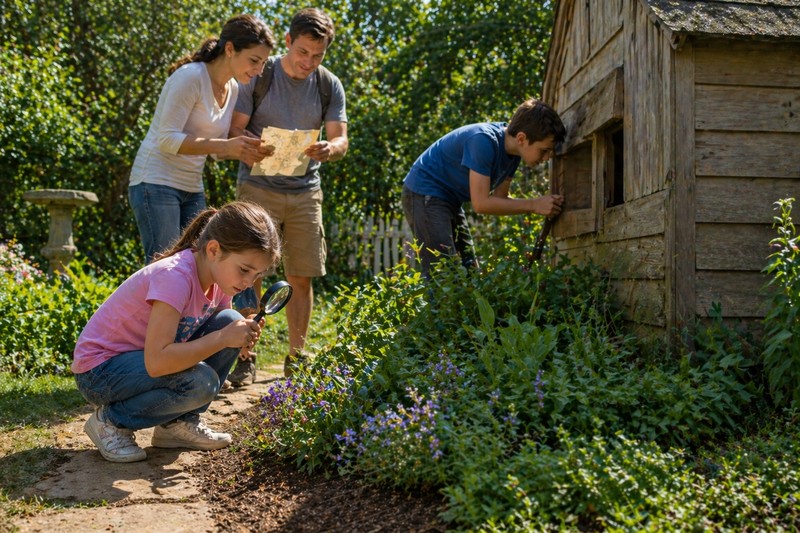
Setting Up an Outdoor Hunt in 20 Minutes
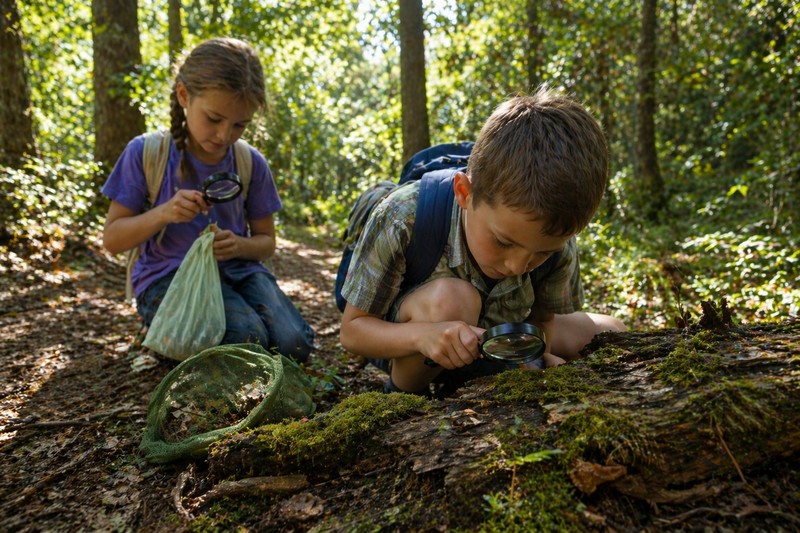
Step 1: Choose Your Location (2 minutes)
Pick a backyard, park, or nature area you know reasonably well. You don’t need to be a nature expert—kids find plenty even with minimal knowledge.
Step 2: Decide Your Format (2 minutes)
You have three main options:
- Find-and-collect: Kids gather items in a bag or basket (works best for backyard/park)
- Spot-and-point: Kids find things and point them out; adults verify (good for large groups)
- Photo hunt: Kids take photos on a phone or camera as proof (fun for older kids, creates memories)
Step 3: Create Your List (10 minutes)
Write 15-25 items based on what’s actually in your location. Use this formula:
- 60% items that are abundant (leaves, rocks, sticks, flowers)
- 30% items that are findable but require searching (specific colors, shapes)
- 10% items that are rare or require exploration (animal evidence, unusual plants)
Pro tip: Include at least one collaborative task like “all team members in a photo together by the biggest tree” to encourage teamwork.
Step 4: Set a Time Limit (2 minutes)
For backyard hunts: 20-30 minutes. For park hunts: 45-60 minutes. For forest hunts: 60-90 minutes. Time pressure creates excitement without stress.
Step 5: Explain the Rules (2-3 minutes)
Keep it simple:
- Stay together as a team
- Don’t pick endangered plants (just point)
- Return all items to a central spot at the end (leaves to compost, rocks to where you found them)
- If you’re not sure it’s okay to touch it, ask first
Step 6: Hunt! (Remaining time)
Let them run. Your job is to follow, answer questions, and make sure everyone’s safe. This isn’t a test—it’s an adventure.
Step 7: Celebration (5 minutes)
When time is up, gather and let each team or individual show off what they found. Ask questions: “How did you know where to look for that feather?” or “What was the hardest thing to find?” This reflection deepens the experience.
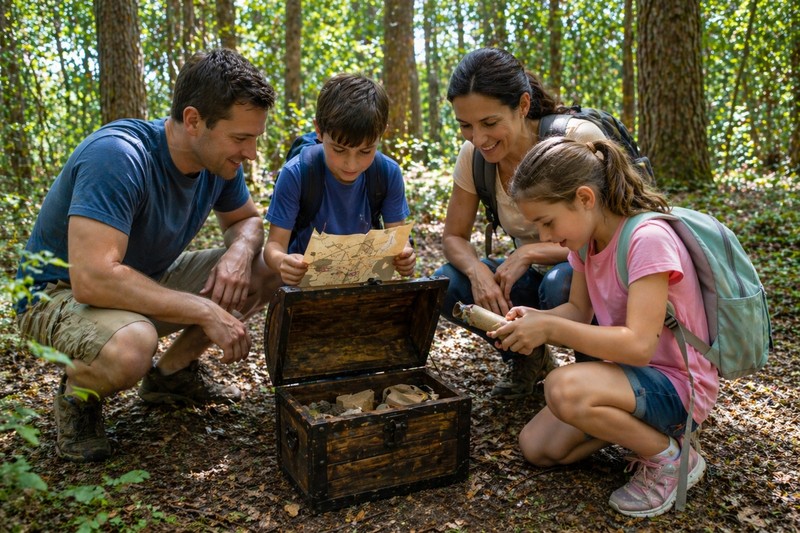
“We used the Forest Treasure Hunt kit at our local state park on a Saturday, and I honestly couldn’t get my kids to leave. Two hours later, they were still looking for clues under logs and pointing out birds. Best screen-free afternoon we’ve had in months. Can’t wait to try the Pirate Hunt at the beach next summer.”
Frequently Asked Questions
What are good items for an outdoor scavenger hunt?
Nature items work best: something red, a heart-shaped rock, a feather, an acorn, a flower with 5 petals, something with spots. Mix in location-based tasks too: follow a trail to the big tree, find where the shadows are longest, look under the biggest leaf. The best hunts combine finding items with clue-based location hunting.
What age can kids do outdoor scavenger hunts?
Toddlers (2-3) can do simple hunts with 3-5 items in your backyard with adult help. Preschoolers (4-5) can handle 10-15 items and understand simple clues. Kids 6-8 can do complex hunts with 20+ items and written clues. Tweens (9-12) enjoy hunts that include math clues, map reading, or photography challenges. Teens enjoy competitiveness—make it a timed race or add points.
How long should an outdoor scavenger hunt take?
Backyard: 20-30 minutes. Small park: 30-45 minutes. Large park or forest trail: 60-90 minutes. Beach hunt: 45-60 minutes. The goal is long enough to feel like an adventure but short enough that attention spans don’t break. Time pressure (starting with 60 minutes, for example) creates urgency and excitement.
Can you do outdoor scavenger hunts in winter?
Absolutely! Winter offers unique items: icicles, snow patterns, evergreen cones, bare branches shaped interestingly, animal tracks in snow, frost patterns on leaves. Winter hunts might include “find 3 things that are white,” “find icicles hanging from something,” or “find a place where you can see animal tracks.” Kids actually love winter hunts because the items feel more special.
What if you can’t find all the items on the list?
That’s fine! The fun is in the searching, not the finding. We typically expect kids to find 70-80% of items depending on the season and location. If something genuinely isn’t in the area (like “find a crab” if you’re in a landlocked park), give an alternative. Some of the best hunts have items like “find something you’ve never seen before” that forces exploration.
Is it safe to let kids collect things outdoors?
Yes, with guidelines. Avoid anything poisonous (poison ivy, hemlock, certain mushrooms), endangered plants (orchids, lady’s slippers), or thorny plants. Leaves, flowers, rocks, sticks, and shells are all safe. Have kids wash hands afterward. If you’re unsure about what’s safe to touch in your area, Google it first or ask at a local nature center.
What’s the difference between a scavenger hunt and a treasure hunt?
Scavenger hunts ask you to find multiple items from a list. Treasure hunts have you follow clues that lead to a single prize. You can combine both: use a scavenger hunt to find clues, which then lead to a prize at the end.
Can you do outdoor scavenger hunts with large groups?
Yes! Check out our guide on scavenger hunt for large groups. For outdoor hunts specifically, divide into teams of 3-5, give each team the same list, and make it a race. You can also use a photo-hunt format where teams take pictures instead of collecting items—avoids the “which team claimed this rock first” disputes.
Popular Outdoor Hunt Themes
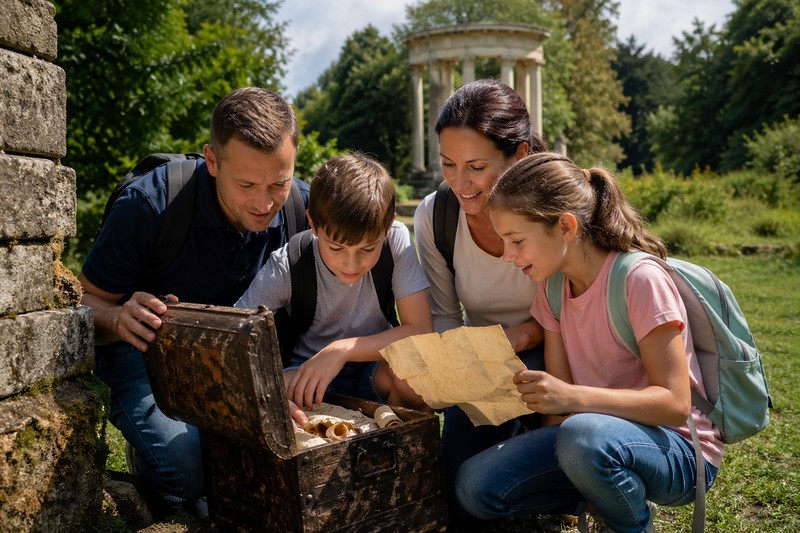
Backyard Scavenger Hunt Ideas (Beginner)
Start simple. If you’re doing a backyard scavenger hunt ideas, focus on items within 50 feet of your house. Great for young kids or first-time hunts.
Summer Scavenger Hunt for Kids
A summer scavenger hunt for kids can be even more ambitious—longer lists, bigger areas, water element (sprinklers, kiddie pool). Summer is prime scavenger hunt season.
Outdoor Scavenger Hunt for Kids (General)
If you want an all-around guide, our page on scavenger hunt for kids covers indoor and outdoor variations with age-specific tips.
Creating Your Own Outdoor Hunt (Advanced Tips)
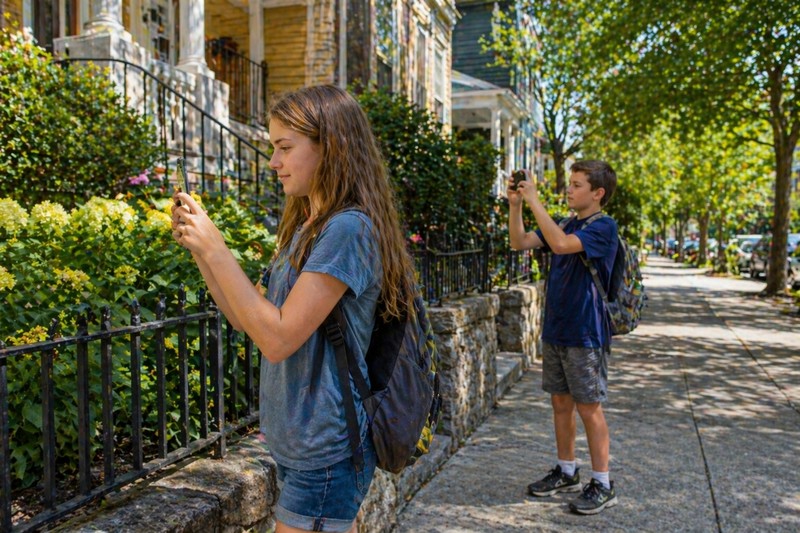
Once you’ve done a few pre-made hunts, here’s how to create your own:
Scout the Location First
Walk through the area you’re planning to use. Make a mental note of what’s there: trees, flowers, insects, water, rocks, interesting structures. This is where you’ll pull your list from.
Write With Diversity in Mind
Include visual items (find something blue), tactile items (find something smooth), auditory items (find something that rustles), and kinesthetic items (run to that tree and back). This keeps it interesting for different learning styles.
Include Challenges, Not Just Items
Mix straight finds with tasks: “Find a stick and make the biggest Y-shape you can,” “Find three rocks and arrange them from smallest to biggest,” “Balance a leaf on your nose,” “See who can jump the farthest on one foot.” This turns it from a list into a game.
Consider the Season
Spring hunts emphasize blooming flowers and baby animals. Summer hunts can include insects and water. Fall hunts celebrate changing leaves and seeds. Winter hunts focus on evergreens, animal tracks, and structure of bare branches.
Add a Prize or Finale
You don’t need much—even a small prize at the end boosts excitement. Or plan a picnic after the hunt, or an ice cream stop. Something to look forward to makes the hunt feel more special.
Take the Adventure Outside
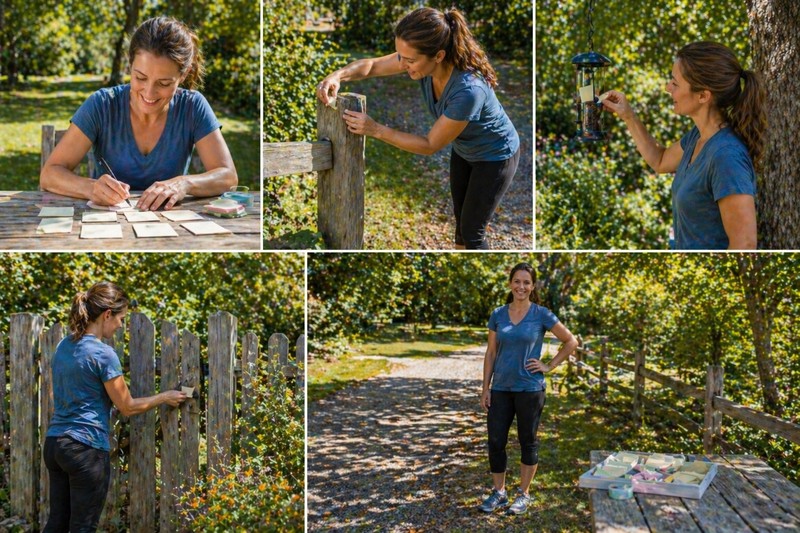
Ready-made outdoor hunt kits — designed for parks, forests, and backyards. Download instantly, print at home, and get kids outside today.
Forest Treasure Hunt → Pirate Treasure Hunt → Browse All Kits →Starting at $14.99 · Instant download · Print at home · Unlimited reprints