Blog
Riddles for Kids: 60 Best + 12 Themed Collections (Free Printable Pack)
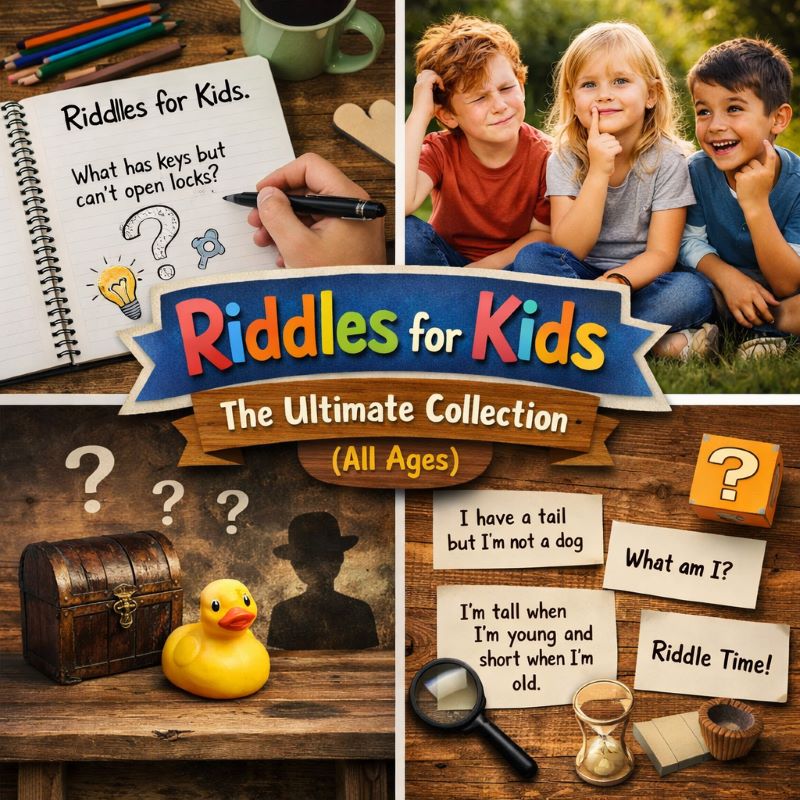
Riddles are one of the oldest and most effective ways to stimulate children’s thinking – and they’re wildly fun too. A good riddle makes kids laugh, think, and feel clever when they crack it. This collection covers riddles for kids of all ages: easy ones for 3-year-olds, tricky brain-benders for 10-12-year-olds, themed riddles, and everything in between.
Riddles by Age |
What Am I? Riddles |
Themed Riddles |
Rhyming Riddles |
Brain Teasers |
Tips for Using Riddles
📥 Download the Free Ultimate Riddle Pack PDF (60 Riddles, Ages 3-12) →
Riddles for Kids by Age Group
What Are Riddles for Kids?
Riddles for kids are fun brain teasers that challenge children to think creatively and solve puzzles using wordplay, logic, and lateral thinking. They come in many forms: “What am I?” riddles, rhyming riddles, math riddles, and trick questions. Riddles boost critical thinking, vocabulary, and problem-solving skills while keeping kids entertained.
Last updated: May 2026 | Reading time: 15 min | 60 sample riddles, 12 themed collections, FAQ & free printable Ultimate Riddle Pack PDF
These riddles have been carefully crafted and tested with children across different age groups to ensure they are both challenging and age-appropriate. Each riddle is designed to boost critical thinking skills.
The right riddle for the right age makes all the difference. Too easy and kids are bored; too hard and they’re frustrated. Here’s how to match riddles to developmental stages:
Riddles for Ages 3-5 (Toddlers & Preschoolers)
At this age, kids are just starting to understand humor and wordplay. The best riddles are very short, have obvious (or very simple) answers, and often involve animals or everyday objects they know well.
Example: “I’m fluffy and white, I live on a farm, I say ‘baa’. What am I?” (A sheep)
Tips: Ask the riddle slowly, give generous hints, celebrate enthusiastically when they guess right (even if they needed hints!). The goal is to build confidence and love of wordplay, not to stump them.
Riddles for Ages 6-8 (Early School Age)
Children at this stage can handle two-step riddles, simple wordplay, and riddles with a small “trick.” They love the satisfaction of figuring it out independently. Group riddle sessions work brilliantly – kids love competing to answer first.
Example: “What has hands but can’t clap?” (A clock)
Riddles for Ages 9-12 (Tweens)
older kids and tweens want real challenges – riddles that require lateral thinking, multi-step logic, or unexpected perspective shifts. They appreciate clever wordplay and riddles that genuinely require thinking, not just guessing.
Example: “I speak without a mouth and hear without ears. I have no body, but I come alive with wind. What am I?” (An echo)
60 Best Riddles for Kids (Sample From Every Category)
Want riddles immediately, without clicking through? Here are 60 hand-picked riddles across six categories — 10 each. Read aloud, give clues, celebrate every solve.
Easy Riddles for Kids (Ages 3-6)
- “I’m fluffy and white, I live on a farm, I say ‘baa.’ What am I?” A sheep
- “I have a face but no eyes, hands but no fingers. What am I?” A clock
- “I have leaves but I’m not a book. I have a trunk but I’m not a car. What am I?” A tree
- “I’m round and bouncy, you can kick or throw me. What am I?” A ball
- “I melt fast on a hot day, sweet and cold I make you smile. What am I?” Ice cream
- “I bark, I wag, I chase the cat. What am I?” A dog
- “I have a long trunk, I’m gray and huge, I love peanuts. What am I?” An elephant
- “I’m yellow, I shine, I keep you warm in the day. What am I?” The sun
- “You blow me up, I float away, I pop with a bang. What am I?” A balloon
- “I’m green, I hop, I say ‘ribbit.’ What am I?” A frog
Funny Riddles for Kids
- “What kind of room has no doors and no windows?” A mushroom
- “Why did the cookie go to the doctor?” Because he felt crummy
- “What has many keys but can’t open a single door?” A piano
- “What gets bigger the more you take away from it?” A hole
- “What’s full of holes but still holds water?” A sponge
- “Why don’t scientists trust atoms?” Because they make up everything
- “What runs but never walks?” Water (or a nose)
- “What has a head and a tail but no body?” A coin
- “What can you catch but never throw?” A cold
- “What goes up but never comes down?” Your age
“What Am I?” Riddles (Ages 6-10)
- “I have keys but no locks. I have space but no room. You can enter but you can’t go inside. What am I?” A keyboard
- “I’m not alive, but I grow; I have no lungs, but I need air. What am I?” Fire
- “I speak without a mouth and hear without ears. I have nobody, but I come alive with wind. What am I?” An echo
- “I have cities, but no houses; mountains, but no trees; rivers, but no water. What am I?” A map
- “The more you take, the more you leave behind. What am I?” Footsteps
- “I have a face and two hands, but no arms or legs. What am I?” A clock
- “I have to be broken before you can use me. What am I?” An egg
- “I get wetter as I dry. What am I?” A towel
- “I’m light as a feather, yet the strongest person can’t hold me for 5 minutes. What am I?” Breath
- “I have branches, but no fruit, trunk, or leaves. What am I?” A bank
Math Riddles for Kids
- “I’m an odd number. Take away a letter and I become even. What number am I?” Seven (remove ‘s’)
- “If two’s company and three’s a crowd, what are four and five?” Nine
- “I am a 3-digit number. My tens digit is 5 more than my ones digit. My hundreds digit is 8 less than my tens digit. What number am I?” 194
- “What can you put between 7 and 8 to make the result greater than 7 but less than 8?” A decimal point (7.8)
- “How can you add eight 8s to get the number 1,000?” 888 + 88 + 8 + 8 + 8 = 1,000
- “If you multiply this number by any other number, the answer will always be the same. What is it?” Zero
- “There are 4 apples in a basket. You take away 3. How many do you have?” Three (the ones you took)
- “I am a number. When you add 5 to me, you get 21. What number am I?” Sixteen
- “How many sides does a circle have?” Two — the inside and the outside!
- “Two fathers and two sons sat down to eat eggs for breakfast. They ate exactly three eggs each having one. How is that possible?” Grandfather, father, son (3 people)
Lateral Thinking & Hard Riddles (Ages 9-12)
- “A man rode into town on Friday, stayed three days, and rode out on Friday. How?” His horse was named Friday
- “You see a boat filled with people. It has not sunk, but when you look again you don’t see a single person on the boat. Why?” All the people are married
- “A girl fell off a 30-foot ladder. She wasn’t hurt. Why?” She fell off the bottom rung
- “What word in the English language is always spelled incorrectly?” “Incorrectly”
- “What can travel around the world while staying in a corner?” A stamp
- “What is so fragile that saying its name breaks it?” Silence
- “I’m tall when I’m young, and I’m short when I’m old. What am I?” A candle
- “Forwards I’m heavy, backwards I’m not. What am I?” The word “ton”
- “What has 13 hearts but no other organs?” A deck of cards
- “You measure my life in hours and I serve you by expiring. What am I?” A candle
Quick Brain Teasers (Mixed Ages)
- “How many months have 28 days?” All 12
- “What 5-letter word becomes shorter when you add two letters to it?” “Short” → “Shorter”
- “A doctor gives you 3 pills, telling you to take one every 30 minutes. How long do the pills last?” 1 hour
- “What disappears as soon as you say its name?” Silence
- “Three doctors said Robert is their brother. Robert says he has no brothers. Who is lying?” No one — the doctors are his sisters
- “What word looks the same upside-down and backwards?” SWIMS
- “What can you hold without ever touching?” A conversation
- “What has 88 keys but cannot open a single lock?” A piano
- “A man builds a house with four sides, each facing south. A bear walks by. What color is the bear?” White (it is at the North Pole)
- “What has one head, one foot, and four legs?” A bed
What Am I? Riddles for Kids
“What Am I?” riddles are the most beloved format for children. The riddle describes something in mysterious terms and the child has to figure out what it is. They work at every age because you can scale the complexity up or down easily.
What makes a great “What Am I?” riddle:
- 3-5 descriptive clues, getting more specific with each line
- An answer that kids know and love (animals, food, weather, everyday objects)
- One playful or unexpected clue that makes the answer surprising
- An ending that makes kids think “of course!” when they hear the answer
We have a huge collection sorted by age:
- What Am I? Riddles for Ages 4-6 – Easy, fun, animal riddles for kids for little ones
- Riddles for 5 Year Olds – 25 simple and fun riddles perfect for preschoolers
- Tricky What Am I? Riddles for Ages 7-9 – More complex objects, nature, and wordplay
- Challenging What Am I? Riddles for Ages 10-12 – Abstract concepts, lateral thinking
- 100 What Am I? Riddles with Answers – The complete mega-collection
Themed Riddles for Kids
Themed riddles are perfect for incorporating into parties, school lessons, or scavenger hunts. Match the theme to your activity and kids are instantly more engaged.
Animal Riddles for Kids
Animals are the most requested riddle topic — from easy farm animal riddles for ages 4–7 to challenging wild creature brain teasers for older kids. Perfect for nature-themed parties, classroom science units, and outdoor scavenger hunts.
See 50+ Animal Riddles for Kids (Easy to Hard) →
Mermaid & Ocean Riddles
Perfect for mermaid parties, beach days, or ocean-themed units. Think sea creatures, waves, treasure chests, and underwater worlds.
Ninja Riddles
Action-packed riddles about stealth, speed, and ninja skills. Kids who love ninjas, martial arts, or spy themes go wild for these.
Riddles for Scavenger Hunts
Riddles make perfect scavenger hunt clues – each one leads to the next hiding spot. Our collection includes classic location riddles (“I’m always running but never move, you come to me when you’re thirsty – what am I?” → the tap) that work perfectly as hunt clues.
Scavenger Hunt Quiz Questions →
Indoor Scavenger Hunt for Kids →
Rhyming Riddles for Kids
Rhyming riddles add a musical, playful element that younger children especially love. The rhythm makes the riddle easier to memorize, which means kids can “perform” them for their friends – building confidence and language skills at the same time.
Example: “In the morning I’m tall, in the evening I’m small – I disappear at night when there’s no light at all. What am I?” (A shadow)
See our full rhyming riddles collection →
Brain Teasers and Challenging Puzzles
Brain teasers take riddles to the next level – they require sustained thinking, creative problem-solving, and sometimes a complete shift of perspective. They’re especially valuable for school-age children because they build exactly the kind of flexible thinking that transfers to academic performance.
The key types of brain teasers:
- Logic puzzles – “If Alice is taller than Bob, and Bob is taller than Carol, who is shortest?” Systematic, step-by-step thinking required.
- Lateral thinking puzzles – Situations that seem impossible until you think outside conventional assumptions.
- Math riddles – Numbers hidden in story form. Great for making math feel playful.
- Word riddles – Wordplay, double meanings, and clever linguistic tricks.
Full collection of challenging brain teasers →
How to Use Riddles with Children
Make It a Game, Not a Test
The moment riddles feel like a test, the fun disappears. Keep the energy playful, celebrate creative wrong answers (“that was a great guess!”), and never make a child feel bad for not knowing.
Use Them at the Right Moments
- Car rides – Perfect. No screens, captive audience, shared experience.
- Waiting times – Doctor’s office, restaurant, queue. Transforms boring waits.
- Bedtime wind-down – Gentle riddles replace screen time and stimulate imagination.
- Party icebreaker – Give each child a riddle to ask others. Instant conversation starter.
- Classroom morning routine – A “riddle of the day” that kids solve throughout the morning.
Let Kids Make Their Own Riddles
Once kids know a few riddle formats, encourage them to create their own. This is significantly more valuable than just solving riddles: they have to think about what makes something unique, how to describe it without naming it, and how to make it tricky but solvable. It’s creative writing, critical thinking, and vocabulary building all at once.
Turn Riddles Into an Adventure!
Our themed scavenger hunt kits use riddles as clues – kids solve puzzles to find the next location! Perfect mix of brain challenge and physical adventure.
Put Those Riddles to Use!
Riddles are great on their own – but even better as part of an adventure. Check out these related activities:
- Scavenger Hunt for Kids – Use riddles as clues! Our ultimate guide shows you how to set up a hunt where each riddle leads to the next hiding spot.
- Spring Scavenger Hunt for Kids – Take your riddles outdoors! Nature-themed clues and springtime challenges that get kids exploring.
- Birthday Games for Kids – Riddle rounds, trivia games, and brain-teaser challenges work brilliantly at birthday parties. See all our ideas!
Frequently Asked Questions About Riddles for Kids
Also check out our guide on witch riddles for kids!
New on Riddlelicious
Turn Riddles Into an Adventure — Print & Play Kits


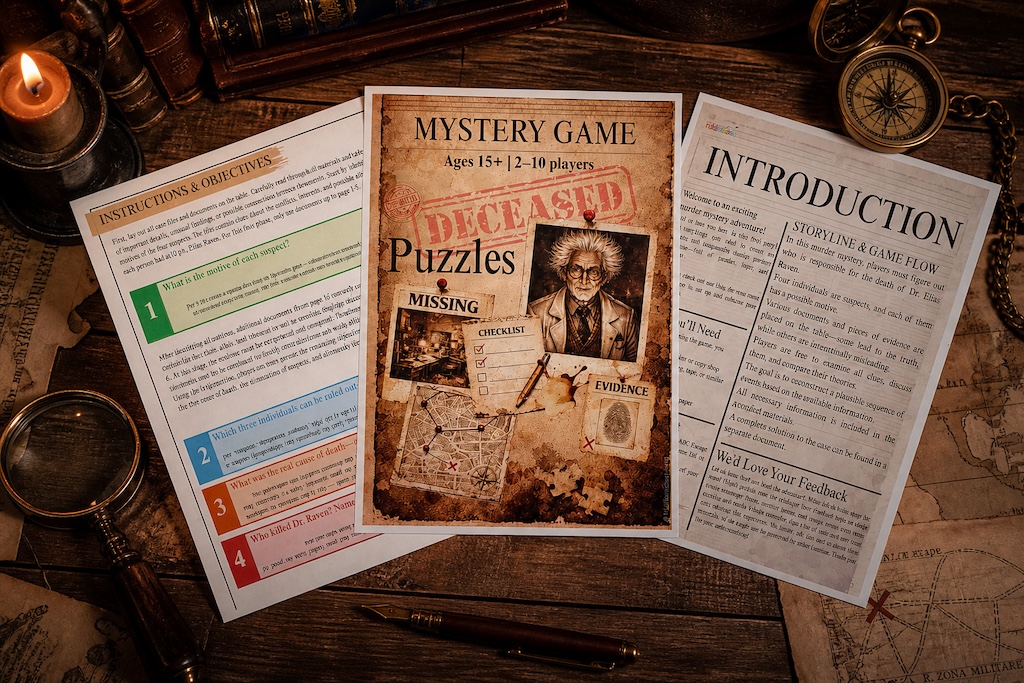
Instant Download · Print at Home · Unlimited Reprints
Sources & Further Reading
Explore More Themed Riddle Collections
This page is the pillar. For more themed riddles by character, season, or category, jump straight to the dedicated collections:
- 🏴☠️ Pirate Riddles (ages 4-12)
- 🦸 Superhero Riddles (ages 4-12)
- 🦖 Dinosaur Riddles (30 + tasks)
- 🪄 Magical Riddles & Illusions
- 🧚 Fairy Riddles + 10 Magical Tasks
- 😂 Joke Questions for Children
- 🎵 Rhyming Riddles (ages 3-12)
- 🐾 Animal Riddles (50+)
- 🌊 Mermaid & Ocean Riddles
- 🥷 Ninja Riddles
- 🧙 Witch Riddles (ages 4-9)
- 🌲 Forest Riddles (ages 4-12)