

Blog
Sensory Scavenger Hunt for Kids: Five Senses Activities

A sensory scavenger hunt for kids invites children to explore the world through all five senses: sight, sound, smell, touch, and taste. Instead of just looking for objects, children listen, feel, sniff, and sometimes taste their way through the adventure. It is one of the most developmentally powerful scavenger hunt formats, especially for toddlers and preschoolers.
Last updated: February 2026 | Reading time: 7 min
This guide is informed by child development principles and practical experience running sensory activities with young children. Every activity supports age-appropriate sensory exploration and can be adapted for children with different sensory needs.
Why Sensory Scavenger Hunts Matter

Sensory play supports brain development, builds neural connections, improves fine motor skills, and helps children process the world around them. A scavenger hunt channels natural curiosity into a structured activity. It also works beautifully for children who benefit from occupational therapy activities. For more on perception development, see our perception games in kindergarten guide.
Five Senses Scavenger Hunt Checklist
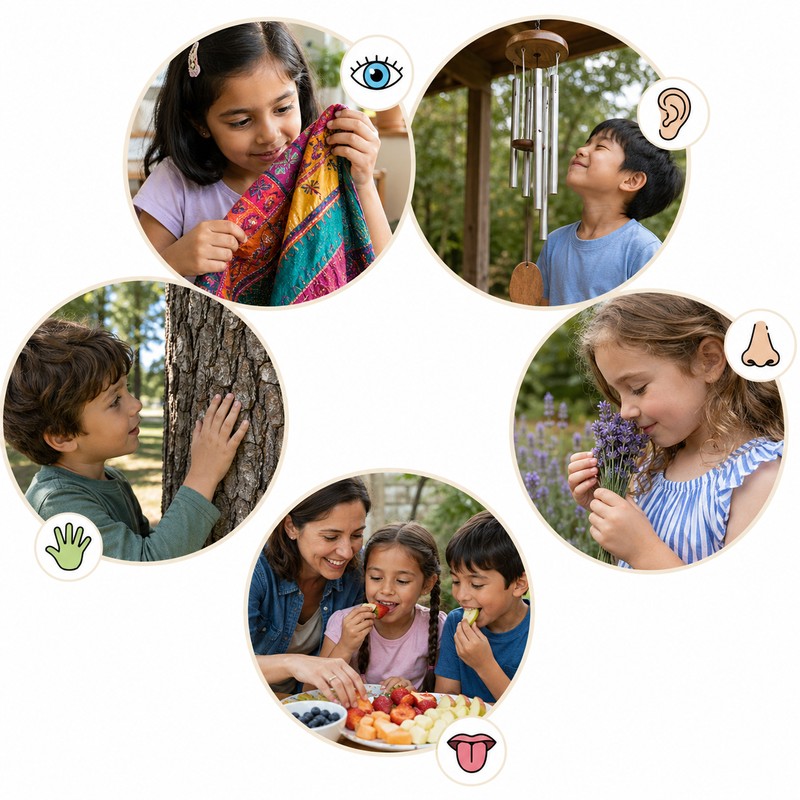
Sight: Things to See
- Something that sparkles or shines
- Three different shades of green
- Something with a pattern (stripes, dots, zigzag)
- The smallest thing you can spot
- Something that moves without being touched
- A shadow with an interesting shape
Sound: Things to Hear
- A bird singing
- Wind blowing through trees or grass
- A sound made by water
- Something that crunches when you step on it
- A sound from far away
- The quietest sound you can hear (close your eyes)
Touch: Things to Feel
- Something smooth
- Something rough or bumpy
- Something soft and squishy
- Something cold
- Something warm (from the sun)
- Something prickly (careful!)
Smell: Things to Sniff
- A flower that smells sweet
- Freshly cut grass or a crushed leaf
- Earth or mud after rain
- Something that smells like food
- A tree trunk or piece of bark
- Your favorite outdoor smell
Taste (Supervised, Safe Items Only)
- A fresh fruit or berry (provided by an adult)
- A herb from the garden (mint, basil)
- Clean water, describing how it tastes
- A cracker with an interesting texture
Sensory Hunt Activities by Age

Toddlers (Ages 2 to 3)
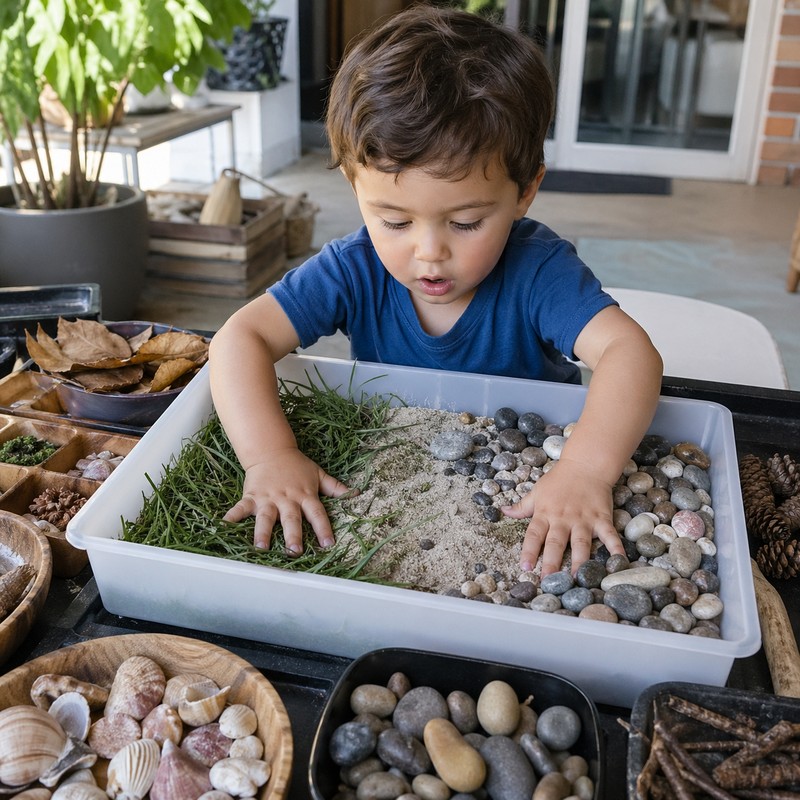
Keep it simple and supervised. Focus on touch and sight. Create a “feely bag” at each station with different textures (cotton wool, sandpaper, velvet, bubble wrap). Use picture cards since toddlers cannot read.
Preschoolers (Ages 3 to 5)
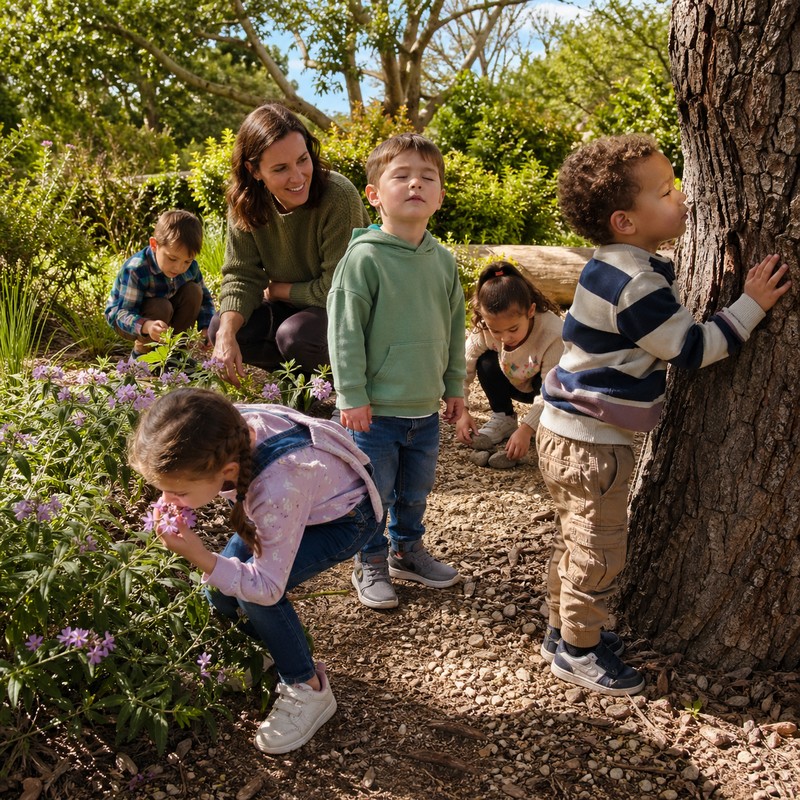
Use all five senses with 3 to 4 items per sense. Walk through a garden or park together. At each stop, ask: “What can you see? What can you hear? What does this feel like?” Pair with our scavenger hunt for ages 3 to 5.
Primary School (Ages 5 to 8)
Use the full checklist. Add a “sensory journal” where children draw or write about each discovery. Great for combining outdoor play with color learning and vocabulary building.
Indoor Sensory Scavenger Hunt
Tips for a Great Sensory Hunt
- Safety first: Always supervise taste activities. Check for allergies
- Go slow: Sensory hunts are about quality, not speed
- Narrate: Help young children build vocabulary: “That bark feels rough and dry”
- Adapt: Offer choices at each station for children with sensory sensitivities
- Celebrate: Every sensory discovery is a win. Praise observation and curiosity
Browse our scavenger hunt collection or check out birthday game ideas that include sensory and movement activities.