

Blog
Scavenger hunt for children aged 3 to 5 years
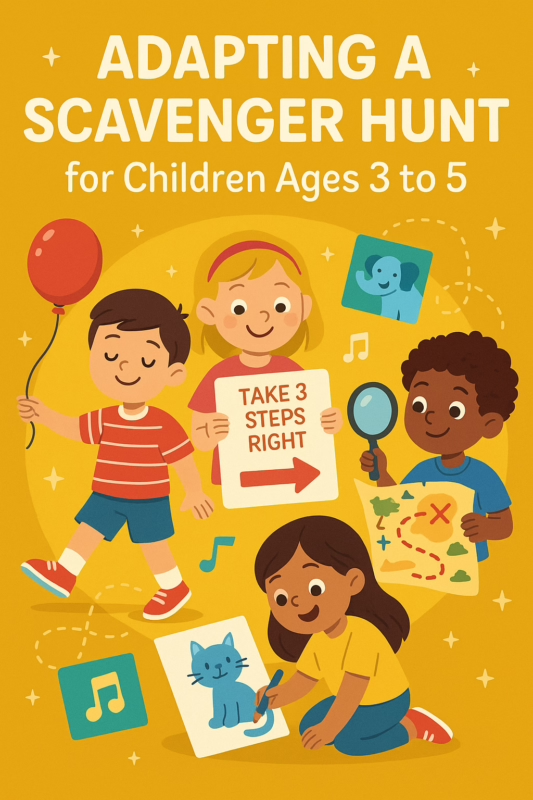
Age-Appropriate Planning for a Scavenger Hunt for Children Ages 3 to 5
A scavenger hunt for children ages 3 to 5 requires thoughtful planning to ensure both fun and age-appropriate challenges. At this developmental stage, kids make great progress in their motor, cognitive, and social skills — meaning the scavenger hunt should match their abilities. Simple tasks, short routes, and a playful story make the experience magical and memorable.
Age Group 3: Simple and Playful Activities
Last updated: April 2026 | Reading time: 4 min
This guide is based on years of hands-on experience designing and running scavenger hunts for kids of all ages. Every idea has been tested with real families to ensure maximum fun and engagement.
Children around age 3 are naturally curious and love discovering new things. However, their attention span is short, so activities should be simple, visual, and easy to complete.
Suitable Activities:
- Color Hunt: Kids search for objects in specific colors, e.g. “Find something blue!” — great for color recognition.
- Sound Matching: Play animal sounds and let kids match them to pictures or figures. This strengthens listening skills.
- Balloon Games: A simple obstacle run while balancing a balloon — great for motor skills.
- Mini Treasure Hunt: Hide large, easy-to-spot items like stuffed animals or colorful blocks for kids to collect.
Age Group 4: First Riddles and Team Play
At age 4, children begin to understand simple connections and can stay focused longer. Small riddles and teamwork are perfect for this age.
Suitable Activities:
- Symbol Hunt: Use pictures or simple symbols as clues (arrows, smiley faces) to guide the way.
- Simple Riddles: Questions like “What is bigger — an elephant or a mouse?” work great as hint tasks.
- Physical Challenges: Balancing on a rope or hopping over obstacles provides movement and excitement.
- Team Exercises: Let kids complete simple group tasks, like assembling a puzzle together.
Find more child-friendly activity ideas in our guide: Scavenger Hunt Tasks.
Ready to play instantly & easy to set up:
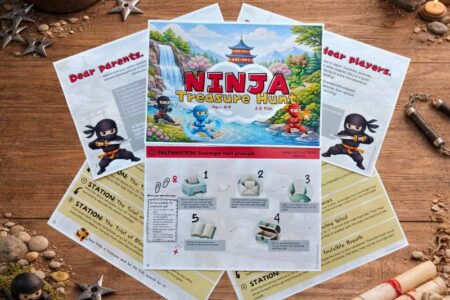
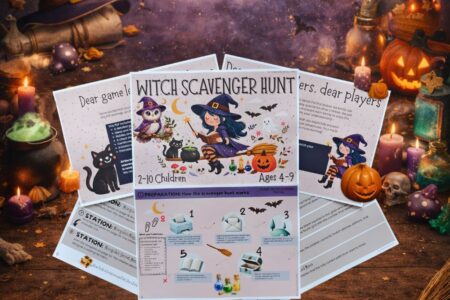
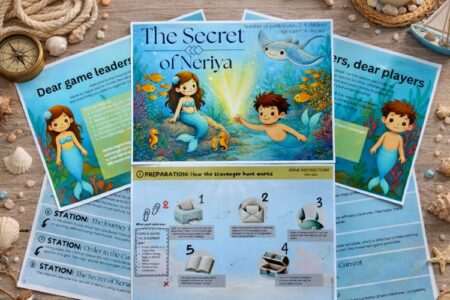
Stress-free for your kid’s birthday: Just print our scavenger hunts — about 30 minutes of prep.
✅ Includes an invitation
✅ Includes riddles & clues
✅ Includes a treasure map
✅ Includes answer keys
✅ Includes a certificate
✅ Includes easy instructions
✅ Includes a full storyline (for reading aloud & getting kids excited)
✅ Perfect for indoors & outdoors


14,99 $
14,99 $
14,99 $
14,99 $
Age Group 5: More Challenging Tasks and Storytelling
Five-year-olds have stronger focus and love diving into imaginative stories. Tasks can be more detailed and teamwork-oriented.
Suitable Activities:
- Instruction Cards: Give kids cards with simple directions, e.g. “Take three steps to the right and look under the red table.”
- Fantasy Missions: Add a storyline — kids rescue a princess or search for pirate treasure.
- Creative Tasks: Let kids draw their own treasure map or decorate a station.
- Group Games: Tasks like transporting an object using a cloth encourage collaboration.
More theme ideas available in our category: Theme Scavenger Hunts & Treasure Hunts.
Common Principles Across All Ages
No matter the age, some fundamentals always apply:
- Fun and movement come first: Kids should be active and enjoy themselves throughout the scavenger hunt.
- Colors and simple symbols: These make navigation easy and intuitive.
- Flexibility: Adjust tasks spontaneously based on the group’s mood and interest.
More planning tips can be found in: How to Prepare a Scavenger Hunt.
Additional Ideas for Parents
- Interactive Stations: Include small hands-on tasks like puzzles or coloring challenges for variety.
- Quiet Breaks: Short rest times for snacks or a story help younger children recharge.
- Themed Adventure Worlds: Turn the scavenger hunt into a trip to a magical forest or a pirate island to spark imagination – our nature scavenger hunt for kids has a free 30-item outdoor checklist to get you started.
Tips for a Stress-Free Scavenger Hunt with Young Children
✔ Keep groups small: 4–6 kids per group is ideal.
✔ Assign adult helpers: One adult per group ensures smooth guidance.
✔ Don’t plan too long: 20–30 minutes is perfect for this age range.
✔ Stay flexible: If an activity doesn’t work, move on to the next.
✔ No overly difficult riddles: If kids get frustrated, they lose interest quickly.
Conclusion: A Playful Scavenger Hunt for Little Explorers
A scavenger hunt for children ages 3 to 5 requires sensitivity to their motor and cognitive abilities. A simple storyline, easy tasks, and short routes make the adventure exciting and stress-free. With a bit of preparation and creativity, the scavenger hunt becomes the highlight of the day — full of movement, discovery, and playful learning!
FAQ: Scavenger Hunts for Kids Ages 3 to 5
1. How long should a scavenger hunt last?
For ages 3–5, no longer than 60–90 minutes. Shorter hunts keep kids motivated and happy.
2. What if a child doesn’t want to join?
Avoid pressure. Offer a small alternative task like holding an item or drawing a map. Gentle involvement often helps.
3. What materials are needed?
- Colorful markers (arrows, balloons)
- Small treasures or prizes
- Printed or handwritten clues
- Items for tasks like blocks, images, simple puzzles
4. Which games are best for 3-year-olds?
Color hunts and animal sound matching are perfect — short, clear, and engaging.
5. How can you challenge 5-year-olds?
Add simple riddles, map-drawing tasks, team challenges, or story missions to keep them engaged.
More tasks and riddles can be found here: Scavenger Hunt Riddles & Tasks.

Farmyard Treasure Hunt
Printable scavenger hunt — print at home, play in minutes. Includes clues, treasure map, certificates & more.