

Blog
Birthday Games for Kids 2026: 40+ Activities by Age + Free PDF Pack
Last updated: April 2026 · 12 min read
About this guide: Written by Arne, founder of Riddlelicious. I’ve been designing and running birthday party games for kids since 2018 — tested across hundreds of real parties, from toddler chaos to teen detective nights. Everything here is based on what actually works.
Planning a birthday party? You already know the hardest part isn’t the cake or decorations — it’s keeping 10 kids entertained for three hours without anyone getting bored or cranky. That’s where the right birthday games come in.
After running hundreds of party activities with kids aged 4 to 15, I’ve learned what actually works. The secret isn’t buying expensive party kits or complex games with 47 rules. It’s choosing activities that match how kids actually think and play at their age. A 6-year-old’s brain lights up for simple magic and surprises. A 10-year-old wants missions and clues. A 13-year-old craves mystery and the chance to feel like detectives solving real problems.
In this guide, I’m sharing 40+ birthday games for kids, organized by age group, with exact instructions you can use immediately. Whether you’ve got 6 kids or 30, whether the party’s indoors or outside, you’ll find games that work for your situation.
Step 1: Know What Makes a Birthday Game Truly Memorable
Here’s what I’ve noticed after running hundreds of parties: the games kids remember aren’t the ones with the fanciest equipment. They’re the ones that gave them agency. Kids remember when they had to figure something out. They remember when they worked as a team to solve a problem. They remember when the game felt like an adventure, not just a competition. They remember when they were surprised.
The best birthday games share three things:
- Clear roles and missions. Instead of “let’s play a game,” it’s “you’re treasure hunters tracking down stolen pirate gold” or “you’re detectives solving a mystery before the villain escapes.” The narrative gives the game meaning beyond just winning.
- Something to discover or solve. Kids engage deeper when they’re searching for clues, cracking codes, solving riddles, or uncovering hidden objects. The game becomes a journey, not just points on a scoreboard.
- Flexibility for mixed ages and abilities. The best games let shy kids and extroverts both have fun. They work whether kids are athletic or prefer strategy. They include everyone, even if some finish faster than others.
Step 2: Pick a Game for Ages 4–6 (Simplicity and Surprise)
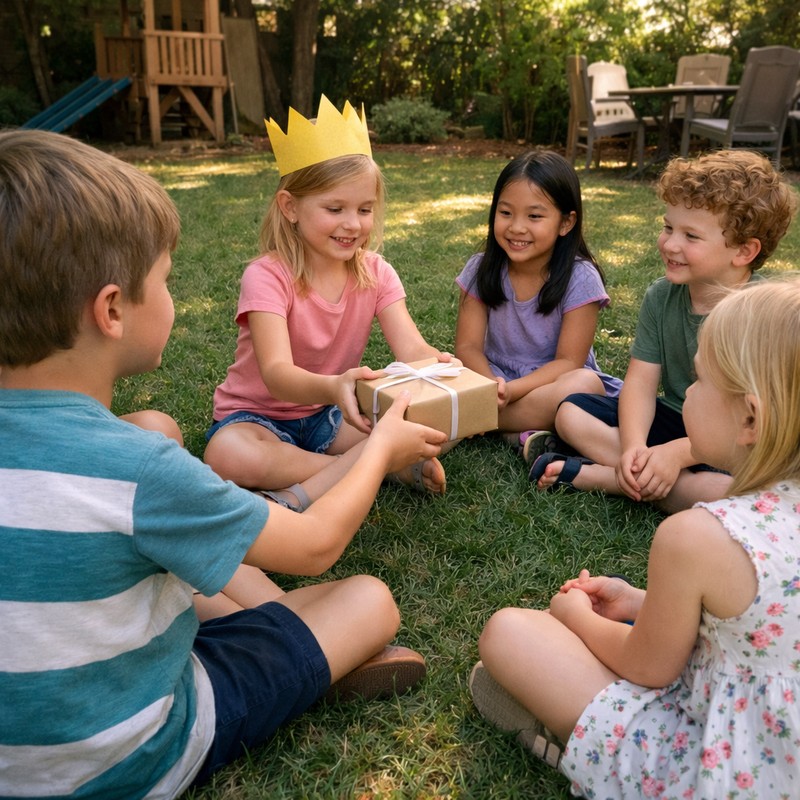
Four- to six-year-olds have wild imaginations but short attention spans. They want games with clear rules they can understand in 30 seconds, activities that feel exciting or surprising, and plenty of repetition. They also love when an adult plays with them.
1. Freeze Dance
Play music. Kids dance. When the music stops, everyone freezes like statues. Anyone who moves is out — or keep everyone in and just play for 5 minutes of pure joy. Pro tip: use silly or unexpected music genres to surprise them (death metal, opera, baby lullabies). Kids find the contrast hilarious.
2. Balloon Pop Relay
Divide kids into two teams. Place inflated balloons at the far end of the room. Kids take turns running to pop a balloon (with their feet, not their hands). First team to pop all balloons wins. Super simple, burns energy, no coordination required. Works both indoors and outdoors.
3. Duck, Duck, Goose (with a Twist)
Same classic game, but add a rule: the person being chased can hide somewhere in the room, and the chaser must find them. Or change the words each round — “Prince, Prince, Princess” or “Dragon, Dragon, Knight.” The variation keeps kids from getting bored during repeats.
4. Simon Says Scavenger
Instead of just touching their nose, use “Simon says: find something red” or “Simon says: grab an object that starts with T.” Kids run around searching while following the rule. It’s scavenger hunt plus Simon Says, and it’s surprisingly engaging for this age.
5. Pirate Coin Hunt
Hide gold coins (chocolate coins work great) around the party space. Give each child a small bucket or bag. Set a timer for 3 minutes and have them find as many coins as they can. No competition needed — focus on the fun of discovering hidden treasure. This one never fails with this age group.
Step 3: Pick a Game for Ages 7–10 (Missions and Challenges)
Seven- to ten-year-olds are the sweet spot for party games. They can read clues, follow multi-step instructions, work as teams, and think strategically. They’re old enough to handle mild competition but still young enough to get genuinely excited about a simple mystery. This is the age where scavenger hunts, treasure hunts, and detective games absolutely shine.
1. Treasure Hunt with Riddle Clues
Hide a prize. Create 4–6 clue cards that describe the next location with a riddle. Example: “I have a face but cannot see. I tell you when it’s time for tea. Where am I?” (Answer: the clock). Kids solve the riddle, run to that location, find the next clue. Last clue leads to the treasure. Works with teams or individuals. This age loves the problem-solving element.
2. Detective Mystery Game
Assign kids roles: detectives, witnesses, or suspects. Create a simple “crime” (a missing toy, a stolen cake, a mysterious letter). Give detectives 20 minutes to interview witnesses, collect clues, and solve the mystery. The fun comes from the kids feeling like they’re doing real detective work. Our detective birthday party guide has templates if you want to skip the design work.
3. Escape Room Challenge (DIY)
Lock a group in a room (or rope off a section of your backyard). Give them 15–20 minutes to solve puzzles and find “the key” to escape. Puzzles can be riddles, combination locks, hidden keys, or simple codes to crack. This age group loves the urgency and teamwork. See our escape room birthday party guide for full instructions.
4. Relay Race with Silly Challenges
Standard relay, but each leg has a challenge: hop on one foot to the cone, walk backwards to the next marker, do three cartwheels, carry a spoon with an egg. It’s easier than a straight race and adds comedy. Kids laugh at each other’s attempts, and everyone stays engaged the whole time.
5. Pirate Ship Adventure (Full Group Activity)
You’re the captain. Kids are your crew on a ship. Call out “All hands on deck!” and give instructions: climb the rigging (jump 5 times), swab the deck (spin around), find the treasure (scavenger hunt), escape the sea monster (race to a safe zone). It’s storytelling plus movement plus games, all in one. Works brilliantly for 8–10 kids. This age also thrives on birthday scavenger hunt variations — the key is making hunts mission-based rather than just “find a list of objects.”
Step 4: Pick a Game for Ages 11–15 (Mystery and Strategy)
Pre-teens and early teens are becoming self-conscious. They don’t want to feel “babyish,” but they’re not ready for purely social activities yet. The games that work best for this age involve mystery, strategy, a hint of competition, and the feeling that they’re solving something “real.” They also want peer interaction and teamwork over winning alone.
1. Murder Mystery Game
Assign characters, backstories, and secret motives. One person is the “victim” (they hide or sit out). The group has 30 minutes to gather clues, interview suspects (kids playing those roles), and vote on who the murderer is. Votes happen, the murderer is revealed, and reactions are priceless. This age loves the social intrigue and role play. It’s a party game and improv workshop in one. See our full murder mystery party guide for templates.
2. Escape Room (Advanced)
Same as the younger group, but harder puzzles. Use actual locks, more cryptic clues, multi-step solutions. Include a narrative twist (secret codes to decipher, hidden messages in photos). This age can handle real complexity and genuinely enjoys being challenged. Time pressure matters more here — knowing they’ve got 20 minutes to escape adds real excitement.
3. Treasure Hunt with Map and Coordinates
Instead of riddle clues, give teams a map with coordinates or landmarks. Each location has a challenge (answer a trivia question, complete a physical task, solve a logic puzzle) to get the next coordinate. This age appreciates the map-and-compass feeling of a real treasure hunt. It’s also great for mixed outdoor and indoor spaces.
4. Spy Game
Divide into two teams: spies and agents. Give spies a list of “targets” (specific objects to find or tasks to complete, like photographing someone doing a silly pose, getting a signature from someone). Agents try to stop spies by tagging them or answering spy-themed trivia questions. It’s tag with a mission, and this age loves the strategic thinking.
5. Social Deduction Game (Mafia/Werewolf Variant)
Everyone gets a role card: most are innocent “townspeople,” a few are “villains.” Each round, players discuss and vote to eliminate someone. Villains secretly meet to plan. It’s pure psychology and strategy. This age loves the bluffing, alliance-building, and social drama. One round takes 15 minutes; three rounds keep everyone entertained for 45 minutes. For this age, the escape room concept expands brilliantly — they can handle narrative depth, hidden meta-puzzles, and the satisfaction of cracking something genuinely tricky.
Step 5: Choose Indoor Birthday Party Games (for Rainy Days and Small Spaces)
Rain, snow, or just a tiny apartment — indoor games need to work in limited space without destroying anything. These are games you can run in a living room, basement, or even a rainy-day rental space.
1. Scavenger Hunt (Classic Indoor)
Hide objects around your indoor space (books, toys, random household items). Give kids a list and set a timer. Simpler for younger kids: “find something blue, something soft, something that starts with S.” Harder for older kids: riddle clues to locations, then find hidden objects. Never fails, works for any age, takes 20–30 minutes.
2. Charades
One kid acts out a movie, book, animal, or phrase. Others guess. Simple, hilarious, no setup required. Modify difficulty by age: 4–6 year-olds can act out animals. 7–10 year-olds act out movie titles. 11+ can do famous people or abstract concepts. Dividing into teams adds structure.
3. Balloon Pop Challenge
Fill balloons with small papers (instructions, riddles, jokes, or challenges). Pop them and read what’s inside. Examples: “Do 10 jumping jacks,” “Tell a joke,” “Solve this riddle.” It’s random, silly, and keeps energy high. You can also fill balloons with small prizes (stickers, temporary tattoos, mini puzzle toys).
4. Minute-to-Win-It Style Games
These are short, silly challenges done in under 60 seconds. Stack cups, balance a cookie on your forehead, transfer cookies from forehead to mouth, blow a ping-pong ball off a table using only your breath. Run 6–8 different challenges in a row, kids compete for points. Works for any age. YouTube has hundreds of ideas.
5. Indoor Treasure Hunt with Codes
Hide a prize in a locked box. Clues throughout the house lead to codes that unlock the box. Example: “How many books are on the shelf?” The answer is one digit of the combination. Kids move through the house solving clues and collecting code digits. This works brilliantly for 7+ year-olds and keeps them moving indoors.
6. Murder Mystery in a Room
All the action stays in one space. Less running, same intrigue. Kids interview suspects (hired actors or parent volunteers), examine evidence (photos, props, written statements), and vote on the culprit. This is your move for small apartments or when you need a low-energy option.
Step 6: Choose Outdoor Birthday Party Games (Backyards, Parks, Fields)

Outdoor space means you can scale up. Kids can run, shout, and play without worrying about breaking things. These games work best in a backyard, park, or open field.
1. Outdoor Scavenger Hunt
Similar to indoor hunts, but use nature. “Find a pinecone, a red leaf, something soft, something that smells good, a stick shaped like a Y.” For older kids: “Find five different types of leaves and bring them back to show an adult.” This works for groups of 6–40 kids if you divide them into teams.
2. Pirate Treasure Hunt (Large Scale)
Hide “treasure” (prizes, toys, gift cards) in multiple locations around your space. Give teams a map with landmarks and clues. Teams race to find as much treasure as possible. This is the scaled-up version of the indoor hunt and works brilliantly for 15+ kids. See our pirate birthday party guide for full setup instructions.
3. Relay Races (Multiple Styles)
Standard relay. Three-legged relay. Backwards relay. Crab-walk relay. Hopping relay. Run 4–5 different relay races in a row. Kids who don’t finish first in one still get excited for the next. No single “winner,” just constant action and fun.
4. Water Balloon Games (Summer)
Water balloon toss (partners throw back and forth, step back after each catch, last non-popped balloon wins). Water balloon relay (run with a water balloon, drop it, you’re out). Water balloon piñata (hang a bag of water balloons, kids throw balloons at it until it breaks). All hilarious, all soaking wet, all perfect for hot days.
5. Outdoor Escape Room / Adventure Course
Set up stations around your outdoor space. Each station has a puzzle or challenge. Solve it, get a clue to the next station. Last station leads to treasure. Use cones, ropes, or chalk to mark boundaries. This works for large groups of kids if you set up 2–3 parallel courses.
6. Tag Variations
Freeze tag (frozen person stays still until another free person unfreezes them). Shadow tag (you’re out if your shadow is caught). Hospital tag (one “it,” but tagged people hold hands with “it,” forming a growing chain chasing others). Superhero tag (different rounds have different superpowers — flying, laser vision, telepathy). Never runs out of steam.
Step 7: Manage Large Groups (15+ Kids) Without Chaos
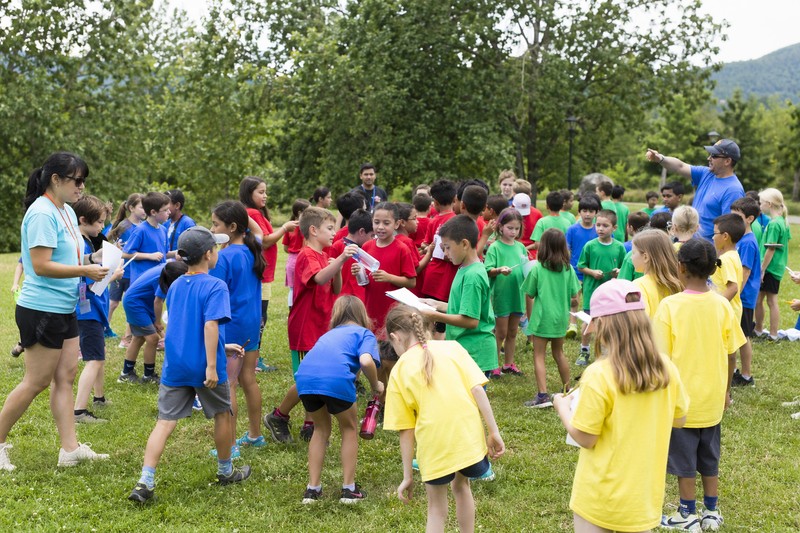
Managing 20+ kids requires games with clear structure, simultaneous action, and built-in breaks. Avoid games where one kid plays at a time while 19 watch — that’s a recipe for chaos. Look for games where everyone plays at once or in small teams.
1. Team Relay Races
Divide into 4–5 teams of equal size. Run multiple relay races in sequence. Each race can be different (backwards, hopping, silly walks, obstacle courses). Keep score. Award points for first, second, third place. This keeps all kids engaged because there’s always another race coming. Low-skill, high-energy, works for all ages 6+.
2. Scavenger Hunt Divided Into Teams
Divide into 4–6 teams. Give each team identical lists of items to find. Teams race to find everything and return. You can make it harder by hiding items in different areas (kids search their assigned quadrant) or by using riddle clues instead of direct lists. With 15+ kids, team hunts are more organized than free-for-alls.
3. Multiple Escape Room Stations
Set up 2–3 identical escape room stations in different rooms or areas. Divide kids into groups of 4–6. Each group rotates through a station, trying to solve it in 12–15 minutes. While one group is escaping, others do a different activity (crafts, snacks, games). This keeps 20+ kids entertained in rotating waves.
4. Large-Group Murder Mystery
Assign everyone a character and role. Run the mystery as a big group activity with roles for 15–25 people. Even kids without speaking roles are detectives investigating. Use two rounds so everyone gets a chance to be different characters. Costs you setup time but keeps huge groups engaged for 60+ minutes.
5. Minute-to-Win-It Tournament Bracket
Set up 6–8 challenge stations around your space. Divide kids into 4–5 groups. Rotate groups through challenges, keeping score. It’s low-pressure because everyone does every challenge, not just winning kids. Total time: 45 minutes for 20 kids.
6. Outdoor Obstacle Course Relay
Design one obstacle course. Divide kids into 4–5 teams. Teams race their members through the course one at a time. Time each run. Fastest team wins. An obstacle course keeps everyone active — while one kid runs, others cheer, and the next kid gets ready. For 15+ kids, this is gold.
The key to large-group success is division: smaller teams, rotating activities, parallel courses. Avoid games where 19 kids watch one kid play. The kids watching will get bored in 90 seconds.
Step 8: Default to the One Activity That Wins Every Time — the Scavenger Hunt
If I had to pick one game type that works across all ages, group sizes, indoor or outdoor, with minimal setup and maximum engagement, it’s the scavenger hunt. Here’s why it’s the gold standard for birthday parties:
- It works for mixed ages. A 5-year-old hunts for “something red.” A 12-year-old hunts for objects matching a riddle. Both are doing the same game, scaled to their ability.
- It naturally divides kids into teams or individuals. You can run it as a team competition or let everyone hunt solo. You can give fast hunters a harder list and slower hunters an easier one. The game scales to your group.
- It burns energy strategically. Kids are running, searching, thinking, and solving. They’re not sitting still, and they’re not randomly chaotic. There’s purpose to their movement.
- It works in any space. A 2,000 sq ft backyard, a small apartment, a public park, an indoor gym, a beach — scavenger hunts work anywhere. You just adjust the hiding spots.
- It creates natural breaks. Hunts last 20–30 minutes, giving you a built-in pause. Then do another activity, then wrap up with a final hunt if you want. It’s not mentally exhausting for you to run.
- It doesn’t require buying anything. You hide stuff you already have. Zero cost. Infinite replay value.
- Kids remember it for months. A kid comes home and tells their parents: “I found 12 hidden objects!” or “We solved the riddle and found the treasure!” It’s concrete. It’s memorable. They felt like they accomplished something.
We’ve written a detailed birthday scavenger hunt guide if you want deeper instructions, riddle templates, and age-specific hunt ideas. But honestly? Even a basic hunt (hide 20 objects, make a list, set a timer) is a hit with kids every single time.
“I used one of your scavenger hunts for my son’s 8th birthday party. All 12 kids were engaged the entire time. No one was bored, no one got left out, and my son talked about finding the treasure for weeks after. Total lifesaver.”
Step 9: Quick Picks — The Single Best Game by Age
When you have ten minutes to plan a party and zero spare brain cycles, use this single-page cheat sheet. One winner per age band, one fallback, plus the time and supplies it actually takes.
| Age | Best Game | Fallback | Time | You Need |
|---|---|---|---|---|
| 3–4 | Pirate Coin Hunt | Freeze Dance | 10 min | Chocolate coins, music speaker |
| 5–6 | Simon Says Scavenger | Balloon Pop Relay | 15 min | Balloons, list of objects |
| 7–8 | Treasure Hunt with Riddle Clues | Pirate Ship Adventure | 30 min | 6 clue cards, small prize |
| 9–10 | Detective Mystery Game | DIY Escape Room | 45 min | Suspect cards, “evidence”, a story |
| 11–12 | Advanced Escape Room | Spy Game | 45 min | Padlocks, riddles, code key |
| 13–15 | Murder Mystery | Social Deduction (Mafia) | 60–90 min | Character cards, accusation sheet |
| Mixed (5–12) | Scavenger Hunt (scaled) | Multi-style Relay Race | 30–45 min | Object list (easy + hard versions) |
Step 10: Build the Party Timeline (1.5, 2, or 3 Hours)
Most party meltdowns are timing problems, not behaviour problems. Use one of the three templates below — they are the rhythms that work in real homes with real kids. Each one has the same shape: a warm-up, a main event, a refuel, a calm wind-down.
The 90-Minute Party
- 0–10 min — Arrival & Free Play. Open the toy basket, put on music. No game yet — let kids settle.
- 10–15 min — Energy Burner. One round of Freeze Dance or Balloon Pop Relay.
- 15–55 min — Main Event. Scavenger hunt or themed mystery.
- 55–75 min — Cake + Open Presents. The natural calm-down.
- 75–90 min — Wind-Down Craft. Colouring sheets, friendship bracelets, sticker activity.
The 2-Hour Party
- 0–10 min — Arrival & Free Play.
- 10–20 min — Warm-Up Game. Simon Says Scavenger.
- 20–65 min — Main Adventure. Detective Mystery or full scavenger hunt.
- 65–80 min — Filler Round. Minute-to-Win-It (5 challenges).
- 80–100 min — Cake + Presents.
- 100–120 min — Calm Wind-Down. Craft, story, or movie clip.
The 3-Hour Party (Best for 7+ Year Olds)
- 0–15 min — Arrival, Costumes, Briefing. Hand out detective badges or pirate hats.
- 15–30 min — Warm-Up Game. Relay race with silly challenges.
- 30–80 min — Main Adventure. Treasure hunt or escape room.
- 80–95 min — Snack Break + Energy Reset.
- 95–130 min — Second Activity. Spy game, water balloon games (outdoor), or craft.
- 130–155 min — Cake + Presents.
- 155–180 min — Calm Wind-Down. Story circle, movie, or quiet card game.
The rule under all three: one big game beats five small ones. Kids need 15–20 minutes to settle into a game before they really invest. Switching every 5 minutes trains them to expect the next thing instead of enjoying the one they are in.
Step 11: Match Games to Your Budget (Free, $10, $50)
Birthday games are wildly different at different budgets, but the cheapest options are often the most memorable. Use the three tiers below to plan.
| Budget | What You Buy | Games You Can Run |
|---|---|---|
| $0 — Free | Nothing — use household items, sticky notes, and a phone for music. | Freeze Dance, Simon Says Scavenger, indoor scavenger hunt, charades, tag variations, hand-drawn riddle hunt. |
| $10 — Pantry Run | A bag of balloons, a pack of chocolate coins, a roll of crepe paper, one small prize. | Balloon Pop Relay, Pirate Coin Hunt, Minute-to-Win-It tournament, Pass the Parcel, water balloon games (summer). |
| $15–25 — Printable Kit | A complete printable scavenger hunt or mystery kit with clues, certificates, and a setup guide. | Themed treasure hunt, DIY escape room, detective mystery — all pre-designed, age-calibrated, reusable. |
| $50 — Premium Setup | Combination padlocks, themed decorations, multiple printable kits, optional party favours. | Real escape room with locked boxes, full murder mystery with prop dinner, multi-station treasure hunt for 20+ kids. |
The most expensive party is rarely the most memorable. Kids remember the hunt under the kitchen table, not the sixty-dollar inflatable.
Step 12: Inclusive Games That Work for Every Child at the Party
Every birthday party in 2026 has at least one child who needs a small adjustment — sensory, mobility, language, dietary. None of them need a separate game. They need the same game with a thoughtful tweak.
Sensory-Sensitive Kids
- Use a kitchen timer instead of loud music for Freeze Dance.
- Offer a “quiet zone” with cushions where any child can opt out for a minute without losing their place.
- Avoid sudden balloon-pop games; swap for stomp-on-bubble-wrap or a quiet treasure hunt.
Mobility-Limited Kids
- Place clue cards at seated height so a child in a wheelchair can reach every station.
- For relay races, allow paired play — one walker, one rider, scored as one team.
- Charades, riddle hunts and detective games are fully accessible by default.
Language Barriers
- Pair text clues with a picture clue side-by-side.
- For mixed-language groups, run the warm-up game as a pantomime (Simon Says without words).
- The Reverse Riddler mode of three-clue riddles works in any language — kids invent clues for an answer everyone can see.
Food Allergies
- Replace chocolate coins with plastic gold coins for the Pirate Hunt. The discovery is the joy, not the chocolate.
- Skip the cake-decorating activity; offer a sticker certificate instead.
- If you are running a candy piñata, fill half with stickers and small trinkets — every guest leaves with something even if their parents will not let them eat the chocolate.
Step 13: Five Common Birthday Game Mistakes to Avoid
- Eliminating kids early. Games where the first kid out has to sit and watch for fifteen minutes break the party. Use re-entry mechanics, parallel rounds, or simply skip eliminations for ages under eight.
- Over-planning. Eight different games in two hours means none of them last long enough to feel real. Pick one main game, two fillers, and an opening warm-up. Done.
- Buying the kit and reading the rules at the party. Always test the kit, the timing and the clue-walk yourself before the doorbell rings. Always.
- Mixing energy levels carelessly. Following a wild Balloon Stomp with a quiet riddle hunt loses half the room. Follow each big-energy game with a calm one, then ramp again.
- Forgetting the ceremony. Hand out a certificate, take one group photo, name one moment from each game. Two minutes of ritual turns a forgettable party into “remember that birthday at Tom’s?”
Free Bonus: Birthday Game Master Pack
Download the Birthday Game Master Pack — a 14-page PDF with party timeline templates (90 min / 2 h / 3 h), the Quick Picks cheat sheet, ten Minute-to-Win-It challenge cards, a scoring sheet, and an editable certificate. Print it once, use it for every party.
Birthday Game Master Pack (Free PDF, 14 pages)
Three timeline templates + Quick Picks cheat sheet + 10 Minute-to-Win-It cards + scoring sheet + certificate. Plan a party in 10 minutes.
Frequently Asked Questions About Birthday Games

How many games should a birthday party have?
For most parties, two to three games is the sweet spot. One main activity that takes 30–45 minutes (scavenger hunt, mystery, escape room), one shorter filler game (10–15 minutes) for transitions, and an opening warm-up so guests settle in. Eight games in two hours sounds generous but actually exhausts kids before any single game gets memorable.
What is the easiest birthday game to set up?
Pirate Coin Hunt — buy a bag of chocolate coins, hide them around the party space, give each guest a small bag, set a 3-minute timer. Five-minute prep, ten-minute play, every age from 3 to 9 loves it. Freeze Dance is the second easiest — just music and a pause button.
What if my child is shy and does not want to play?
Build in voluntary roles. Detective mysteries have “witness” and “evidence-clerk” parts that require less attention than the lead detective. Scavenger hunts let shy kids search solo while extroverts work in teams. Never force participation — most shy kids opt in once they see the game running and feel safe.
Are there any birthday games that work in really small apartments?
Yes. Indoor riddle treasure hunt (8 clues across a 60 m² flat), charades, Minute-to-Win-It tabletop challenges, social deduction games for older kids. Avoid running games (tag, relays) and balloon pops in a small flat — and remember that vertical hiding (behind picture frames, on top of door frames) doubles your station count.
How do I keep games age-appropriate when guests are different ages?
Use one game with two scoring tracks. A scavenger hunt where younger kids find direct objects (red ball, soft pillow) while older kids solve riddle cards pointing to the same set of objects. Detective games where younger kids are ‘evidence-finders’ and older kids are ‘investigators’. The mechanic is shared; the difficulty splits.
Do birthday games need prizes?
Small ones, yes. A wrapped sticker, a tiny eraser, a hand-drawn certificate. Prizes anchor the ending of a game and give kids a tangible object to take home. They do not need to be expensive — a chocolate gold coin, a tattoo, or a ‘champion of the riddle hunt’ badge works perfectly. Avoid escalating prize value each year; you will train an expectation.
What are the best birthday party games for kids?
The best games depend on age, but overall winners are scavenger hunts (work for all ages), freeze dance (ages 4–8), detective mysteries (ages 7–12), escape rooms (ages 8+), and social deduction games like Mafia (ages 11+). Scavenger hunts consistently rank #1 because they work for mixed ages, burn energy strategically, and create lasting memories. The game’s success comes from giving kids a mission (find treasure, solve a mystery) rather than just competition.
What are good party games for kids aged 7?
Seven-year-olds thrive on mission-based games: treasure hunts with riddle clues, detective mysteries, team scavenger hunts, relay races with silly challenges, and indoor escape room activities. This age can read clues independently, follow multi-step instructions, and work as a team. They love the feeling of solving a real problem or discovering hidden treasure. Avoid games that require reading complex rules or long wait times between turns.
How long should birthday party games last?
Plan for one main activity (scavenger hunt, escape room, mystery game) to run 45–60 minutes. This is long enough for kids to settle in and truly enjoy it. Complement with 2–3 shorter filler games (10–15 minutes each, like freeze dance or balloon pop) during setup, transitions, or as an energizer before cake. A typical 2-hour party breaks down as: 10 min arrival/setup, 45–60 min main game, 10 min transition, 15 min filler activity, 20 min cake/snacks, 10 min wind-down (craft or video). This keeps everyone engaged without feeling rushed.
What birthday games work without buying anything?
Tons. Freeze dance (just use music you have), charades, balloon stomp (using balloons from your stash), scavenger hunt (hide objects you already own), relay races, Simon Says, musical chairs, and tag variations cost absolutely nothing. Even an indoor treasure hunt with riddle clues costs zero — you hide things you already have and write riddles yourself. A DIY scavenger hunt is free, replayable, and works for any age or group size.
Can I use these games for different party themes?
Absolutely. A basic scavenger hunt becomes a “pirate treasure hunt” or “detective case” just by changing the narrative. A relay race is a “superhero training course” if you rename the stations. Escape rooms work as a “haunted mansion,” “alien spaceship,” or “spy base” depending on the clues and room decoration you choose. The game mechanic stays the same; you’re just changing the story. This is why we offer themed kits — same hunts, different narratives, instant fun.
What if my group has kids of different ages?
Design games that scale. Scavenger hunts work because younger kids hunt for direct objects while older kids solve riddles. Team-based activities (relay races, escape rooms) work because mixed-age teams naturally balance — older kids lead strategy, younger kids execute. Avoid games with a single “right skill level.” Instead, choose activities where everyone can contribute in different ways. The best mixed-age games are hunts, team mysteries, and activities that don’t require physical dominance to win.
Discover More Riddle Posts!
Browse more articles on our blog →
Paper Clue Scavenger Hunt
Printable scavenger hunt — print at home, play in minutes. Includes clues, treasure map, certificates & more.