Blog
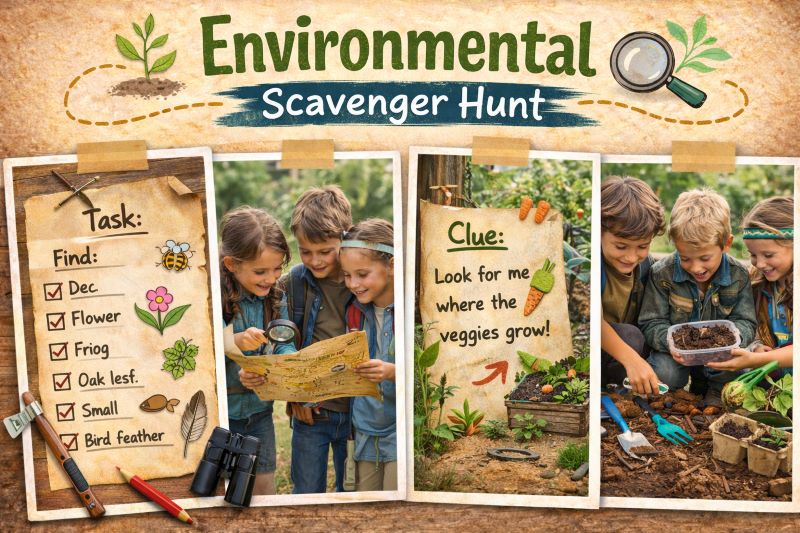
Environmental Scavenger Hunt: 8 Junior Eco-Investigator Challenges for a Science Birthday Party
Updated: October 2026 | Written by Arne, founder of Riddlelicious
About this guide: This independent Riddlelicious party activity turns observation, comparison and note-taking into eight environmental scavenger hunt stations. It is not an EPA program, professional inspection or safety assessment. No station can certify that water, soil, air or a location is safe.
Give each team a notebook and a question: what can we observe, and what would we need to investigate further? Children compare prepared materials, record differences and explain the limits of their observations. The goal is curiosity, not a health grade.
Quick Facts
- Suggested ages: 7–12, with an adult supervising each activity
- Teams: 3–4 children; run stations in small groups
- Timing: Allow roughly 5–10 minutes per activity, plus setup and discussion; shorten the route for younger children
- Location: An adult-checked garden, classroom or sheltered outdoor table, away from traffic, machinery and open water
- Equipment: Notebooks, pencils, clear plastic cups, clean water, paper, a magnifier and optional age-appropriate science supplies
Set Up Your Junior Eco-Investigator Game
Adults prepare all materials beforehand. Do not collect puddle water, unknown soil, litter, wild plants or suspected pollutants. Keep activity materials separate from food, do not taste samples, follow supply labels and wash hands afterward. Keep small items away from younger children.
Label the notebook columns Question · Observation · What we cannot conclude. Award participation certificates for teamwork and careful notes—not environmental health certificates. This activity is not affiliated with or endorsed by the EPA.
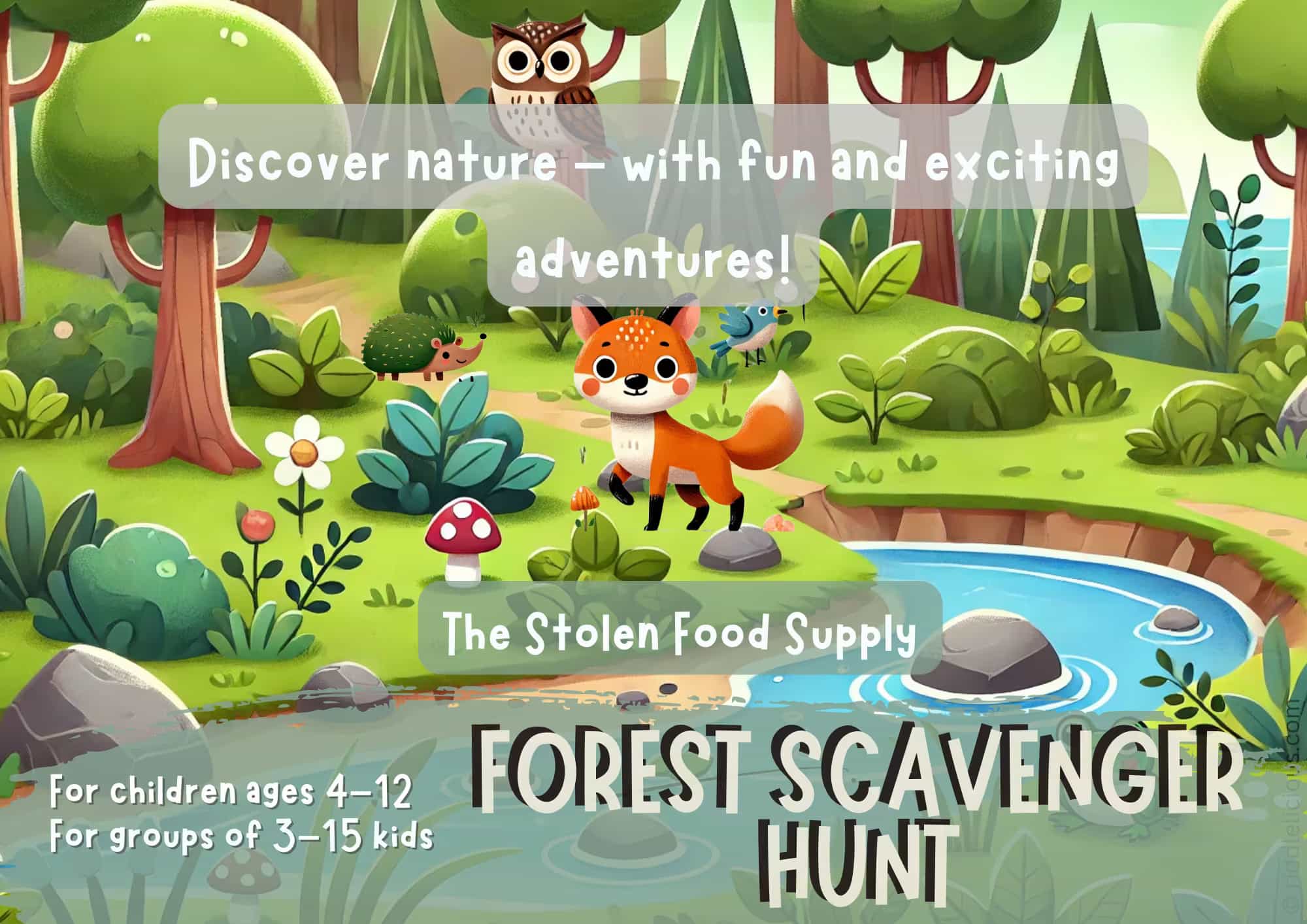
Want a Printable Forest Adventure Instead?
For a story-led outdoor game rather than science demonstrations, explore our Forest Treasure Hunt. Check the product page for its current age guidance, contents and price.
The 8 Investigation Stations
Compare pH Strip Colors
Task: An adult provides labeled cups of clean tap water and bottled water. Follow the pH-strip manufacturer’s instructions and compare the colors with its chart. Record the approximate reading and whether teammates agree.
Notebook: Which colors were easy to distinguish? What could make a reading uncertain?
Observe Texture Without Testing Soil Safety
Task: Adults prepare sealed, transparent containers of clean craft sand, pebbles and paper pieces. Children compare grain sizes, shapes and gaps without opening the containers. Sketch what is visible through a magnifier.
Notebook: Which material has the largest visible pieces? What remains hidden?
Appearance and color cannot identify lead, arsenic or other contaminants. This is a texture activity, not a soil test. Do not sample near roads, old paint, industrial sites or other potentially contaminated areas.
A Qualitative Water-Clarity Comparison
Task: An adult prepares two closed clear plastic containers: clean water, and water mixed with a small amount of clean craft sand. Place the same printed target behind each at the same distance. Compare visibility immediately and after the sand settles.
Notebook: Describe the target as easier or harder to see. Record the setup so another team can repeat it.
This demonstration does not measure turbidity in NTU, dissolved solids or drinking-water safety. Clear-looking water is not necessarily safe.
Spot Visible Specks
Task: An adult puts a thin layer of petroleum jelly on two cards and places them on stable surfaces within the supervised activity area. Retrieve them after a set interval and look with a magnifier. If nothing visible collects, record that result too.
Notebook: Draw any visible specks and note the exposure time. Discuss whether different placement or handling could affect the comparison.
Make a Sound Map
Task: Stay together in an adult-chosen quiet area. Listen briefly and mark the approximate direction of sounds on a sketch: birds, voices or rustling leaves. Use descriptive words rather than a safe/unsafe score.
Notebook: Which sounds were easy to locate? Which were difficult to identify?
Do not approach traffic, garages, machinery or loud sound sources for a reading. This game does not assess hearing risk or compliance with noise standards; no sound-meter app is required.
Observe UV Beads—Without Testing Sunscreen
Task: If you have age-appropriate UV-sensitive beads, an adult follows the supplier’s directions and places a sample in daylight and another in shade. Children can observe from a shaded position and record any color difference. Skip this station if conditions are unsuitable.
Bead color is not a calibrated UV Index reading and cannot establish sunscreen SPF, safe exposure time or complete protection behind glass. Do not use sunscreen-on-bead comparisons as a protection test. Follow local UV advice and normal sun-protection precautions throughout.
Explore What a Filter Catches
Task: An adult mixes clean water with a few larger clean paper pieces, then pours it through a coffee filter into a plastic cup. Compare what remains in the filter with what passes through. Keep every sample labeled “Activity only—do not drink.”
Notebook: Which known materials were retained? What might be too small to see?
This is a model of separation, not microplastics screening or water purification. Looking at unknown fragments cannot establish what they are made of, and a coffee filter does not make unknown water drinkable.
Share an Observation Report
Task: Each team chooses one observation, one uncertainty and one follow-up question. Compare notes without awarding a site health grade.
Report prompts: What did we do? What did we notice? What could change the result? What can this activity not tell us?
The host may sign a “Junior Eco-Investigator Participation” certificate. Label it as a Riddlelicious party activity, not an EPA certificate or evidence that a location is healthy.
Decoration and Snack Ideas
Create a notebook display and signs reading “Observation Station” or “Ask a Question.” Keep all demonstration samples clearly labeled and away from the snack table. Serve ordinary snacks separately, with ingredient and allergy checks; do not add test materials to drinks.
Adapt the Activities by Age
Ages 7–8
Choose three or four stations, use drawings instead of tables, and let an adult handle supplies. End with one observation from each child.
Ages 9–10
Use the notebook columns and compare two teams’ observations. Ask what stayed the same and what changed between samples.
Ages 11–12
Repeat one demonstration with the same setup. Discuss uncertainty and read an official source with an adult; do not turn the results into health or regulatory conclusions.
Pair the Party With a Forest Treasure Hunt
Keep the science observations and the printable adventure as separate activities. Choose the product that fits your group and available preparation time.
Frequently Asked Questions
What if a pH reading looks unusual?
Record it as an approximate observation and check the strip instructions with an adult. Do not diagnose water safety or contamination from this activity. If there is a genuine concern about household water, contact the water supplier or relevant local authority for appropriate advice and testing.
Do I need specialist equipment?
No. Choose the observation stations that fit your supplies and skip optional pH strips or UV beads. Buy age-appropriate materials, follow their instructions and keep an adult in charge. The game does not require an app or a laboratory test kit.
Sources and Further Reading
- EPA: Secondary Drinking Water Standards—context for pH, not a safety certificate for activity samples.
- EPA: Drinking Water Regulations and Contaminants—the distinction between primary and secondary standards.
- EPA: Quality Assurance for Participatory Science—why real monitoring needs methods and quality checks suited to its purpose.