

Blog
Zoo Scavenger Hunt: 8 Junior Zookeeper Academy Challenges for a Wildlife Birthday Party
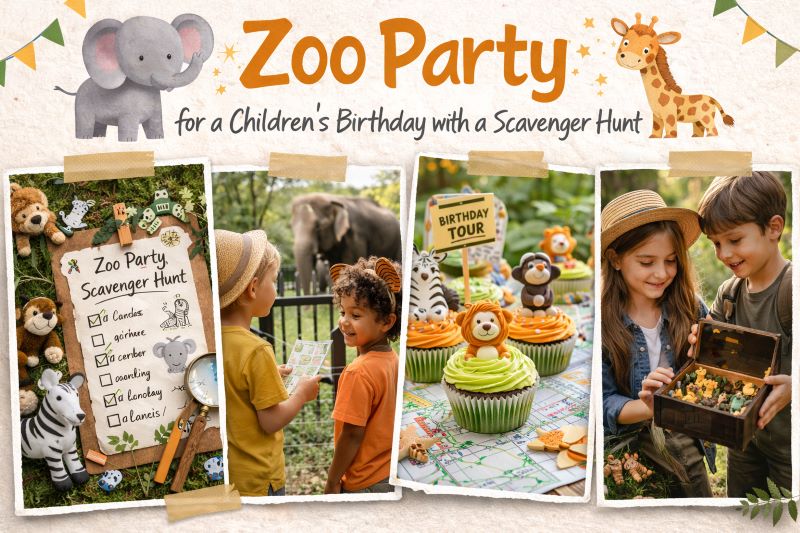
Last updated: April 2026 | Written by Arne, founder of Riddlelicious
About this guide: The zookeeper curriculum here is based on the Association of Zoos and Aquariums (AZA) Animal Care Standards and the actual training content from the AZA Professional Development course for entry-level keepers. Real zoo biology covers taxonomy, behavioral enrichment, nutritional science, animal health assessment, and conservation genetics — disciplines that translate directly into engaging party station activities.
Modern zookeepers aren’t just animal feeders. They’re behavioral scientists, nutritionists, veterinary assistants, and conservation advocates. A senior keeper at a major zoo might manage breeding loan agreements across three countries, design enrichment programs based on peer-reviewed behavioral research, and file weekly health reports that feed into international species survival plans.
The Junior Zookeeper Academy puts every child through 8 real keeper duties — scaled to what a birthday party can demonstrate but grounded in the actual science. Complete all 8 rotations and earn your Junior Keeper Certification from the Academy.
Quick Facts
- Ages: 5–12
- Players: 4–20 (keeper teams of 2–4)
- Duration: 75–90 minutes
- Location: Indoor or backyard — animal photos and models replace live animals
- Equipment: Animal cards, food models, scale, tape measure, magnifying glass, stuffed animals for enrichment
- Science covered: Taxonomy, ethology, behavioral enrichment, nutrition, vital signs, population genetics, IUCN conservation status

Junior Zookeeper Academy Setup
Each keeper team receives their Keeper Dossier: a folder containing their assigned animal species (a photo card with species name, origin, and 3 key facts), a blank Keeper Daily Log (8 boxes to fill in as they complete each rotation), and a Junior Keeper reference booklet (classification key, nutrition table, vital signs ranges for 10 species). The reference booklet is their allowed reference material — real keepers consult their SOPs constantly.
The 8 Keeper Rotations
Taxonomy — Classification Science
Science: The Linnaean classification system (Kingdom → Phylum → Class → Order → Family → Genus → Species) organizes all life into a hierarchy based on shared evolutionary ancestry. Modern taxonomy uses DNA analysis to revise classifications — the giant panda was reclassified from bear-adjacent to confirmed Ursidae in 1985 based on molecular evidence. Understanding taxonomy helps zookeepers understand which species have similar biological needs and can inform housing, diet, and social grouping decisions.
Rotation: Teams receive 10 animal photo cards. Using a simplified classification key, they must sort the animals into the correct Class: Mammalia, Aves, Reptilia, Amphibia, or Actinopterygii (bony fish). Then: arrange 5 mammals into their correct Orders (Carnivora, Primates, Proboscidea, Artiodactyla, Rodentia). The Genus and Species for their team’s assigned animal must be written correctly in their Keeper Log — scientific names are the universal language of zoology.
Behavioral Enrichment — Science-Based Activity Design
Science: Behavioral enrichment addresses the psychological and physical needs of animals in captivity that would be met naturally in the wild — foraging challenges, sensory stimulation, social interaction, and choice. Research shows enrichment reduces stereotypic behavior (repetitive pacing or swaying) and improves reproductive success. The AZA requires documented enrichment programs for all accredited facilities. Enrichment categories: sensory (smell, sound, visual), food (puzzle feeders, foraging), cognitive (problem-solving), social, and habitat complexity.
Rotation: Teams design an enrichment item for their assigned animal species using only materials on the table (cardboard tubes, paper bags, scrunched newspaper, string, rubber bands). Design requirement: the enrichment must address one specific natural behavior of the species (foraging, climbing, problem-solving, scent investigation). Teams present their enrichment design in 30 seconds — explaining the target behavior and why this design addresses it. Real keeper response: the design gets a “feasibility rating” from the host.
Nutritional Science — Diet Formulation
Science: Zoo animal diets are formulated by nutritionists to match the caloric density, macronutrient ratio, and micronutrient profile of the wild diet. A gorilla diet at a major zoo might include 6 pounds of fruit, 4 pounds of vegetables, 1 pound of leafy greens, and a vitamin supplement — precisely calibrated to the species’ metabolic requirements and adjusted for individual animals based on body condition scoring (BCS). Overfeeding is as significant a welfare issue as underfeeding in captive animals.
Rotation: Using a simplified nutritional reference chart, teams calculate the daily diet for their assigned species: total calories, protein requirement (g/kg body weight), calcium/phosphorus ratio, and identify any specific nutrient supplement needed (e.g., taurine for felids, Vitamin C for primates — who can’t synthesize it). Then: weigh out a “diet component” using a kitchen scale to the gram — accuracy within 5g earns full marks.

Health Check — Vital Signs and Body Condition
Science: Keepers perform daily health assessments on their animals without direct contact (called “behavioral health checks”): observing posture, locomotion, appetite, social behavior, feces consistency, and coat/plumage condition. Deviations from baseline are flagged to veterinary staff. Normal resting heart rate ranges vary enormously by species: elephant ~25–35 bpm, giraffe ~40–90 bpm, mouse ~450–750 bpm (inversely correlated with body mass — this is a fundamental physiological scaling law).
Rotation: Teams review 5 “animal observation reports” (each with photos and behavioral notes). For each animal, classify: Healthy (normal baseline) / Monitor (1–2 minor deviations) / Veterinary Referral (significant deviation). Then: measure their own resting heart rate for 30 seconds × 2 = beats per minute. Compare to the reference chart for their body mass equivalent in animals. Finally: demonstrate Body Condition Scoring on a stuffed animal using the palpation technique guide card.
Ethology — Reading Animal Behavior
Science: Ethology (the scientific study of animal behavior in natural conditions) uses standardized observation methods: focal animal sampling (following one individual for a set time), scan sampling (recording the behavior of all individuals at fixed intervals), and behavioral event recording. The ethogram — a complete catalog of all behaviors a species exhibits — is the foundational tool. Jane Goodall’s 30-year Gombe chimpanzee study established the first comprehensive ethogram for a great ape species.
Rotation: Watch 3 short video clips of animals (or use illustrated behavior cards). For each, complete an ethogram entry: identify the specific behavior (feeding, allogrooming, play, agonistic display, thermoregulation, etc.), the approximate duration, and whether it’s individual or social behavior. Then: using the provided ethogram for their assigned species, categorize 5 additional behaviors from description cards. Bonus: calculate what percentage of the observed time budget is spent on each behavioral category.
Population Genetics — Species Survival Plans
Science: The AZA Species Survival Plan (SSP) manages the captive population of endangered species to maintain genetic diversity and demographic viability. The key metric is “mean kinship” — how closely related each animal is to the rest of the population. High mean kinship = inbreeding depression risk = reduced fertility, increased disease susceptibility, developmental abnormalities. Target genetic diversity for a viable captive population: maintain 90% of wild heterozygosity for 100 years. The SSP recommends specific breeding pairs based on minimizing mean kinship.
Rotation: A simplified family tree for a fictitious captive species shows 8 animals across 3 generations. Teams calculate kinship coefficients using the provided formula (count the number of common ancestors × 0.5 per generation). Identify: (1) which pair has the highest kinship (should NOT breed), (2) which pair has the lowest kinship (optimal breeding recommendation), (3) which individual is most genetically valuable to the population and why.
Habitat Design — Enclosure Engineering
Science: Modern zoo enclosures are designed around the “Five Freedoms” of animal welfare (developed by the Brambell Committee, 1965): freedom from hunger/thirst, freedom from discomfort, freedom from pain/injury/disease, freedom to express normal behavior, and freedom from fear/distress. Enclosure design now includes: choice of retreat spaces, variable temperature zones, vertical complexity (for arboreal species), substrate variety, and acoustic management. The trend toward “landscape immersion” design (San Diego Zoo pioneered this in the 1970s) places visitors in a naturalistic setting rather than animals in a cage.
Rotation: Using a grid map, ruler, and design cards, teams plan a 10×10 meter enclosure for their assigned species. Requirements: (1) include all five freedoms in the design, (2) specify substrate type and rationale, (3) indicate visitor viewing area and explain why it’s positioned as it is (minimizing animal stress while maximizing observation). Present the design in 45 seconds to the host as if pitching to a zoo board of directors.
Conservation Status — IUCN Red List and Field Programs
Science: The IUCN Red List categorizes species by extinction risk: Least Concern → Near Threatened → Vulnerable → Endangered → Critically Endangered → Extinct in the Wild → Extinct. Criteria include: population size, rate of decline, geographic range size, and quantitative probability analysis. Currently, 41,459 species are threatened with extinction (IUCN, 2023) — including 26% of mammals, 13% of birds, and 41% of amphibians. Zoo conservation programs contribute to in-situ (field) conservation through funding, research expertise, and captive breeding for reintroduction.
The finale: Each team presents a 2-minute “Conservation Case” for their assigned species: IUCN status, primary threat, what their zoo’s SSP is doing about it, and one recommended action visitors can take to help (specific, actionable — not “care about the environment”). The host awards Junior Keeper Certificates. Award categories: Best Enrichment Design | Most Accurate Diet Calculation | Best Enclosure Plan | Best Conservation Case.
Age Calibration
Ages 5–6
Focus on taxonomy sorting (matching animals to groups), enrichment design (hands-on building), and the animal health check (visual observation of photos). Skip genetics, IUCN analysis, and diet calculations. The stuffed animal health check is the most engaging station at this age.
Ages 7–9
Full program as described. Diet weighing is very popular — kids are precise with scales. Behavioral enrichment design generates creative solutions. Ethology with video clips works well if videos are kept to 45 seconds max.
Ages 10–12
Add: calculate the mean kinship for the full population (not just pairwise), research one real AZA SSP for their assigned species online (if devices available), and write the full keeper daily log in professional format using the AZA template structure.
Download the Safari Scavenger Hunt
8 wildlife adventure station cards, animal tracker guide, and field naturalist certificate — for ages 5–12, instant download.
Frequently Asked Questions
Do I need real animals for this party?
No — all stations use photo cards, stuffed animals, and model specimens. The science is the same whether the animal is present or represented by a high-quality photograph. In fact, working with photo cards trains the same observational skills real keepers use for remote animal monitoring (camera trap footage analysis). For an enhanced version, a local zoo or wildlife educator can sometimes be hired for a 20-minute visit as the opening “guest keeper.”
What species should I assign to each team?
Choose 4–6 species that are easy to research and visually distinctive: African elephant, snow leopard, giant panda, ring-tailed lemur, Komodo dragon, and Aldabra giant tortoise are good choices — each has a clear IUCN status, documented SSP, and interesting enrichment requirements. Avoid very common pets (dogs, cats) since they lack interesting conservation status, and avoid species with limited public-domain photo resources.
Safari Scavenger Hunt
Printable scavenger hunt — print at home, play in minutes. Includes clues, treasure map, certificates & more.
Sources & Further Reading
- Association of Zoos and Aquariums (AZA). Animal Care Standards — aza.org/animal-care
- IUCN Red List of Threatened Species — iucnredlist.org
- Brambell Committee. “Report of the Technical Committee to Enquire into the Welfare of Animals kept under Intensive Livestock Husbandry Systems” (1965) — Five Freedoms origin
- Goodall, Jane. The Chimpanzees of Gombe. Harvard University Press, 1986
- Hutchins, Michael et al. Zoo Animal Welfare. 2008 — AZA professional development curriculum