

Blog
Horse Ranch treasure hunt
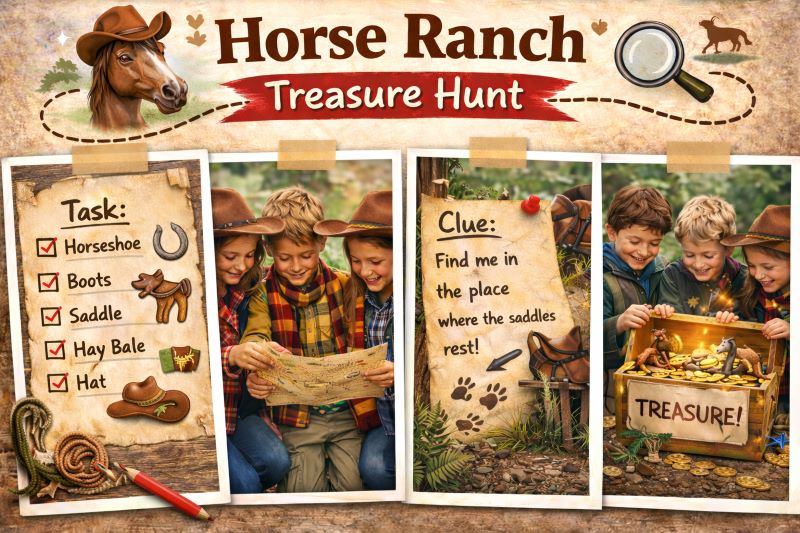
Part of our Scavenger Hunt Guide: Scavenger Hunt for Kids: The Ultimate Guide (100+ Ideas) – find themes, age tips, printable kits and more.
Horse Ranch Scavenger Hunt – Learn About Horses Through Play
Last updated: February 2026 | Reading time: 5 min
This guide is based on years of hands-on experience designing and running scavenger hunts for kids of all ages. Every idea has been tested with real families to ensure maximum fun and engagement.
A horse ranch scavenger hunt isn’t just full of fun and adventure — it also gives children the chance to learn about horses in a playful, creative way. From daily life on a horse ranch to exciting facts about these impressive animals, the horse theme can be educational, engaging, and exciting all at once. Here you’ll discover how to weave horse knowledge into your scavenger hunt so kids not only stay entertained but also learn something along the way.
Stations Filled with Horse Knowledge and Adventure
A horse ranch scavenger hunt becomes even more exciting when it includes stations that offer both fun and real learning. With creative challenges and well-designed tasks, young horse fans can discover fascinating facts about horses. Here are detailed ideas for different stations — including questions and answers.
1. Discover Horse Breeds and Their Unique Traits
This station introduces kids to the variety of horse breeds. Use pictures, small figures, or (if possible) real horses. Children must guess the breed based on clues. Here are some examples:
- Clue: “I am small and sturdy and often live on the Shetland Islands.”
Answer: Shetland Pony — known for their strength and often used for children’s riding. - Clue: “I’m known for my speed and often used in racing.”
Answer: Thoroughbred — the fastest of all breeds and dominant in the racing world. - Clue: “I am big and powerful and was traditionally used for work in the fields.”
Answer: Draft horses like the Noriker or Percheron — very strong and great for heavy pulling work.
Kids learn how different horses can be and gain a better understanding of their abilities and typical uses.
2. Explore Horse Grooming and Stable Equipment
Grooming is an important part of horse care. At this station, kids discover tools used for grooming, such as brushes, hoof picks, and sponges.
Tasks with Answers:
- “What tool is used to clean a horse’s hooves?”
Answer: A hoof pick — it removes dirt and stones to prevent injuries. - “Why should a horse’s coat be brushed after riding?”
Answer: Brushing removes sweat and dirt, stimulates circulation, and helps the horse feel comfortable.
A big highlight: Kids can brush a plush horse or — with supervision — a real horse to learn how different brushes feel and work.
3. Feeding Horses: Learn About Proper Nutrition
A horse’s diet is crucial for its health. At this station, show different types of feed — some suitable, some not.
Task: Sort the items into “safe to eat” and “not safe.”
Safe horse foods:
- Apples
- Carrots
- Hay
- Oats
Not safe for horses:
- Chocolate
- Bread (especially fresh bread)
- Citrus fruits
- Sugar cubes (in large amounts)
Explain why some foods are dangerous — for example, bread can swell in the stomach and cause digestive problems.
Check out our ready-to-print Horse Scavenger Hunt


4. Understanding Horse Body Language
Horses communicate mainly through body language, and recognizing their signals is essential for safe interaction. Use pictures or short videos to show children how horses express emotions.
Questions and Answers:
- “What does it mean when a horse pins its ears back?”
Answer: The horse feels uncomfortable, annoyed, or threatened. Kids should be cautious and keep some distance. - “How does a horse show that it is relaxed?”
Answer: A relaxed horse has soft eyes, ears gently forward or sideways, and may chew or lick lightly.
For added fun, let children act out the expressions themselves or include a mini quiz where they guess what the body signals mean.
5. Horses in Nature: Discover Tracks and Habitat

At this station, kids learn how horses live in nature and what tracks they leave behind. Show real horseshoes or make prints by pressing a horseshoe into soft dirt or sand.
Questions and Answers:
- “How many liters of water does a horse drink per day?”
Answer: Between 20 and 50 liters, depending on size and activity level. - “How many hours a day does a horse spend eating?”
Answer: Around 16 hours — horses are continuous grazers.
You can also turn this into a small track hunt: hide “hoofprint clues” that lead kids to the next station. This helps them learn how animals leave traces in nature while staying active and engaged.
Horse-Themed Riddles & Activity Ideas
- Rhyming Riddle: “I’m strong and loyal, a cowboy’s trusted friend. Who am I?”
Answer: A horse. - Letter Hunt: Hide letters along the scavenger hunt route. When kids collect them all, they spell words like “horse ranch” or “paddock.”
- Horse Quiz: Prepare fun questions such as “How many legs does a horse have?” or “What do you call a male horse?”
Horse-Themed Treasure
At the end of the scavenger hunt, the treasure should match the horse theme! Here are some fun ideas:
- Small horseshoe charms
- Horse stickers or mini notebooks
- A voucher for a visit to a real horse ranch
- DIY bracelets with horse-themed beads

Conclusion: Combining Learning and Fun
A horse-themed scavenger hunt is much more than just a game — it blends adventure with fascinating insights into the world of horses. Kids learn in a playful way how horses live, what they need, and how important it is to treat them responsibly. Whether you host it on a ranch, in the forest, or in your own backyard, this scavenger hunt becomes an unforgettable experience for every young horse fan! 🐎✨